Cencosud Enters Hard-Discount War with Don Salva: A Strategic Pivot for Latin America’s ‘Cautious Consumer’
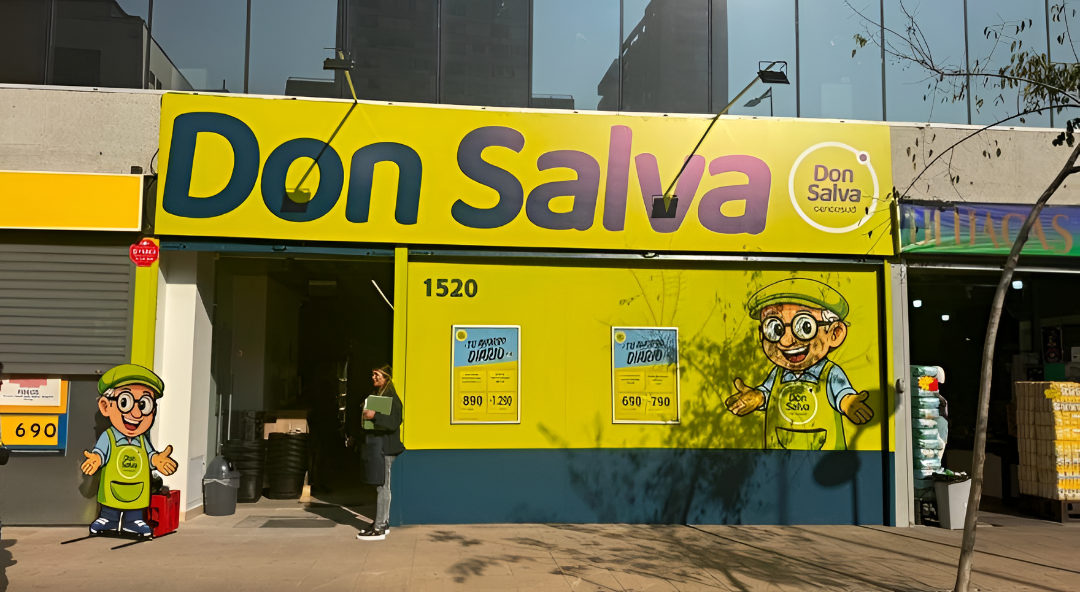
In a bold move to counter rising inflation and shifting consumer habits, Chilean multinational Cencosud has launched **Don Salva**, a new hard-discount supermarket chain designed to deliver “permanent savings” to budget-conscious shoppers. The inaugural store opened in Santiago’s Santo Domingo district on **May 23, 2024**, marking Cencosud’s first foray into the ultra-low-price retail segment—a format that has disrupted markets from Europe to Latin America.
With a lean, neighborhood-focused model and a slogan promising *”Acá sí alcanza”* (“Here, it truly reaches”), Don Salva targets Latin America’s growing “cautious consumer” demographic, which now prioritizes essential goods and operational efficiency over premium experiences. The launch underscores Cencosud’s diversification strategy, expanding beyond its existing portfolio of mid-to-high-end brands like **Jumbo (Chile)**, **Wong (Peru)**, and **Metro** to capture the hard-discount market—a segment dominated by regional players but increasingly attractive as cost-of-living pressures mount.
For Cencosud, this pivot is not just about growth; it’s a response to a decade of economic volatility. The company’s first-quarter 2026 revenues of **CLP 4.041 trillion (USD 4.565 billion)**—a modest 0.2% year-over-year increase—highlight the challenges of maintaining margins in a high-inflation environment. By entering the hard-discount space, Cencosud aims to hedge against further erosion of discretionary spending while reinforcing its position as Latin America’s largest retailer by revenue.
Why Don Salva? The Hard-Discount Imperative
The hard-discount format thrives on three pillars: **ultra-low prices**, **operational efficiency**, and **hyper-local convenience**. Don Salva’s stores—planned for high-density urban areas—will feature:
- Slimmed-down product assortments: Focused on essentials (groceries, household staples, and private-label brands) with minimal frills.
- Self-service and cashierless checkouts: Reducing labor costs while speeding up transactions.
- Aggressive pricing: Undercutting competitors by 20–30% on core items, with promotions limited to “permanent savings” rather than temporary discounts.
This model mirrors global successes like Germany’s **Aldi** and France’s **Lidl**, which have expanded aggressively in Latin America. However, Don Salva faces stiff competition from local discount chains—such as Chile’s **Lider Express** and Peru’s **Vivanda**—as well as Cencosud’s own legacy brands adapting to value-driven shopping. The company has not disclosed expansion plans, but industry analysts suggest **Peru and Argentina** are top candidates for future rollouts, given their similar economic pressures.
Cencosud’s Portfolio: A Multiformat Strategy Under Pressure
Cencosud’s existing brands cater to diverse socioeconomic segments, but none have fully addressed the hard-discount demand. Here’s how Don Salva fits into the group’s strategy:
| Brand | Market | Format | Target Consumer |
|---|---|---|---|
| Jumbo | Chile | Hypermarket | Middle to upper-middle class |
| Wong | Peru | Supermarket | Mid-income families |
| Metro | Peru | Cash-and-carry | Small businesses |
| Don Salva | Chile (launch), potential Peru/Argentina | Hard-discount | Budget-conscious, inflation-hit households |
The Paulmann family, which controls **56.16%** of Cencosud’s equity, has historically avoided the hard-discount segment, viewing it as a race to the bottom. Yet, with **63.5% of the company’s financial debt denominated in USD** (as of March 31, 2026) and **89% hedged** to mitigate currency risks, the group’s leadership appears willing to take calculated risks. Don Salva’s success will hinge on whether it can deliver consistent savings without sacrificing quality—a tightrope walk for retailers in inflationary climates.
Who Wins? The Impact on Competitors and Consumers
Don Salva’s entry will test the resilience of Cencosud’s existing brands while forcing competitors to adapt. Key stakeholders include:
- Consumers: Hard-discount chains benefit low-income households but may limit product variety. Don Salva’s focus on essentials could ease budget constraints for families spending **over 40% of income on food** in Chile (a threshold exceeded in 2025 per the Economic Commission for Latin America and the Caribbean (ECLAC)).
- Competitors:
- Jumbo/Santa Isabel (Chile): May face margin pressure but could cross-sell premium items to Don Salva shoppers.
- Lider Express (Chile): The dominant discount player, with 15% market share, will likely intensify promotions.
- Wong/Metro (Peru): If Don Salva expands there, it could cannibalize mid-tier sales unless these brands pivot to value.
- Suppliers: Don Salva’s emphasis on private labels may reduce demand for branded goods, pressuring manufacturers to lower prices.
For Cencosud, the gamble is twofold: **Can Don Salva achieve profitability at prices that resonate with the cautious consumer?** And **will it cannibalize sales from higher-margin formats?** Early indicators from Europe suggest hard-discount chains can coexist with premium retailers—but only if they carve out a distinct niche. Cencosud’s ability to balance both will determine whether Don Salva becomes a temporary trend or a lasting fixture in Latin America’s retail landscape.
What’s Next? Expansion and Watching the Numbers
Cencosud has not provided a timeline for Don Salva’s expansion beyond Chile, but industry observers expect **Peru and Argentina** to be priority markets, given their similar economic conditions. The company’s next quarterly earnings report (scheduled for **August 2026**) will offer clues about Don Salva’s traction, including:
- Foot traffic and sales per square meter at the Santiago flagship.
- Supplier negotiations for private-label goods.
- Potential regulatory hurdles in new markets (e.g., Argentina’s price controls).
For now, Don Salva’s slogan—*”Acá sí alcanza”*—captures the essence of its mission: to make essential goods affordable in an era where every peso counts. Whether it succeeds will depend on execution, not just ambition.
Key Takeaways
- Strategic Shift: Cencosud’s entry into hard-discount retail with Don Salva reflects a response to inflation and consumer demand for ultra-low prices.
- Market Opportunity: Latin America’s “cautious consumer” segment is growing, with households prioritizing essentials over discretionary spending.
- Competitive Pressure: Don Salva will challenge existing discount chains like Lider Express while testing Cencosud’s ability to balance high- and low-end formats.
- Financial Caution: With 63.5% of debt in USD, Cencosud’s hedging strategy (89% of debt hedged) aims to mitigate currency risks amid economic uncertainty.
- Watch for Expansion: Peru and Argentina are likely next for Don Salva, but success hinges on proving profitability at hard-discount margins.
FAQ: Don Salva and the Future of Latin American Retail
What do you think about Cencosud’s hard-discount pivot? Will Don Salva succeed where others have struggled, or is this a risky gamble in an inflationary market? Share your thoughts in the comments below—or tag us on X to join the discussion.
For updates on Don Salva’s expansion and Cencosud’s financial performance, watch for the company’s next earnings report on **August 2026**. In the meantime, follow Cencosud’s official website for official announcements.
Keep reading