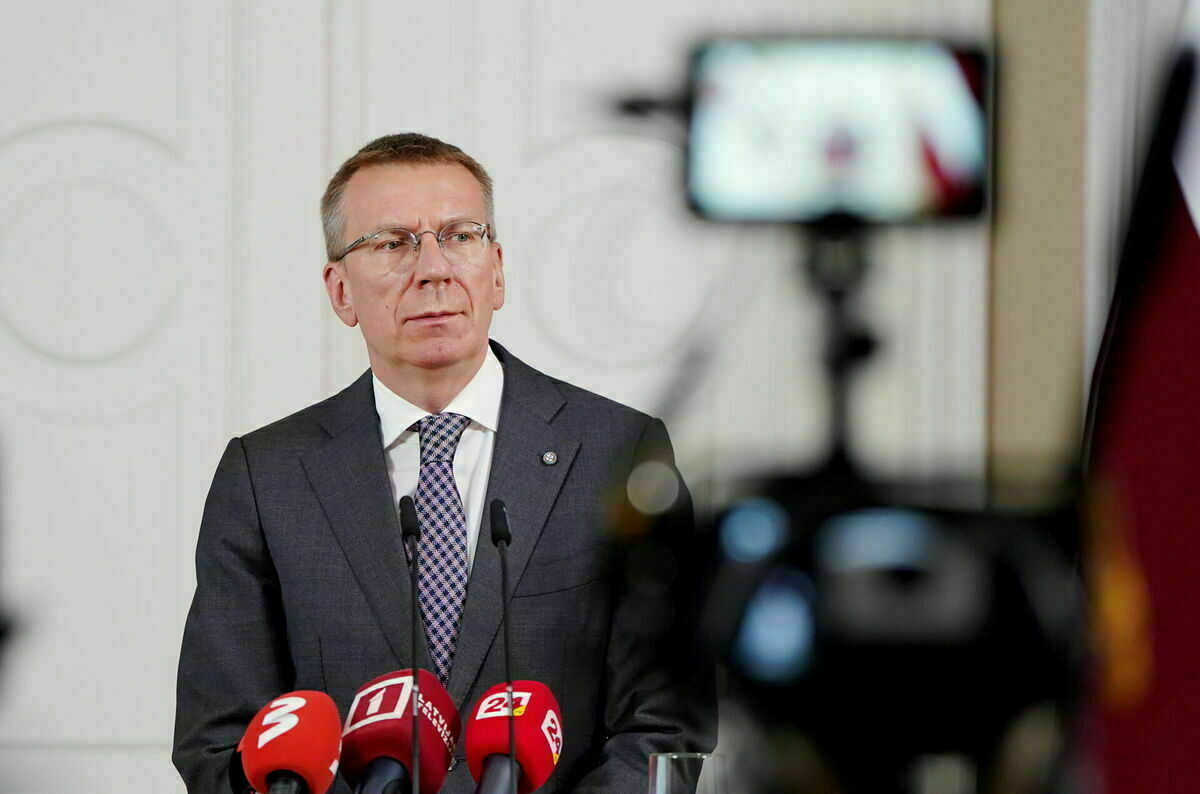
Latvia’s President Rinkēvičs Urges EU to Step Up Ukraine Defense Support: ‘A Matter of Credibility’
Riga, Latvia — In a direct call to European leaders, Latvian President Edgars Rinkēvičs has reiterated the urgent need for the European Union to significantly increase its military and financial support for Ukraine, framing the issue as a matter of credibility and long-term security for the continent. Following a high-level meeting with Ukrainian President Volodymyr Zelenskyy earlier this month, Rinkēvičs outlined Latvia’s latest defense assistance package and warned that the EU’s failure to deliver on commitments—particularly around artillery ammunition—risks undermining Western solidarity.
The latest developments come as Ukraine faces persistent challenges on the battlefield, including shortages of critical munitions and escalating threats from Russian forces. Rinkēvičs emphasized that while Latvia and other NATO allies have demonstrated strong political support, the practical delivery of military hardware must match the rhetoric. “Everyone says they support Ukraine, but we need to send a clearer political signal: that Ukraine will be supported until total victory over Russian imperialism,” Rinkēvičs stated during a press conference following his meeting with Zelenskyy.
Key Takeaways:
- Latvia has pledged a new military aid package worth millions, including artillery systems, drones and winter gear.
- The EU’s commitment to deliver one million 155mm artillery shells remains unfulfilled, according to Rinkēvičs.
- Latvia will train at least 3,000 Ukrainian soldiers in 2024, with rehabilitation support for wounded fighters.
- Rinkēvičs called for a 10-year security guarantee for Ukraine, signaling long-term Western backing.
New Military Aid Package: What Latvia Is Providing
During the press conference, Rinkēvičs detailed Latvia’s latest military aid package, which includes:
- Haubitz artillery systems and 155mm ammunition.
- Anti-tank weapons, including Javelin and NLAW systems.
- Air defense missiles (e.g., IRIS-T SLM).
- Mortars and ammunition, as well as all-terrain vehicles for logistics.
- Drones, including both reconnaissance and attack models.
- Communications equipment and power generators for frontline units.
- Winter gear, including insulated uniforms and thermal blankets.
Latvia will supply locally produced “Tarragon” unmanned aerial vehicles (UAVs), along with information technology equipment, to enhance Ukraine’s intelligence and command capabilities. The package also includes medical supplies and rehabilitation support for wounded Ukrainian soldiers, with Latvia offering training and recovery programs for at least 3,000 Ukrainian troops in 2024.
Rinkēvičs stressed that while these contributions are significant, they are insufficient without broader EU action. “The most critical gap is the EU’s failure to deliver on its promise of one million 155mm artillery shells,” he said. “Here’s not just a logistical issue—it’s a question of our credibility. If we cannot fulfill this basic commitment, what message does that send to Ukraine’s soldiers and to Putin?”
EU’s Artillery Shortfall: A Credibility Crisis
The EU’s struggle to meet its artillery ammunition pledge has been a recurring theme in Western-Ukraine defense discussions. Rinkēvičs acknowledged that Latvia is exploring options to purchase additional 155mm shells directly and transfer them to Ukraine, but he warned that this cannot be a long-term solution. “We are looking at ways to buy these shells and donate them immediately, but the real issue is systemic,” he said. “The EU must treat this as a priority and coordinate production across member states.”
Industry sources suggest that production bottlenecks and bureaucratic delays have hindered the EU’s ability to ramp up shell production. Meanwhile, Ukraine’s frontline units continue to face shortages, with some reports indicating that Russian forces have adapted tactics to exploit these gaps. Rinkēvičs did not provide specific casualty figures but emphasized that every delay in ammunition delivery translates to lives lost.
10-Year Security Guarantee: Latvia’s Long-Term Commitment
Beyond immediate military aid, Rinkēvičs announced that Latvia has agreed to a 10-year security partnership with Ukraine, signaling a deeper commitment to the country’s defense. “This is not just about the next few months—it’s about ensuring Ukraine’s sovereignty for a decade,” he said. The agreement includes:
- Ongoing military training programs for Ukrainian forces.
- Joint exercises and intelligence-sharing initiatives.
- Economic and infrastructure support to rebuild war-torn regions.
This long-term pledge aligns with similar commitments from other Baltic states, including Lithuania and Estonia, which have also pledged decades of support. However, Rinkēvičs cautioned that political will must translate into tangible action. “Words are important, but they must be backed by deeds,” he said. “Ukraine’s fight is not just for its territory—it’s for the future of European security.”
What Happens Next: Upcoming Checkpoints
The next critical milestones include:
- EU Defense Ministers Meeting (June 2024): Rinkēvičs and other Baltic leaders will push for concrete steps on artillery production and delivery.
- Latvia’s Military Aid Delivery Timeline: The first batch of new equipment, including drones and anti-tank systems, is expected to be shipped within the next three months.
- Ukraine’s Counteroffensive Updates: Ukrainian officials will provide progress reports on the southern front, where artillery support remains a decisive factor.
For readers seeking official updates:
- Latvian Ministry of Defense: mod.gov.lv
- Ukrainian Presidential Office: president.gov.ua
- EU Defense Aid Tracking: defence.aid
Why This Matters: The Broader Implications
Rinkēvičs’ call for stronger EU support reflects growing frustration among NATO allies over the pace of defense aid to Ukraine. While the U.S. Has been a major supplier of artillery and air defense systems, European contributions have lagged due to production constraints, political divisions, and bureaucratic hurdles. The situation underscores a broader challenge: Can Europe act as a unified security bloc when needed?
For Ukraine, the stakes could not be higher. With Russian forces regrouping and launching new offensives, the ability to sustain frontline units—particularly with artillery—will determine the outcome of key battles. Meanwhile, the EU’s internal debates over aid packages highlight the geopolitical tensions within the bloc, where some member states prioritize energy security over military support.
As Rinkēvičs noted, the issue extends beyond Ukraine’s borders. “If we fail to support Ukraine now, we risk emboldening further aggression—not just in Europe, but globally,” he said. “This is about deterrence. It’s about showing that the rules-based order matters.”
Reader Questions: Key FAQs
Q: What is the “Tarragon” UAV mentioned in the aid package?
A: The “Tarragon” is a Latvian-designed unmanned aerial vehicle (UAV) used for reconnaissance and surveillance. It is part of Latvia’s broader effort to support Ukraine’s intelligence capabilities. More details here.
Q: How does Latvia’s aid compare to other NATO countries?
A: Latvia’s contributions are proportionate to its size but significant in terms of per-capita military aid. For example, Estonia has pledged 1% of its GDP to Ukraine, while Latvia has committed over €1 billion in defense assistance since 2022. The U.S. Remains the largest donor, but European contributions are critical for long-term sustainability.
Q: What is the status of the EU’s artillery pledge?
A: As of January 2024, the EU had delivered less than 20% of the promised one million shells. Production delays, particularly in Germany and France, have slowed progress. Latvia is now exploring direct purchases to bridge the gap.
Q: Will this aid package change Ukraine’s battlefield strategy?
A: While new equipment will improve Ukraine’s defensive capabilities, analysts suggest that the real game-changer will be the EU’s ability to fulfill its artillery commitment. Without sustained shell production, Ukraine’s counteroffensive plans may face delays.
Final Thoughts: A Call to Action
As the war enters its third year, the question of Western unity—and the willingness to pay the price—has never been more pressing. Rinkēvičs’ remarks serve as a reminder that support for Ukraine is not just a moral obligation but a strategic imperative for European security.
What are your thoughts on Latvia’s leadership in this crisis? Should the EU prioritize military aid over energy security? Share your views in the comments below.
Stay updated: Follow World Today Journal for real-time coverage of Ukraine’s defense challenges and EU responses.
Related reading