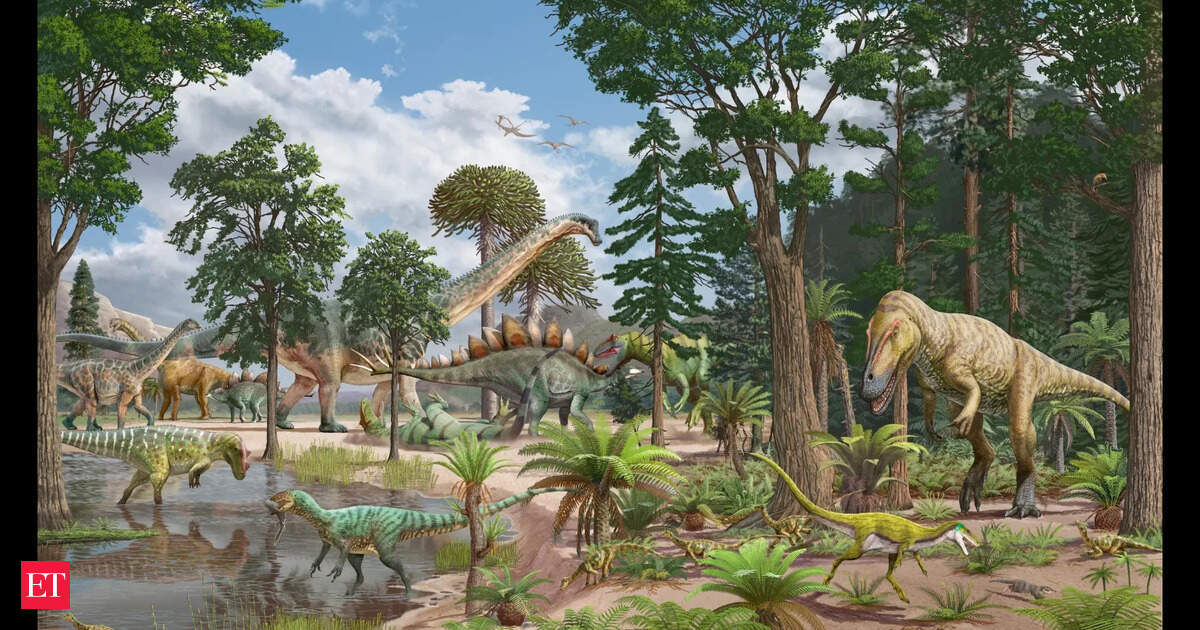
Dinosaurs faced devastation within hours of the Chicxulub asteroid impact 66 million years ago, according to a study published in the Economictimes. Researchers found that vaporized rock created a lethal atmospheric blanket, subjecting terrestrial life to extreme thermal radiation and instant extinction across vast regions.
The Chicxulub Impact Force and Immediate Devastation
The asteroid that ended the 160-million-year reign of prehistoric creatures measured roughly six miles across and slammed into Mexico’s Yucatán Peninsula at a speed of about 12 miles per second. The collision released energy equivalent to 100 teratons of TNT, which researchers calculate to be more than one billion times greater than the combined atomic bomb explosions at Hiroshima and Nagasaki.
That impact carved out a cavity 62 miles wide and 19 miles deep, while generating tsunamis reaching nearly two miles in height and hurricane-force winds approaching 620 miles per hour. Within moments, the catastrophic energy wiped out local ecosystems and rocketed approximately 25 trillion metric tons of debris high into the atmosphere.
Vaporized Rock and Thermal Radiation as Lethal Agents
While earlier scientific discussions heavily debated whether dinosaurs starved slowly in a dust-choked nuclear winter or burned in global fires, recent modeling highlights the destructive power of vaporized rock. When the Mount Everest-sized asteroid struck, it vaporized enormous quantities of material that rose into the upper atmosphere before cooling into fine dust particles.
Planetary scientists modeling the aftermath discovered that this uncondensed vapor acted as an insulating blanket, trapping heat and magnifying the thermal radiation generated by falling, superheated spherules returning from orbit. According to researchers, this dynamic pushed surface conditions far beyond survival thresholds.
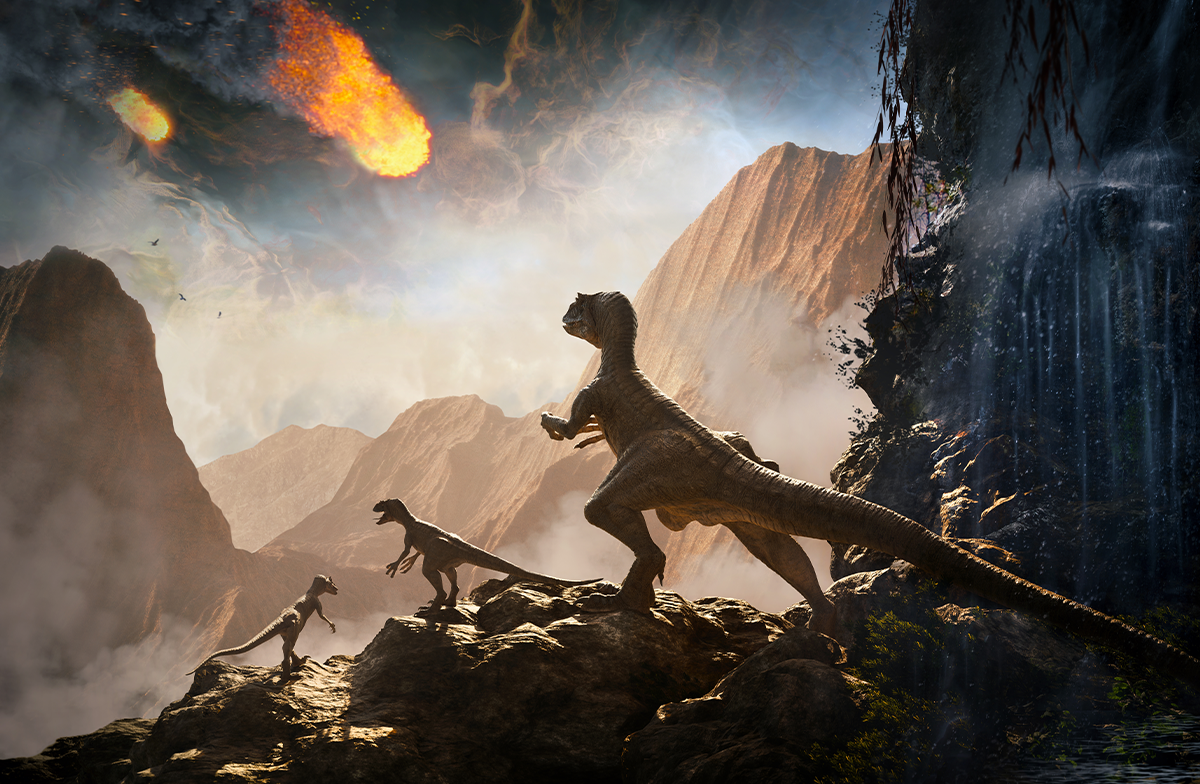
“With the fine dust, the Cretaceous animals received 17 times the dose of thermal radiation that is 100 percent lethal to humans. It was enough to ignite grass, pine needles, lichen, and maybe even directly ignite wood.”
Brandon C. Johnson
This intense thermal wave meant that living creatures faced immediate lethal conditions rather than a delayed decline. As Purdue University planetary scientist and study co-author Brandon Johnson noted about the severity of the timeline, We’re in the realm where we might be essentially killing off everything within that first hour or two
.
Reconciling Instant Catastrophe With Long-Term Environmental Collapse
Despite pointing to immediate mass mortality from thermal radiation and spontaneous wildfires, researchers emphasize that the flash-cooked scenario is fundamentally linked to the long-term starvation hypothesis. The atmospheric blanket of dust, ash, and soot that blocked incoming sunlight for years or decades originated from the very same impact mechanics.
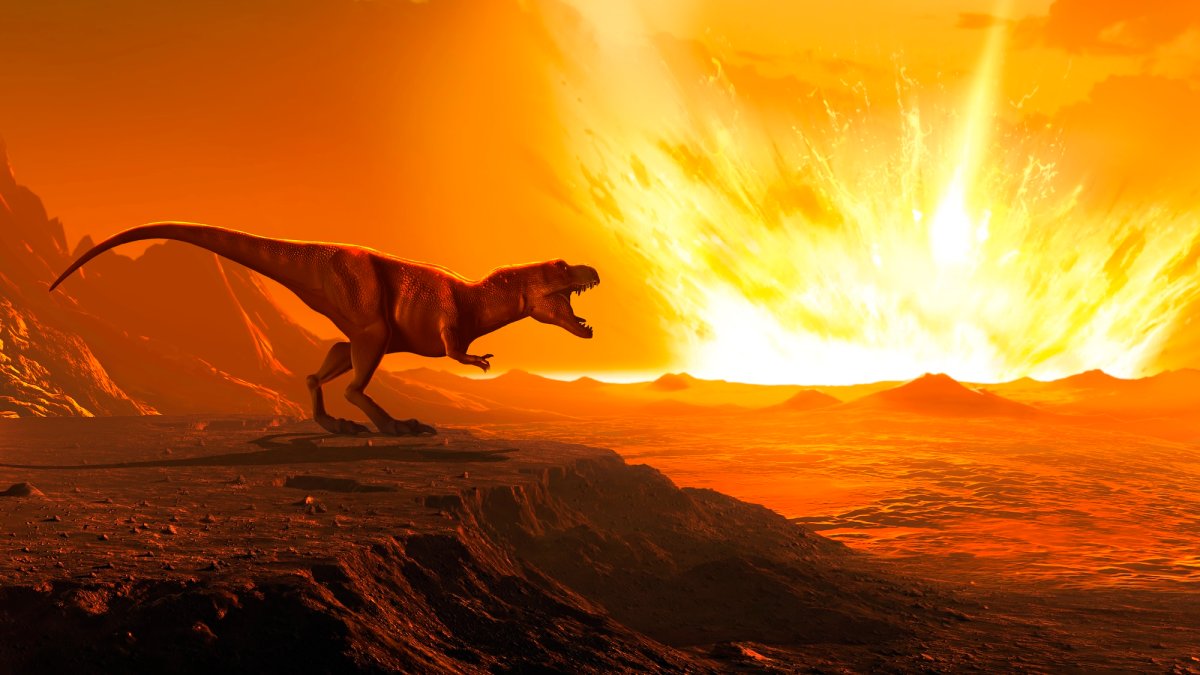
Johnson compared the mechanics to a household thermos, explaining that the extreme heat phase transitioned smoothly into a prolonged global chill. After the initial infernos subsided, the lingering debris obscured sunlight, halting photosynthesis and collapsing plant life at the base of the food chain.
Herbivorous dinosaurs lost their vegetation sources, while carnivores quickly exhausted dwindling prey populations. Yet, life persisted in resilient forms. Small mammals, birds, crocodilians, turtles, insects, and aquatic organisms survived through adaptations in body size, diet, and habitat, carrying evolutionary lineages like modern birds past the Cretaceous–Paleogene boundary.
Unresolved Questions and Future Research Directions
Scientific inquiry into the exact global footprint of the fires continues. Much of the physical evidence for wildfire activity remains concentrated in North America, leaving researchers eager to uncover wider geological records.