The Growing Push to Protect new Zealand Children Online: A “Worst Children’s Library” Sparks Parliamentary Debate
New Zealand is grappling with a critical question: how to safeguard its young people from the increasingly pervasive and harmful content found online. A stark and unsettling exhibit, dubbed the “Worst Children’s Library,” recently brought the issue directly to the halls of Parliament, igniting a renewed debate about potential legislative action, including a proposed ban on social media for those under 16. This article delves into the context of this debate, the key players involved, the concerns driving the push for change, and the potential pathways forward.
A Disturbing Reality Unveiled
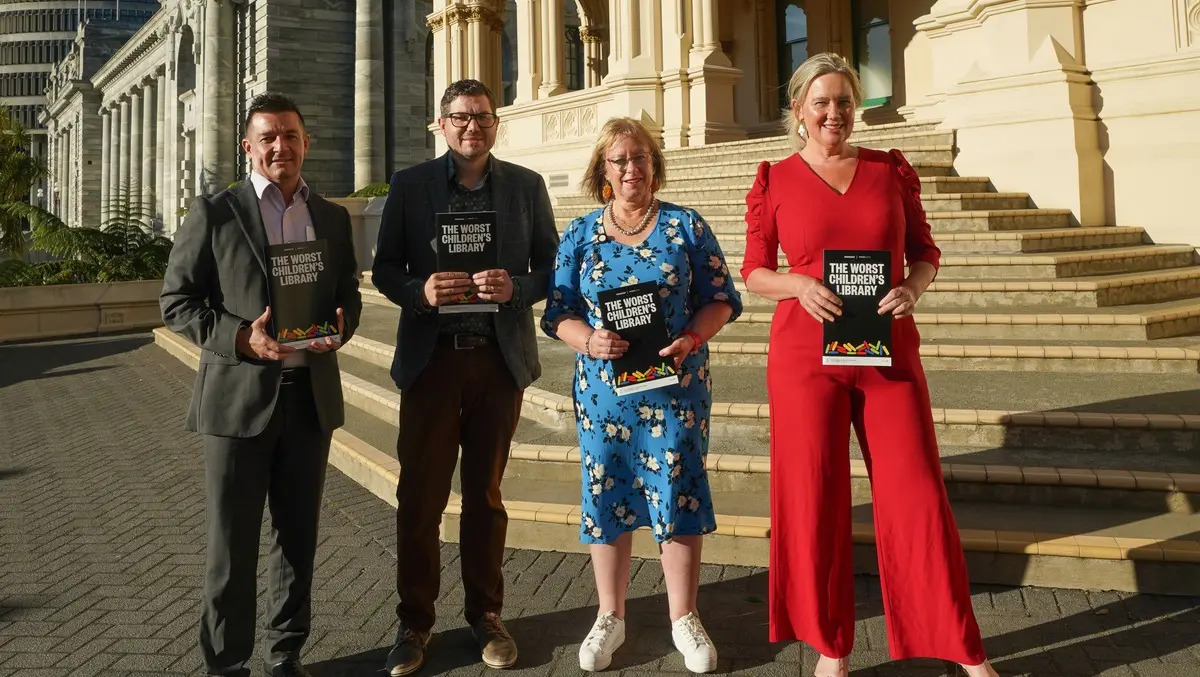
The “worst Children’s Library,” a collaboration between technology giant Samsung and online safety advocacy group Safe Surfer,isn’t filled with beloved storybooks. Instead,it showcases the very content children in New Zealand are actually encountering on their devices - from disturbing imagery and explicit material to harmful ideologies and increasingly refined forms of online abuse. Presented within the familiar setting of a library, the exhibit’s deliberate contrast is designed to be jarring, highlighting the vulnerability of young users and the ease with which they can access inappropriate content.
The exhibit’s impact was immediate. MPs from across the political spectrum were exposed to the unfiltered reality of the online landscape, prompting expressions of shock and a renewed sense of urgency. Helen White, Labor MP for Mt Albert and Spokesperson for Community and Voluntary sector, described the experience as revealing “the true reality of what our children are seeing online,” emphasizing the need for support for parents navigating this complex issue.Barbara Kuriger, National MP for Taranaki-King Contry and Deputy Speaker, echoed this sentiment, stating the display “challenged assumptions about the safety of online environments” and underscored “the risk of harm and the need to protect our tamariki [children].”
Legislative Momentum: The Social Media Bill
The timing of the “Worst Children’s Library” is no coincidence. It coincides with growing public and political pressure for stricter regulations surrounding children’s access to social media. A petition organized by the “B416 Group” has garnered over 45,000 signatures, advocating for a ban on social media for under-16s, mirroring a similar approach recently adopted in australia.
This public outcry has translated into legislative action. national MP Catherine Wedd introduced the Social Media Bill earlier this year, proposing a complete ban on social media accounts for individuals under the age of 16 in New Zealand. However, the bill currently lacks unanimous support within Parliament, and its progression hinges on achieving cross-party consensus – a important hurdle in a politically diverse landscape.
Beyond Blocking: A Multi-Faceted Approach to Online Safety
While a social media ban represents a potentially drastic measure, the conversation extends beyond simply restricting access. Experts and advocates emphasize the need for a complete strategy that encompasses education,parental controls,and technological solutions.
Samsung, through its partnership with Safe Surfer, is actively developing and promoting “kid-safe” device ranges equipped with advanced parental control tools. these tools allow parents to restrict and monitor their children’s online activity, providing a layer of protection against harmful content. Simon Smith,Samsung’s Head of Corporate Marketing,highlighted the company’s commitment to addressing the issue “at the source.”
Though, technological solutions alone are insufficient. Safe Surfer, founded in 2016, specializes in filtering content like pornography, graphic violence, malware, and illegal sites, but its Co-Founder and Chief Executive, Rory Birkbeck, warns that the nature of harmful online material is constantly evolving. He points to the emergence of AI-powered “nudify” apps and deepfake technology as fueling a “new wave of abuse” targeting Kiwi children, frequently enough unintentionally. Birkbeck stresses the importance of recognizing that children are frequently exposed to harmful content without actively seeking it out and lack the maturity to fully understand its context.
The Evolving Threat Landscape & The Need for urgent Action
The concerns extend beyond conventional forms of harmful content.The rise of misogynistic content, hate speech, and the insidious spread of misinformation pose significant risks to young, developing minds.The ease with which children can stumble upon these materials underscores the urgency of the situation.
The “Worst Children’s Library” served as a powerful catalyst for dialog, prompting MPs to confront the stark reality of the online world their constituents’ children inhabit. The hope, as expressed by both White and Birkbeck, is that this shared understanding will pave the way for collaborative action, regardless of political affiliation.
Looking ahead: A Path Towards Protecting New Zealand’s Youth
The future of the Social Media bill remains uncertain.