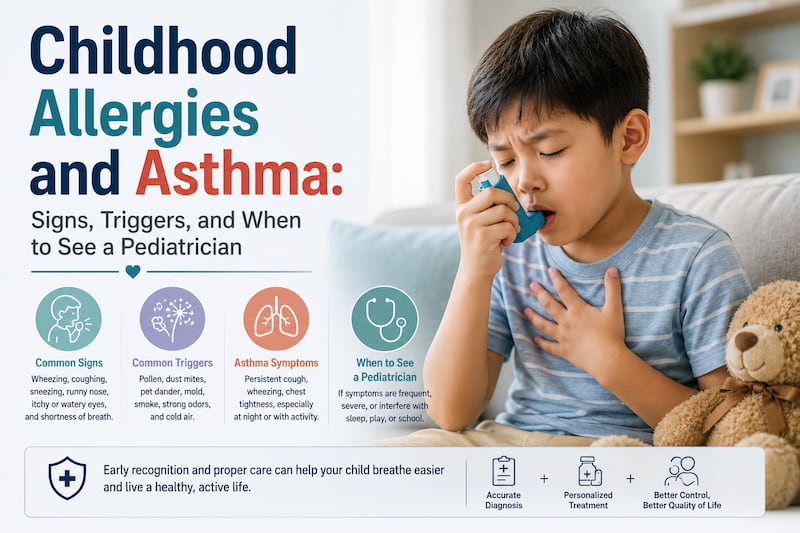
Childhood allergies and asthma are two of the most common chronic conditions of childhood, often presenting with overlapping symptoms that can complicate early diagnosis. Parents frequently struggle to distinguish between the persistent congestion or coughing of a common cold and the recurring patterns associated with allergic responses or airway inflammation. Understanding these distinctions is essential for effective management, as untreated symptoms can lead to significant disruptions in sleep, physical activity, and school attendance.
Allergic reactions occur when a child’s immune system overreacts to substances that are typically harmless, such as pollen, pet dander, or dust mites. Unlike a viral cold, which tends to bring fever and body aches, allergies often persist for weeks, recur at the same time each year, or flare in specific settings. Classic indicators of allergic reactions include sneezing, a runny or stuffy nose, itchy or watery eyes, and an itchy throat.
Identifying the Signs of Pediatric Asthma
Asthma is inflammation and narrowing of the airways that makes breathing harder. While wheezing is a recognized symptom, it is not present in every case. Some children mainly cough and never wheeze dramatically, presenting primarily with a persistent cough that worsens at night, during physical exertion, laughter, or when exposed to cold air. A cough that interrupts sleep or worsens with activity is worth discussing with a pediatrician.
Parents should monitor for chest tightness or shortness of breath during play, as these are signs that the airways are constricting. Because some children do not experience dramatic wheezing, parents may overlook the condition. Documenting the frequency of these symptoms—specifically noting if they occur in certain environments or following laughter or exercise—provides pediatricians with the data necessary to form an accurate diagnosis.
Common Triggers and Regional Factors
Triggers for both allergies and asthma are highly individualized, but they frequently include pollen, dust mites, mold, and pet dander, as well as respiratory infections. Environmental factors play a significant role in symptom severity; for example, families in the Treasure Valley may find that dry air, high-desert seasonal pollen, and summer wildfire smoke exacerbate respiratory sensitivity.
Cold winter air is another frequent asthma trigger. Identifying these specific patterns is the cornerstone of a successful management strategy. Keeping a symptom diary that tracks the date, time, and potential exposure to triggers—such as visits to homes with pets or days with high pollen counts—can help families and healthcare providers pinpoint the exact factors that initiate a flare-up.
Evidence-Based Management and Treatment Plans
Management for childhood asthma and allergies focuses on both rapid relief and long-term prevention. Effective care involves a combination of avoiding known triggers, using medications appropriately, and having a clear plan for what to do when symptoms flare. Controller and rescue inhalers are used for asthma, while antihistamines are used for allergies.
The goal of treatment is to move beyond reactive care—treating symptoms only after they appear—to a proactive model that prevents inflammation before it compromises the child’s quality of life. With a well-structured management plan, most children are able to participate fully in sports, maintain regular school schedules, and enjoy uninterrupted sleep.
When to Seek Professional Medical Evaluation
A pediatrician should be consulted when symptoms become frequent, interfere with sleep, activity, or school, or do not respond to over-the-counter measures. If a child experiences rapid breathing, breathing difficulty, or if a rescue inhaler fails to provide relief, immediate medical attention is required. Experienced Meridian Idaho pediatricians can distinguish allergies from asthma from ordinary colds, identify triggers, and build a management plan tailored to the child.
Building a formal “asthma action plan” with a healthcare provider ensures that parents, school nurses, and coaches are aligned on how to manage the child’s health in various settings. This document outlines daily maintenance steps and clear protocols for what to do during an emergency. By shifting from guesswork to a medically supervised strategy, families can minimize the impact of these chronic conditions. For those concerned about persistent symptoms, scheduling an appointment with a local pediatrician is the recommended next step to establish a baseline of care and begin a tailored treatment plan.