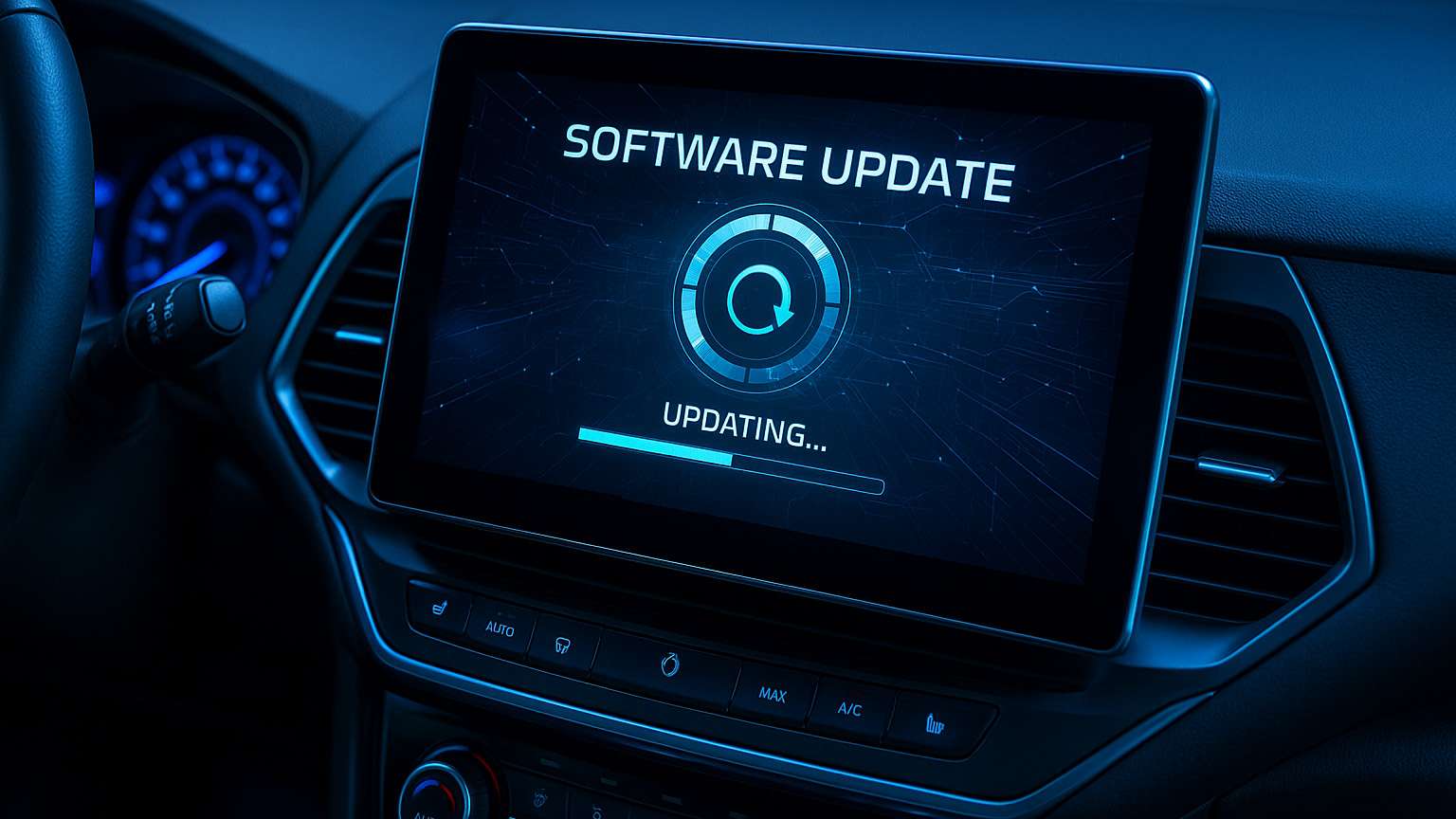
For years, the promise of the “smartphone on wheels” has been the primary selling point of the modern electric vehicle (EV). The ability to wake up to a car that is faster, smarter, or more efficient thanks to an over-the-air (OTA) software update was once seen as a miracle of engineering. However, a growing wave of frustration among EV owners in China is highlighting the darker side of this connectivity: the ability for manufacturers to alter the fundamental performance of a vehicle long after it has left the showroom.
Reports are emerging from the Chinese market—the world’s largest arena for electric mobility—of owners noticing significant reductions in their vehicle’s driving range following software updates. While manufacturers often frame these updates as “optimizations” or “stability improvements,” some users claim that their cars are delivering fewer kilometers per charge than they did at the time of purchase. This tension brings to the forefront a critical question in the era of software-defined vehicles: who truly controls the hardware once the transaction is complete?
As a software engineer by training and a journalist by trade, I have watched this pattern play out in the consumer electronics space for a decade. We saw it with smartphone “batterygates,” where processor speeds were throttled to preserve aging batteries. Now, that same tension is migrating to the automotive industry, where the stakes are not just a slower app, but the actual utility and value of a high-cost asset.
The “Range Drop” Phenomenon: Optimization or Throttling?
The controversy centers on the Battery Management System (BMS), the complex software layer that monitors the state of charge, temperature, and health of the battery cells. The BMS determines how much energy is available for the motor and how the vehicle estimates its remaining range. When a manufacturer pushes an OTA update to the BMS, they can fundamentally change how the car consumes energy or how it reports that consumption to the driver.
In many of the reported cases in China, owners have observed that the “estimated range” displayed on the dashboard has dropped significantly following an update. Manufacturers often defend these changes by arguing that the software is now providing a more “accurate” reflection of the battery’s state, rather than an optimistic estimate. In other instances, updates may limit the maximum discharge rate of the battery to prevent overheating or to slow the rate of degradation, which effectively reduces the vehicle’s peak performance, and range.
This creates a transparency gap. For the consumer, the experience is a loss of a feature they paid for. For the manufacturer, it is often a necessary technical adjustment to ensure safety or longevity. Without a transparent changelog—the kind of detailed documentation software developers use to track every modification—the consumer is left to guess whether their car has been “nerfed” for the company’s benefit or optimized for the user’s safety.
The Engineering Trade-off: Longevity vs. Performance
To understand why a range reduction might occur, one must look at the chemistry of EV batteries. Whether using Lithium Iron Phosphate (LFP) or Nickel Manganese Cobalt (NMC) cells, batteries are subject to degradation. Factors such as extreme temperature swings and frequent fast-charging can accelerate this wear. The International Energy Agency (IEA) notes that the rapid scaling of EV adoption has put immense pressure on battery efficiency and longevity standards globally.

If a manufacturer discovers that a specific battery batch is degrading faster than expected, they have two choices: issue a physical recall to replace the modules—an astronomical expense—or push an OTA update to limit the battery’s stress. By reducing the maximum voltage or limiting the current draw, the software can effectively “shield” the battery from further damage. While this extends the life of the pack, it often results in a perceptible drop in acceleration or a reduction in the total usable range.
This is the “invisible hand” of the software-defined vehicle. In a traditional internal combustion engine car, a mechanical failure required a physical fix. In a modern EV, the “fix” is often a line of code that trades performance for reliability. When this trade-off is made without the owner’s explicit consent or clear communication, it ceases to be an optimization and begins to look like a breach of trust.
Regulatory Friction and the CLTC Standard
The situation in China is particularly volatile because of the high stakes of range certification. The China Light-Duty Vehicle Test Cycle (CLTC) is the standard used to determine the official range of an EV. Because the CLTC is often criticized for being overly optimistic compared to real-world driving, there is already a gap between the “advertised” range and the “actual” range.
When an OTA update further reduces that real-world range, it pushes the vehicle further away from its certified specifications. This raises potential legal issues regarding consumer protection laws. If a vehicle was sold based on a certified range of 600 kilometers, and a software update reduces that capacity to 500 kilometers, the product is no longer the one that was legally marketed.
Chinese regulators, including the Ministry of Industry and Information Technology (MIIT), have a history of strict oversight regarding vehicle specifications. However, the speed of software iteration currently outpaces the speed of regulatory auditing. OTA updates happen in days; certification cycles happen in months. This lag creates a “grey zone” where manufacturers can alter vehicle behavior with minimal immediate oversight.
The Precedent of “Batterygate” and the Path Forward
The automotive industry is currently repeating a mistake made by the tech industry years ago. When Apple admitted to throttling older iPhones to prevent unexpected shutdowns, the backlash was global, resulting in massive fines and a permanent stain on the company’s transparency record. The lesson was simple: users do not mind a performance adjustment if it is explained and optional; they despise it when it is hidden.
To avoid a systemic crisis of confidence, EV manufacturers must move toward a “Transparency First” model for OTA updates. This should include:
- Detailed Change Logs: Every update should come with a clear explanation of how it affects battery performance, range, and power output.
- Opt-in Performance Toggles: For non-safety-critical updates, users should be able to choose between “Performance Mode” (maximum range/power) and “Longevity Mode” (optimized for battery health).
- Third-Party Verification: Independent audits of OTA updates to ensure that “optimizations” are not being used to mask hardware defects or artificially manage fleet performance.
Key Takeaways for EV Owners
| Possible Cause | Manufacturer Justification | Consumer Impact |
|---|---|---|
| BMS Recalibration | Improved range estimation accuracy | Lower displayed range, but same actual capacity |
| Voltage Throttling | Prevention of battery degradation | Reduced peak acceleration and total range |
| Thermal Management | Improved safety/overheating prevention | Reduced performance during extreme weather |
| Software Bug | Unintended regression in energy efficiency | Unexpected drop in range (requires patch) |
The shift toward software-defined vehicles is an inevitable and largely positive evolution. The ability to fix a braking issue or improve a navigation system remotely is a massive win for safety and convenience. But as we move forward, we must ensure that the “software” part of the vehicle does not become a tool for eroding the value of the “hardware” part.

The reports coming out of China serve as a canary in the coal mine for the global EV market. As more brands transition to this model, the demand for “Digital Rights for Hardware” will only grow. We cannot allow the convenience of the cloud to override the basic consumer right to the product we purchased.
The next critical checkpoint for this issue will be the upcoming regulatory reviews of EV certification standards in China, where the MIIT is expected to further refine how OTA updates interact with official range claims. Whether these regulations will mandate transparency or allow manufacturers to continue “optimizing” in secret remains to be seen.
Do you think manufacturers should be allowed to throttle performance to save battery life without your consent? Share your thoughts in the comments below and let us know if you’ve noticed range changes after an update.