
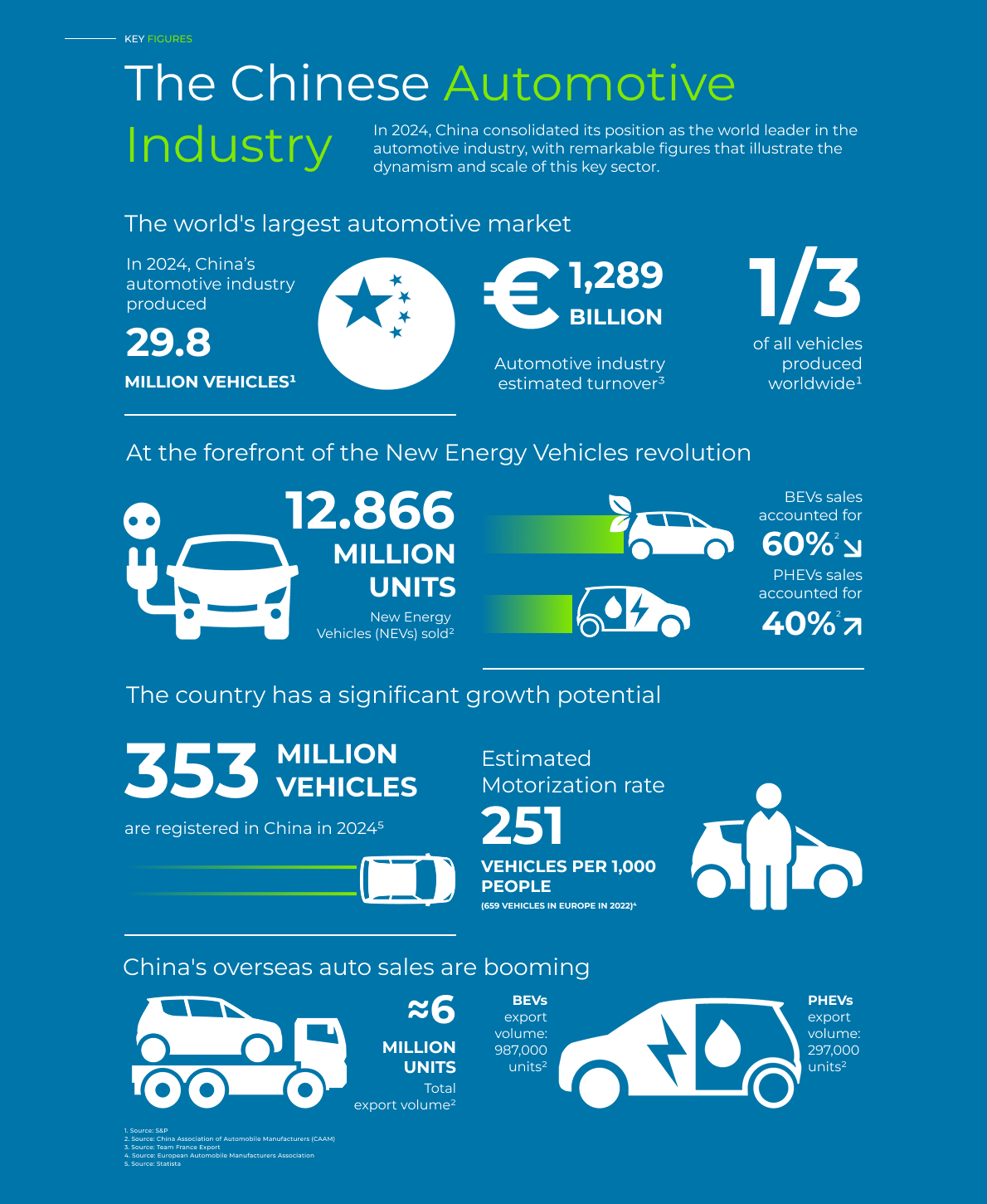
The European automotive landscape is currently witnessing a seismic shift as Chinese electric vehicle (EV) manufacturers accelerate their penetration into the continent’s markets. Leading this charge is BYD, whose rapid growth in Europe signals a broader strategic pivot by Beijing-based firms to move beyond simple exports toward integrated local production and market dominance.
The scale of this expansion is best illustrated by BYD’s recent performance. According to reporting from Le Temps, the company has seen a 170% increase in its European presence over a single year. This surge is not merely a result of aggressive pricing but a calculated entry strategy involving a diverse portfolio of models designed to compete directly with established European brands in both the mass-market and premium segments.
For decades, the European car industry—centered in Germany, France, and Italy—has operated as a global benchmark for engineering and luxury. However, the transition to electric mobility has created a window of opportunity. Chinese firms, having mastered the battery supply chain and scaled production at an unprecedented pace, are now utilizing that efficiency to undercut traditional manufacturers on price while offering competitive technology.
This influx of Chinese EVs has sparked a heated debate among policymakers in Brussels and national capitals. While consumers benefit from more affordable electric options, industry advocates warn of a systemic threat to the European industrial base. The tension between maintaining open trade and protecting domestic manufacturing has reached a critical point as the “Chinese wave” transforms from a theoretical risk into a tangible market reality.
The BYD Surge: A Blueprint for Market Penetration
BYD (Build Your Dreams) has evolved from a battery manufacturer into a global automotive powerhouse. Its strategy in Europe relies on a “vertical integration” model, where the company produces almost every component of the vehicle, including the batteries and semiconductors. This allows them to maintain tighter control over costs and delivery timelines than many of their European counterparts.
The 170% growth reported by Le Temps reflects a broader trend of aggressive expansion. BYD is not merely shipping cars from Shenzhen; it is establishing a physical footprint. The company’s decision to build manufacturing plants within Europe is a strategic move to bypass potential import tariffs and to brand itself as a local producer, thereby reducing the “foreign” perception of its vehicles.
This shift toward localized production is part of a wider trend. Reports from Autoplus indicate that Chinese automakers are planning to triple their production capacity abroad. By establishing factories in Europe, these companies can navigate the complex regulatory environment of the European Union more effectively while creating local jobs to mitigate political backlash.
The competitive edge for BYD and similar firms lies in the “price-to-feature” ratio. Chinese EVs often include high-end infotainment systems, advanced driver-assistance systems (ADAS), and impressive range at price points that are significantly lower than comparable models from Volkswagen, Stellantis, or Renault. This has made them particularly attractive to fleet buyers and middle-class consumers looking to transition to electric power without the “luxury tax” often associated with European EVs.
Strategic Challenges for the European Industrial Core
The arrival of the Chinese wave has left European manufacturers in a defensive posture. For years, legacy brands focused on perfecting the internal combustion engine, treating EVs as a secondary niche. In contrast, Chinese firms treated the EV transition as a “leapfrog” opportunity, skipping the combustion era entirely to lead in software-defined vehicles.
This disparity has led to stark warnings from industry observers. Pierre Lellouche, speaking via CNews, has characterized the current state of the European automotive industry as “moribund,” suggesting that the region is facing a form of industrial colonization where Chinese firms are not just selling cars but are integrating themselves into the very factories and supply chains of Europe.
The threat is not limited to the sale of vehicles. The real danger lies in the erosion of the supply chain. Because China controls the vast majority of the world’s graphite, lithium processing, and battery cell production, European firms are often dependent on Chinese suppliers to build the very cars they intend to use to compete against Chinese brands. This creates a strategic vulnerability that the European Commission is currently attempting to address through the Critical Raw Materials Act.
the Japanese automotive industry is facing a similar crisis. Analysis from the Institut français des relations internationales (Ifri) highlights that the rise of EVs in China has presented a profound strategic challenge for Japanese makers like Toyota and Honda. Japan’s slower pivot toward full battery-electric vehicles (BEVs) in favor of hybrids has allowed Chinese firms to capture the dominant share of the most populous market in the world, a lesson European manufacturers are now observing with alarm.
The Regulatory Battle: Tariffs and Trade Defense
To counter the influx of low-cost EVs, the European Union has turned to trade defense instruments. The European Commission has conducted extensive anti-subsidy investigations into Chinese electric vehicles, alleging that state subsidies allow these firms to sell their cars at artificially low prices, which distorts the internal market.
The result of these investigations has been the implementation of provisional countervailing duties. These tariffs are designed to level the playing field by adding a percentage-based tax to Chinese-made EVs imported into the EU. However, these measures are a double-edged sword. While they protect domestic manufacturers, they may slow the EU’s progress toward its goal of banning the sale of new internal combustion engine cars by 2035, as cheaper Chinese EVs have been a primary driver of EV adoption among lower-income consumers.
Chinese firms are already adapting to these tariffs. By shifting production to European soil, they can effectively “neutralize” import duties. For example, BYD’s investment in a plant in Hungary is a direct response to the geopolitical and regulatory climate. When a car is “Made in Hungary,” it is an EU product, exempt from the tariffs aimed at Chinese exports.
Key Market Dynamics at a Glance
| Feature | European Legacy Brands | Chinese New Energy Vehicles (NEVs) |
|---|---|---|
| Supply Chain | Heavy reliance on external battery suppliers | Highly vertically integrated (In-house batteries) |
| Production Speed | Slower, iterative development cycles | Rapid prototyping and quick market release |
| Pricing Strategy | Premium pricing with brand heritage | Aggressive pricing based on scale and subsidies |
| Market Approach | Gradual transition from ICE to EV | EV-first strategy with software integration |
What Happens Next: The Road to 2026 and Beyond
The battle for the European road is far from over. As we glance toward the 2026 horizon, the focus is shifting from “if” Chinese cars will succeed to “how much” of the market they will control. The Beijing Auto Display 2026 is expected to showcase a new generation of models specifically tailored for European tastes—emphasizing safety, sustainability, and seamless software integration.
European manufacturers are now attempting a “catch-up” strategy. This involves massive investments in “affordable” EV platforms—cars priced under €25,000—to compete with the entry-level offerings from BYD and MG. However, the challenge remains whether they can achieve the same cost structures as their Chinese rivals without the benefit of state-led battery subsidies.
The geopolitical dimension will continue to play a role. The EU’s desire for “strategic autonomy” means it will likely continue to encourage the reshoring of battery production. Yet, the paradox remains: to build a competitive EV industry, Europe needs the technology and scale that China currently possesses.
For the global consumer, this competition is a net positive. The pressure from Chinese entrants is forcing European brands to innovate faster and lower their prices. The “Chinese wave” is not just a threat to factories; it is a catalyst for the fastest transformation of the automotive industry since the introduction of the assembly line.
The next major checkpoint for the industry will be the final determination of the EU’s definitive anti-subsidy duties and the subsequent trade negotiations between Brussels and Beijing. These rulings will determine whether the European market remains an open playing field or becomes a fortress of protectionism.
We wish to hear from you. Do you believe European automakers can reclaim their dominance, or is the shift to Chinese EVs inevitable? Share your thoughts in the comments below or share this analysis with your network.
Related reading
- Black Americans Face Worst Financial Position in a Decade Under Trump-Vance Economy
- Meet Natalia Farah: The Young Chef Revolutionizing Pastry in Barranquilla with Lets Dough It
- Bank of Japan Closes Door to Further Rate Hikes (time.news)
- Japan Faces Global Criticism and Nuclear Warnings on Atomic Bomb Anniversaries (newsdirectory3.com)