
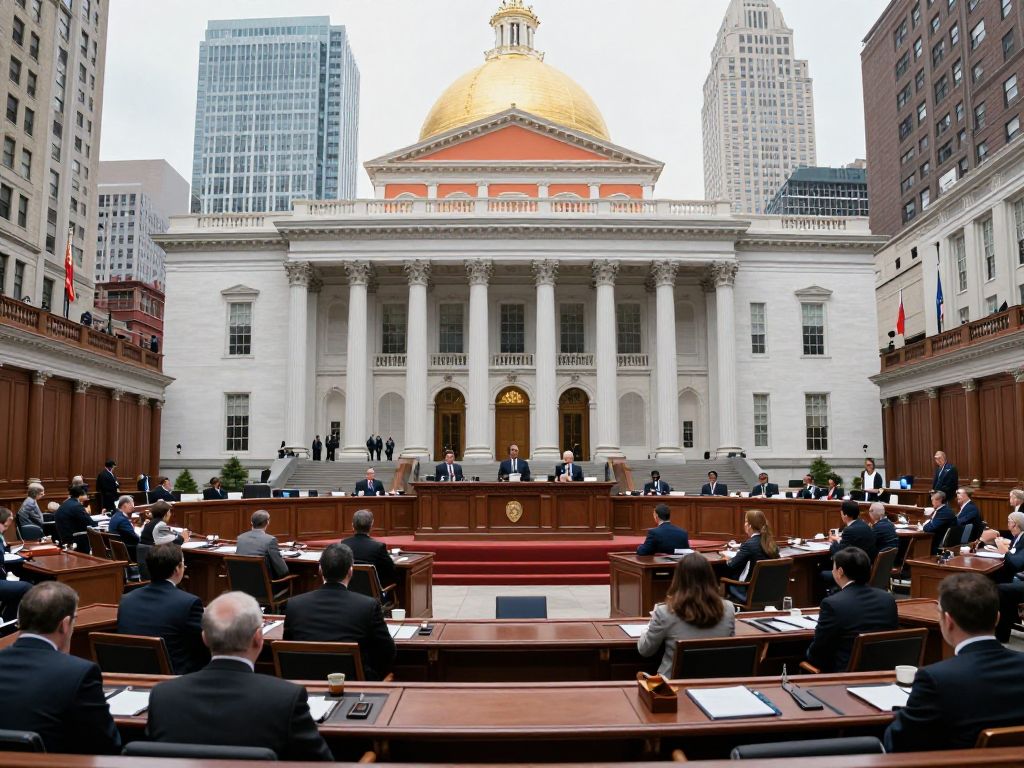
The political landscape is currently grappling with a persistent paradox: the gap between what voters claim they want in a leader and how they actually cast their ballots. For years, polling and public discourse have suggested a growing appetite for generational change, with a perceived need for younger candidates who can navigate a digital-first world and bring fresh perspectives to stagnant policy debates. However, when the stakes transition from theoretical polls to actual primary ballots, the preference for “fresh blood” often evaporates in favor of the perceived stability of incumbency.
This tension is vividly illustrated in the current Democratic primary for the U.S. Senate in Massachusetts. The contest has evolved into a high-stakes case study on the viability of generational change in American politics, pitting the seasoned experience of Senator Ed Markey against the challenge of Representative Seth Moulton. While the narrative of a “generational fight” has dominated headlines, the data suggests that voters may be more comfortable with a known quantity than a younger alternative, even when the age gap is significant.
For those of us analyzing global markets and economic policy, this trend is not merely a political curiosity. It reflects a broader risk-aversion strategy among electorates. In an era of extreme volatility—both economic and geopolitical—voters often prioritize “institutional memory” and proven legislative track records over the potential energy of youth. This dynamic creates a formidable barrier for younger aspirants, who find that the remarkably “freshness” they campaign on is viewed by the electorate as a lack of necessary seasoning.
The Incumbency Advantage and the Age Gap
The Massachusetts race highlights the steep climb facing younger challengers. Senator Ed Markey, now 79, maintains a commanding position in the race despite the clear efforts of his opponent to frame the contest as a choice between the past and the future. According to a Suffolk University/Boston Globe poll released in April 2026, Markey holds a 17-point lead over Representative Seth Moulton, with 47% of respondents supporting Markey compared to 30% for Moulton.
This disparity underscores a critical reality of primary politics: name recognition and a long-standing record of constituent service often outweigh the theoretical appeal of a younger candidate. For Markey, his longevity in Washington is not viewed by his base as a liability, but as an asset of expertise. For Moulton, the challenge is to convince voters that “generational change” is a tangible benefit rather than a vague aspiration.
This pattern is not isolated to the current cycle. Massachusetts has a historical tendency toward political stability, where candidates often “wait their turn” rather than attempting to disrupt the established hierarchy. The 2020 primary saw a similar dynamic when 39-year-old Rep. Joe Kennedy III challenged Markey. Despite Kennedy’s youth and family pedigree, Markey successfully fended off the challenge, proving that the “incumbency shield” is particularly strong in the Commonwealth.
Why Voters Hesitate to Choose Youth
The disconnect between voter rhetoric and action can be attributed to several psychological and structural factors. When polled, voters often express a desire for “new leadership” because they are frustrated with the status quo. However, the act of voting is an act of risk management. A younger candidate represents an unknown variable—a question of whether they possess the temperament, the network, and the legislative skill to be effective on day one.
In the case of the Markey-Moulton race, the “risk” of choosing a younger candidate is weighed against the “certainty” of an incumbent who has already navigated the complexities of the Senate. This creates a ceiling for candidates who run primarily on the platform of being “the next generation.” To break through, younger candidates must offer more than just a different birth year. they must present a specific, actionable policy shift that makes the risk of losing an experienced incumbent worth the trade-off.
the financial infrastructure of modern campaigns heavily favors incumbents. Sitting senators typically possess larger war chests and established donor networks, allowing them to dominate the airwaves and define their opponents before the opponents can define themselves. This financial moat makes it difficult for younger challengers to build the necessary visibility to move from “intriguing alternative” to “viable winner.”
The Broader Implications for Political Entrepreneurship
From an economic and policy perspective, the reluctance to embrace younger candidates can lead to a “stagnation of ideas.” When the barrier to entry for younger leaders is too high, the political class fails to evolve alongside the economy. We see this in the struggle to create cohesive policy around artificial intelligence, cryptocurrency, and the gig economy—areas where younger legislators often have a more intuitive grasp of the underlying mechanics.
The “generational gap” is not just about age, but about the ability to translate modern lived experiences into legislative action. If the electorate continues to prioritize longevity over adaptability, there is a risk that government policy will remain perpetually reactive rather than proactive. The Massachusetts primary serves as a reminder that while the public may voice a desire for change, the institutional machinery of voting is designed to preserve the existing order.
For young entrepreneurs and policy experts looking to enter the political arena, the lesson is clear: youth is not a primary qualification; it is a secondary attribute. The path to victory lies in demonstrating a level of competence and strategic networking that mimics the stability of an incumbent while offering a vision that the incumbent cannot provide.
Key Takeaways on the Generational Divide
- The Polling Paradox: Voters frequently express a desire for younger candidates in surveys, but consistently vote for experienced incumbents in actual elections.
- The Stability Premium: In times of volatility, voters treat “institutional memory” as a hedge against risk, favoring those with proven track records.
- The Incumbency Moat: Name recognition and established fundraising networks create a significant barrier for younger challengers, regardless of their policy platforms.
- The Competence Requirement: To succeed, younger candidates must move beyond the “generational change” narrative and provide specific, high-impact policy alternatives.
As the Massachusetts primary progresses, the focus will shift toward whether Representative Moulton can narrow the 17-point gap by pivoting from a narrative of age to a narrative of specific urgency. The final results will provide further insight into whether the American electorate is truly ready for a generational shift or if the preference for stability remains the dominant force in democratic selection.
The next critical checkpoint in this race will be the upcoming primary election date, where the final tally will determine if the “generational fight” resulted in a change of guard or a reaffirmation of the status quo. We will continue to monitor the polling shifts and campaign filings as the date approaches.
Do you believe age is a relevant factor in legislative effectiveness, or is experience the only true currency in Washington? Share your thoughts in the comments below and share this analysis with your network.