
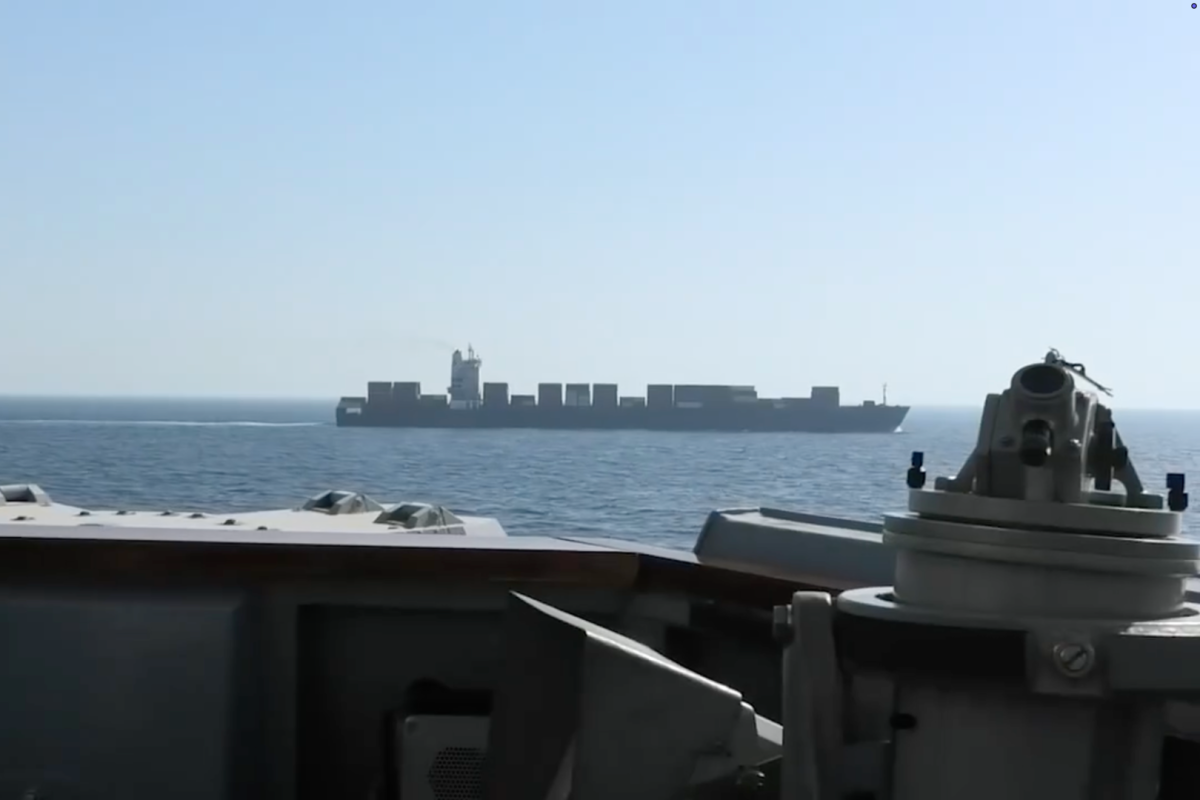
In recent developments surrounding maritime security and international sanctions, a Chinese Foreign Ministry spokesperson addressed speculation regarding a vessel seized by U.S. Forces near Iran’s coast. The comments came after claims emerged that the ship, identified as the Touska and flying the flag of Iran, may have been transporting materials linked to missile production from Chinese ports.
When questioned about whether the Touska was carrying rocket fuel precursors from China, Guo Jiakun, spokesperson for China’s Ministry of Foreign Affairs, stated: “As far as I know, it is a foreign-flagged container ship.” He further emphasized that China opposes any malicious association or exaggeration of the issue, according to reporting by Newsweek citing his remarks made on Tuesday.
The vessel in question was boarded by U.S. Marines on Sunday in the Gulf of Oman, near the Iranian port of Chabahar. U.S. Central Command has previously indicated that items such as metals, pipes, and electronic components—materials that could serve both industrial and military purposes—were among the types of goods under review during inspections of vessels suspected of violating sanctions.
Former U.S. Ambassador to the United Nations Nikki Haley had earlier asserted on social media that the Touska was “headed from China to Iran and is linked to chemical shipments for missiles,” describing it as “another reminder that China is helping prop up Iran’s regime.” Her comments followed initial assessments by security sources suggesting the ship might be carrying dual-use items after a voyage from Asia, though those sources did not specify the exact nature of the cargo.
Analysis of maritime tracking data has shown that vessels associated with Iran’s Islamic Republic of Iran Shipping Lines (IRISL) have made recent calls to Chinese ports. In 2019, U.S. Authorities began scrutinizing IRISL-linked ships for potential sanctions evasion, particularly in relation to the transport of goods that could support Iran’s missile and drone programs amid ongoing regional tensions.
The Touska’s movement has drawn attention due to the broader context of U.S. And Israeli military actions targeting Iranian military infrastructure. Reports from March 2026 indicated that two Iranian-owned cargo ships had departed a chemical-storage port in China amid heightened concerns over Iran’s access to propellant precursors following strikes on its facilities. Analysts noted that such damage could increase Tehran’s reliance on external supply chains for materials used in solid rocket fuels, and explosives.
Experts at institutions like the Atlantic Council’s GeoEconomics Center have described how China and Russia enable Iran to circumvent Western sanctions through what they term the “Axis of Evasion.” This network involves the use of shadow fleets, alternative payment systems, and the trade of dual-use technologies that allow sanctioned states to maintain critical supply chains despite restrictions. While neither Beijing nor Moscow has been accused of direct arms transfers to Iran in this conflict, their roles in facilitating trade and energy exchanges remain under scrutiny.
China has consistently maintained that it opposes the unilateral imposition of sanctions and advocates for diplomatic solutions to international disputes. Official statements have stressed that Beijing adheres to international law in its foreign trade activities and rejects characterizations of its cooperation with Iran as harmful or destabilizing.
As of now, no official confirmation has been provided by either U.S. Or Chinese authorities regarding the specific cargo aboard the Touska at the time of its seizure. The vessel’s current status, location, and any ensuing legal or diplomatic proceedings have not been publicly detailed in verified sources.
For ongoing updates on sanctions enforcement, maritime interdictions, and official statements from the U.S. Department of Defense or China’s Ministry of Foreign Affairs, readers are encouraged to consult those agencies’ official websites and verified press releases.
We invite our global audience to share perspectives and insights in the comments section below. If you found this report informative, please consider sharing it with others interested in international affairs and global trade dynamics.