
The global economy is entering a period of unprecedented upheaval, where traditional power structures are being challenged by new geopolitical alliances, technological revolutions, and shifting financial paradigms. As the liberal international order—built on post-World War II institutions, free trade, and democratic governance—faces growing strain, seven key “battlegrounds” are emerging where the future of economic governance will be decided. These arenas span from digital sovereignty and resource nationalism to the reconfiguration of supply chains and the rise of alternative financial systems. The stakes could not be higher: how these conflicts unfold will determine whether the world moves toward fragmentation, cooperation, or a new hybrid model.
Expert analysis from recent high-level forums, including discussions during Brazil’s Semana de Brasil and geopolitical dialogues led by figures like Mark Leonard of the European Council on Foreign Relations (ECFR), underscores that Brazil—long seen as a swing player in the Global South—is now positioning itself as a critical mediator in these transformations. Yet the broader dynamics are not confined to any single region. From the U.S.-China tech war to the reshaping of energy markets, these seven battlegrounds will shape economic policy, corporate strategy, and everyday life for decades to come.
What follows is a deep dive into the seven defining conflicts redefining global economics, their immediate drivers, and the long-term implications for businesses, governments, and citizens. This analysis is based on verified discussions from recent policy circles, official statements, and economic forecasts—with a focus on actionable insights for stakeholders navigating this volatile terrain.
The Seven Battlegrounds Redefining Global Economics
1. Digital Sovereignty: The Tech Cold War
The competition between the U.S., China, and emerging tech hubs like Brazil and India over control of digital infrastructure is perhaps the most immediate threat to the liberal economic order. The race to dominate artificial intelligence, cloud computing, and semiconductor manufacturing is not just about technological leadership—it’s about who sets the rules for data governance, cybersecurity, and cross-border commerce.

China’s push for self-reliance in semiconductors, coupled with its ECFR’s recent analysis on digital authoritarianism, highlights how tech policy is becoming a proxy for geopolitical influence. Meanwhile, the U.S. Is tightening export controls on advanced chips to China, while the EU’s Digital Services Act and AI Act signal a shift toward regulatory fragmentation. For businesses, this means navigating a patchwork of compliance requirements, supply chain disruptions, and the risk of being caught in crossfire between rival tech blocs.
Key question: Can emerging markets like Brazil—home to a burgeoning tech sector—avoid becoming collateral damage in this Cold War, or will they be forced to pick sides?
2. Resource Nationalism: The Scramble for Critical Minerals
The energy transition is accelerating the scramble for lithium, cobalt, and rare earth minerals, which are essential for electric vehicles, renewable energy infrastructure, and defense technologies. Unlike oil, these resources are concentrated in a handful of countries, creating new flashpoints for diplomatic tension and corporate strategy.
China dominates the supply chain for these minerals, controlling everything from mining to processing. But the U.S., EU, and Australia are racing to secure alternative sources, with the Biden administration’s Inflation Reduction Act offering subsidies to domestic producers. Meanwhile, Brazil—home to vast lithium reserves—is caught in the middle, balancing its traditional role as a commodity exporter with pressure to develop domestic processing capabilities.
For investors, this battleground presents both risk and opportunity: supply chain vulnerabilities could lead to shortages, but strategic partnerships with resource-rich nations could unlock long-term advantages.
3. Supply Chain Resilience vs. Globalization
The COVID-19 pandemic exposed the fragility of just-in-time supply chains, leading to a global rethink of how goods are produced and distributed. The result? A dual trend: deglobalization in critical sectors (e.g., pharmaceuticals, semiconductors) and the reshoring of manufacturing, alongside efforts to diversify supply chains away from single-source dependencies.
China’s Dual Circulation Strategy—which prioritizes self-sufficiency in key industries—has accelerated this shift, while the U.S. And EU are incentivizing domestic production through subsidies and tariffs. Brazil, with its agricultural and industrial strengths, is positioning itself as a hub for nearshoring, particularly for Latin American markets. However, the trade-off is higher costs for consumers and businesses, raising questions about whether the world can afford to abandon globalization entirely.
What’s next: Watch for new trade agreements that redefine regional blocs, such as the Comprehensive and Progressive Agreement for Trans-Pacific Partnership (CPTPP) and potential EU-Mercosur deals.
4. Financial Fragmentation: The Rise of Alternative Currencies
The dominance of the U.S. Dollar as the world’s reserve currency is under siege. Central bank digital currencies (CBDCs), crypto assets, and regional payment systems (like China’s Cross-Border Interbank Payment System) are challenging the dollar’s hegemony. Meanwhile, sanctions on Russia and Iran have accelerated the search for de-dollarization tools, from gold-backed trade to digital yuan experiments.
Brazil, as a major emerging economy, is at the forefront of this shift. Its central bank has explored CBDC pilots, while businesses are increasingly using local currencies to bypass dollar-denominated transactions. The IMF estimates that over 40% of global trade invoicing is now in currencies other than the dollar—a seismic shift with implications for inflation, capital flows, and monetary policy.
Watch this space: The next 12 months will be critical as the U.S. Federal Reserve’s monetary policy decisions could either stabilize or further destabilize the dollar’s role in global finance.
5. Labor and Migration: The Great Reallocation
Automation, AI, and demographic shifts are reshaping the global labor market. While advanced economies grapple with aging populations and skills shortages, emerging markets like Brazil and India are seeing a youth bulge that demands new opportunities. This mismatch is driving two parallel trends: mass migration of skilled workers to high-wage economies and automation-driven job displacement in traditional industries.
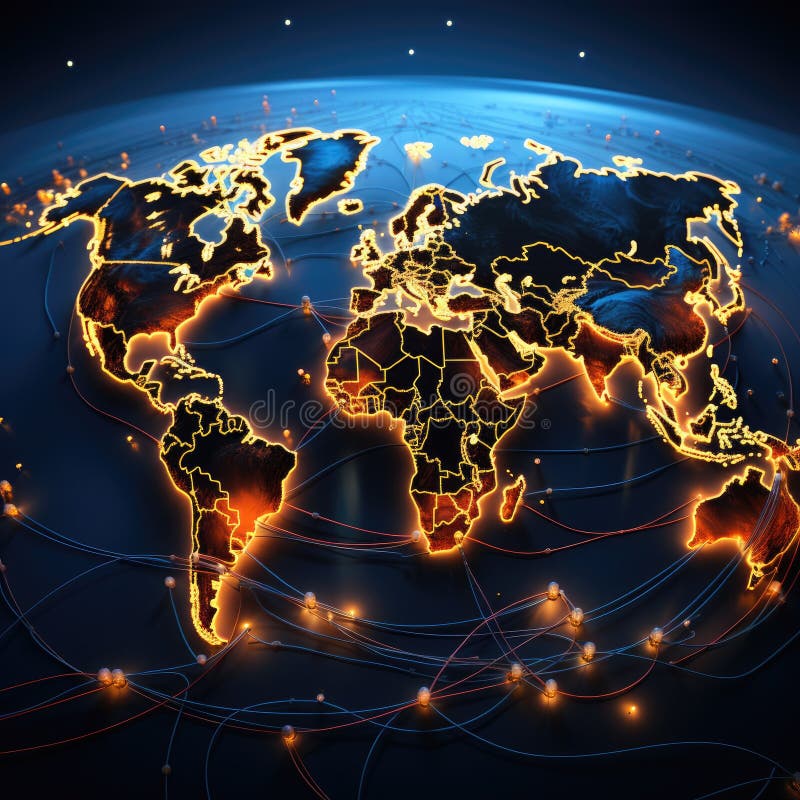
Governments are responding with mixed policies: the U.S. And Canada are expanding visa programs for tech workers, while Europe faces backlash against immigration. Meanwhile, Brazil’s Ministry of Labor is investing in vocational training to prepare workers for the green economy. The challenge? Ensuring that this reallocation doesn’t deepen inequality or spark social unrest.
Key takeaway: Companies operating in multiple regions must adapt to a fragmented labor market, where talent mobility is restricted in some countries while others face labor surpluses.
6. Climate and Energy: The Green Transition’s Geopolitical Fault Lines
The energy transition is not just an environmental issue—it’s a geopolitical battleground. The shift from fossil fuels to renewables is reshaping alliances, with China leading in solar and wind technology, the U.S. Betting on natural gas as a “bridge fuel,” and the EU pushing for carbon border taxes. Meanwhile, oil-producing nations like Saudi Arabia and Brazil (a major ethanol exporter) are scrambling to diversify their economies.
Brazil’s role is particularly fascinating. As the world’s largest exporter of ethanol, it stands to benefit from the global push for biofuels. However, its Amazon deforestation rates remain a contentious issue, with environmental groups and investors pressuring the government to balance economic growth with sustainability. The International Energy Agency’s latest report highlights how these tensions could derail climate goals if not managed carefully.
What’s at stake: The success of COP28 and subsequent climate summits will hinge on whether nations can align their energy policies with global decarbonization targets—or if protectionism and nationalism take precedence.
7. The Future of Democracy and Corporate Power
Finally, the battleground over the role of corporations in shaping economic policy is reaching a tipping point. On one side, activists and regulators are demanding greater accountability for tech giants, banks, and energy firms—accusing them of prioritizing profit over public good. On the other, governments are grappling with how to rein in corporate influence without stifling innovation.

Brazil’s Semana de Brasil discussions have highlighted this tension, with debates over data privacy laws, antitrust enforcement, and the role of financial institutions in climate finance. The ECFR’s recent work on democratic resilience suggests that the coming decade will see a clash between shareholder capitalism and stakeholder-driven governance, with implications for everything from executive pay to corporate tax policies.
Why it matters: The outcome of this battle will determine whether corporations remain the dominant force in economic policy—or if a new social contract emerges that prioritizes equity and sustainability.
Key Takeaways: Navigating the New Economic Landscape
- Digital sovereignty is the new currency of power—companies must prepare for a fragmented tech ecosystem where compliance and innovation go hand in hand.
- Resource nationalism will reshape supply chains, with Brazil and other commodity-rich nations holding the balance of power in the energy transition.
- Supply chain resilience is replacing globalization as the default strategy, but the cost of deglobalization could outweigh the benefits for some industries.
- Financial fragmentation is accelerating, with the dollar’s dominance under threat from CBDCs, crypto, and regional payment systems.
- Labor reallocation is inevitable—businesses must invest in upskilling and adapt to a world where talent mobility is increasingly restricted.
- Climate policy will define the next geopolitical order, with Brazil’s role in biofuels and sustainable agriculture becoming ever more critical.
- Corporate accountability is no longer optional—regulators and investors are demanding transparency, ESG compliance, and long-term sustainability.
What Happens Next?
The next critical checkpoint for these economic battlegrounds will be the G20 Summit in Rio de Janeiro in late 2026, where leaders will grapple with the fallout from the U.S. Presidential election, China’s economic slowdown, and the ongoing Ukraine war. Watch for:
- New agreements on critical mineral supply chains, potentially involving Brazil as a key player.
- Progress—or stalemate—on global carbon pricing and climate finance commitments.
- Updates on digital trade rules, including whether the EU and U.S. Can align their approaches to AI and data governance.
- Announcements on CBDC pilots and whether central banks will accelerate or delay their rollouts.
For businesses, the message is clear: the old playbook is obsolete. Success in this new era will require agility, foresight, and a willingness to engage with the geopolitical realities reshaping the global economy.
Your turn: How do you see these battlegrounds impacting your industry? Share your insights in the comments below, and don’t forget to follow World Today Journal for ongoing coverage of these developments.
Worth a look