
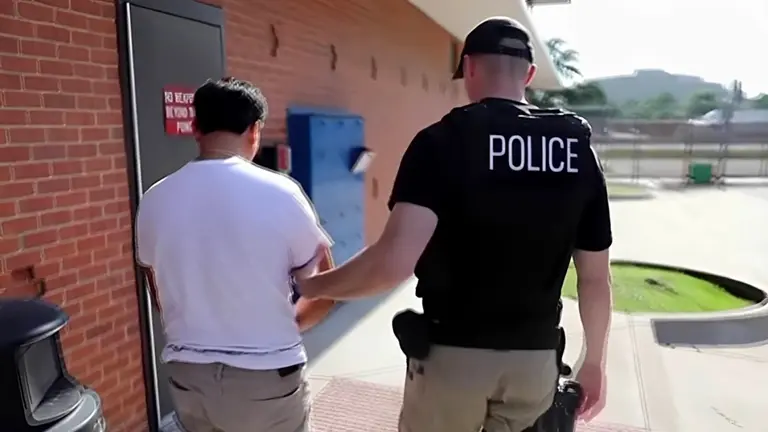
As Texas approaches a critical legal deadline, a cloud of uncertainty hangs over immigrant communities across the Lone Star State. For years, the responsibility of enforcing immigration laws has rested almost exclusively with the federal government, but a contentious state law known as Senate Bill 4 (SB4) threatens to fundamentally shift that power dynamic, potentially deputizing local police officers as immigration agents.
The tension is palpable in cities from El Paso to Dallas, where advocates and residents fear that the imminent implementation of the law could lead to a surge in arrests and a breakdown in trust between local law enforcement and the people they serve. At the heart of the conflict is a bold attempt by the state of Texas to criminalize illegal entry, a move that critics argue is not only unconstitutional but a dangerous overreach of state authority.
With the potential for the law to take effect on May 15, the legal battle has reached a fever pitch. The outcome will likely determine whether a state can independently enforce federal immigration mandates or if the U.S. Government maintains sole jurisdiction over the nation’s borders. For the millions of undocumented individuals living in Texas, the stakes are not merely legal—they are deeply personal, involving the threat of separation from families and the loss of basic stability.
The Mechanics of Texas SB4: A Shift in Enforcement
Senate Bill 4 represents a significant departure from traditional U.S. Immigration enforcement. Historically, the U.S. Immigration and Customs Enforcement (ICE) and Customs and Border Protection (CBP) have handled the detection and removal of individuals entering the country without legal authorization. SB4 seeks to change this by making it a state crime to enter Texas illegally.
Under the provisions of Senate Bill 4, the act of crossing the border into Texas without authorization is classified as a misdemeanor. This allows any law enforcement officer—including local police and county sheriffs—to arrest individuals suspected of illegal entry. This “state-level” enforcement means that officers who have no formal immigration training could potentially perform arrests and conduct interrogations regarding a person’s citizenship status.
The law is particularly controversial because it allows for arrests based on “reasonable suspicion” that a person has entered the country illegally. This creates a legal gray area where individuals could be detained even if they have not committed any other crime, simply because an officer believes they crossed the border illegally. Legal experts argue this could lead to racial profiling and the detention of legal residents or citizens who cannot immediately provide documentation.
The Legal Tug-of-War: State vs. Federal Authority
The battle over SB4 is essentially a clash of legal philosophies regarding “preemption.” In U.S. Law, the doctrine of preemption suggests that when federal and state laws conflict, the federal law takes precedence—especially in areas of national concern like foreign policy and immigration.
The U.S. Department of Justice (DOJ) has consistently argued that SB4 is preempted by federal law. The federal government maintains that the power to regulate the entry and exit of non-citizens is an exclusive federal prerogative. By creating its own state-level crime for illegal entry, Texas is seen by the DOJ as infringing upon the executive branch’s ability to manage national borders and conduct diplomatic relations with neighboring countries.
Conversely, Texas officials have argued that the federal government has failed in its duty to secure the border, leaving the state to deal with the resulting social and economic pressures. From the state’s perspective, SB4 is a necessary tool for self-defense and public safety. The state contends that it has the right to protect its territory and citizens when the federal response is deemed insufficient.
The American Civil Liberties Union (ACLU) and other human rights organizations have joined the legal fray, filing challenges to block the law’s implementation. They argue that SB4 violates the Fourth and Fourteenth Amendments of the U.S. Constitution, specifically regarding due process and protection against unreasonable searches and seizures.
The Human Cost and Community Impact
Beyond the courtroom, the potential enforcement of SB4 is creating a “chilling effect” across Texas communities. When local police are perceived as immigration agents, the relationship between the community and the state fractures. This often results in undocumented immigrants avoiding essential services, including healthcare, education, and emergency police assistance.
In cities like Fort Worth and Dallas, community leaders have expressed grave concerns that victims of domestic violence or witnesses to serious crimes will stop reporting these incidents to the police for fear that a routine interaction could lead to an immigration arrest. This paradox creates a public safety risk for everyone, as criminals may feel emboldened to target vulnerable populations who are too afraid to seek help from the authorities.
Local governments have been caught in the middle. Some jurisdictions have historically designated themselves as “sanctuary cities,” pledging not to use local resources for federal immigration enforcement. However, SB4 complicates this stance; if the arrest is for a state crime (the SB4 misdemeanor) rather than a federal immigration violation, the legal protections offered by sanctuary policies may be rendered moot.
Key Takeaways: Understanding SB4
- State-Level Crime: SB4 makes illegal entry into Texas a state misdemeanor, not just a federal civil violation.
- Local Empowerment: The law allows local police and sheriffs to arrest individuals suspected of entering the country illegally.
- Federal Conflict: The U.S. Department of Justice argues the law is unconstitutional because immigration is a federal responsibility.
- Community Risk: Advocates warn of increased racial profiling and a decrease in the reporting of crimes by immigrant populations.
- Current Status: The law faces ongoing challenges in the court system, with critical deadlines regarding its implementation.
What In other words for Immigrants in Texas
For those currently residing in Texas without legal status, the implementation of SB4 introduces a new layer of risk. While ICE arrests have always been a concern, the possibility of being detained during a routine traffic stop or a neighborhood encounter with local police increases the likelihood of detection and detention.

Legal advocates recommend that individuals in these communities keep a “know your rights” card and have a designated emergency contact or legal representative available. Understanding that the law allows for detention based on “suspicion” means that the burden of proof in the initial stages of an encounter may feel shifted, making it essential to seek legal counsel immediately upon any detention.
the distinction between a civil immigration violation and a criminal state charge is critical. A conviction under SB4 could result in a criminal record in the state of Texas, which could complicate future attempts to seek legal residency or asylum, adding a permanent legal hurdle to an already precarious situation.
The Global Context of Border Securitization
The struggle in Texas is not an isolated event but part of a global trend toward the “securitization” of borders. Across Europe and the Americas, we are seeing an increase in the use of paramilitary forces and the criminalization of migration to deter movement. From the Mediterranean to the Rio Grande, the shift toward treating migration as a security threat rather than a humanitarian or administrative challenge is becoming more pronounced.
From a geopolitical perspective, Texas’s attempt to act as a sovereign entity in border enforcement challenges the traditional notion of the nation-state. If a sub-national entity (a state or province) successfully implements its own immigration laws, it could set a precedent for other regions globally to bypass national governments, leading to a fragmented and inconsistent approach to human migration.
The international community, including human rights monitors, continues to watch the Texas situation closely. The outcome will serve as a bellwether for how democratic societies balance the desire for border security with the fundamental human rights of migrants and the legal structure of federalist governments.
Looking Ahead: The Next Checkpoints
The immediate focus remains on the court rulings that could either stay or allow the implementation of SB4. Legal observers are closely monitoring the U.S. Court of Appeals for the Fifth Circuit and the potential for the U.S. Supreme Court to intervene. The next critical window is the period leading up to May 15, where a final injunction could either block the law or leave the door open for local police to begin arrests.
As the legal deadlines approach, community organizations and legal aid clinics are ramping up their outreach to ensure that vulnerable populations are informed of their rights and have access to legal representation. The coming weeks will determine whether Texas enters a new era of state-led immigration enforcement or whether the federal government successfully maintains its sole authority over the border.
We want to hear from you. Do you believe state-level immigration enforcement improves security or undermines the rule of law? Share your thoughts in the comments below and share this article to keep others informed.