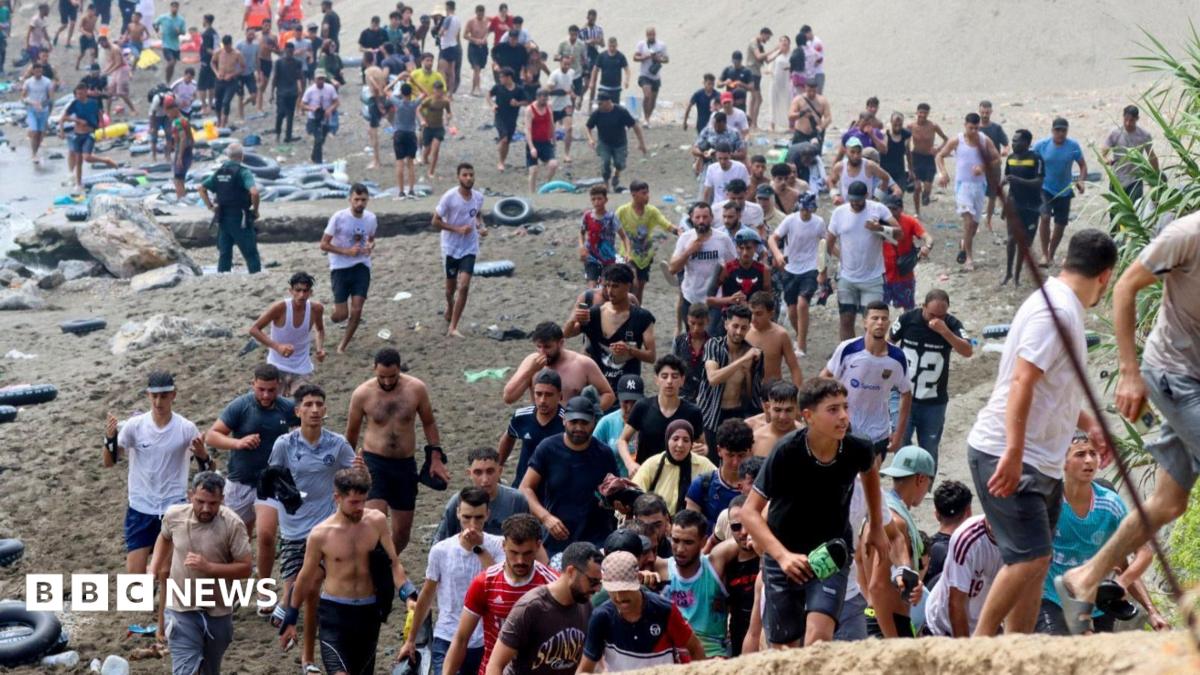
An unprecedented surge of approximately 60,000 migrants crossed into the Spanish North African enclave of Ceuta in a single 24-hour period, according to local authorities. The staggering influx equates to more than 70 percent of the city’s total permanent population of roughly 83,600 residents, testing the capacity of local emergency services and prompting an immediate response from the central government in Madrid.
The sudden mass arrival overwhelmed border surveillance infrastructure along the frontier with Morocco, creating severe logistical and humanitarian challenges for regional officials. Spanish authorities deployed police and military units to manage the unprecedented crowds, while humanitarian organizations mobilized emergency shelters, food, and medical supplies to accommodate the new arrivals.
Geopolitically, the mass crossing highlights the complex migration dynamics at Europe’s southern land borders. Ceuta, alongside Melilla, represents the only physical land boundary between the European Union and the African continent, making both enclaves frequent focal points for migration pressures and diplomatic tensions between Spain and Morocco.
Emergency Response and Humanitarian Aid in Ceuta
Local authorities in Ceuta activated emergency protocols immediately as thousands of individuals continued to arrive along the coastline and land borders. According to reports from the British Broadcasting Corporation, rescue teams and security forces worked around the clock to process arrivals and provide immediate assistance to vulnerable individuals, including families and minors.
The local health system faced acute strain as medical personnel treated hundreds of people for exhaustion, hypothermia, and minor injuries sustained during the crossing. Emergency accommodation centers quickly reached maximum capacity, leading authorities to establish temporary shelters in local sports complexes and exhibition halls to house the influx safely.
Central government officials in Madrid coordinated closely with regional leaders to streamline the transfer of migrants to the Spanish mainland as processing facilities in Ceuta reached their operational limits. Transport vessels and aircraft were deployed to facilitate orderly transfers while maintaining public health and security standards.
Diplomatic and Political Repercussions
The mass migration event triggered high-level diplomatic consultations between Madrid and Rabat. Spanish Prime Minister Pedro Sánchez described the situation as a serious crisis for Spain and for Europe as a whole, emphasizing the need for robust bilateral cooperation to manage border security and address the root causes of irregular migration.
According to analysis published by Reuters, European Union officials expressed solidarity with Spain, reiterating that the external borders of member states require coordinated European support and resources during large-scale emergency situations. Brussels pledged technical and financial assistance to help alleviate the pressure on local municipal services in Ceuta.
Human Rights organizations monitoring the situation called for adherence to international asylum standards and proper individual evaluations for all arrivals, emphasizing the legal obligations of European states to protect vulnerable populations while managing border security efficiently.
Next Steps and Official Updates
Spanish interior ministry officials announced that border reinforcement measures would remain in place indefinitely while bilateral talks with Moroccan counterparts continue. Authorities plan to release updated processing figures and logistical assessments as mainland transfers proceed over the coming days.
Residents and observers seeking official updates can monitor announcements released through the Spanish Government’s official portal or local municipal briefings issued by the Ciudad Autónoma de Ceuta. Official channels will continue to provide verified data regarding border operations, humanitarian aid distribution, and repatriation or asylum proceedings.
Worth a look