
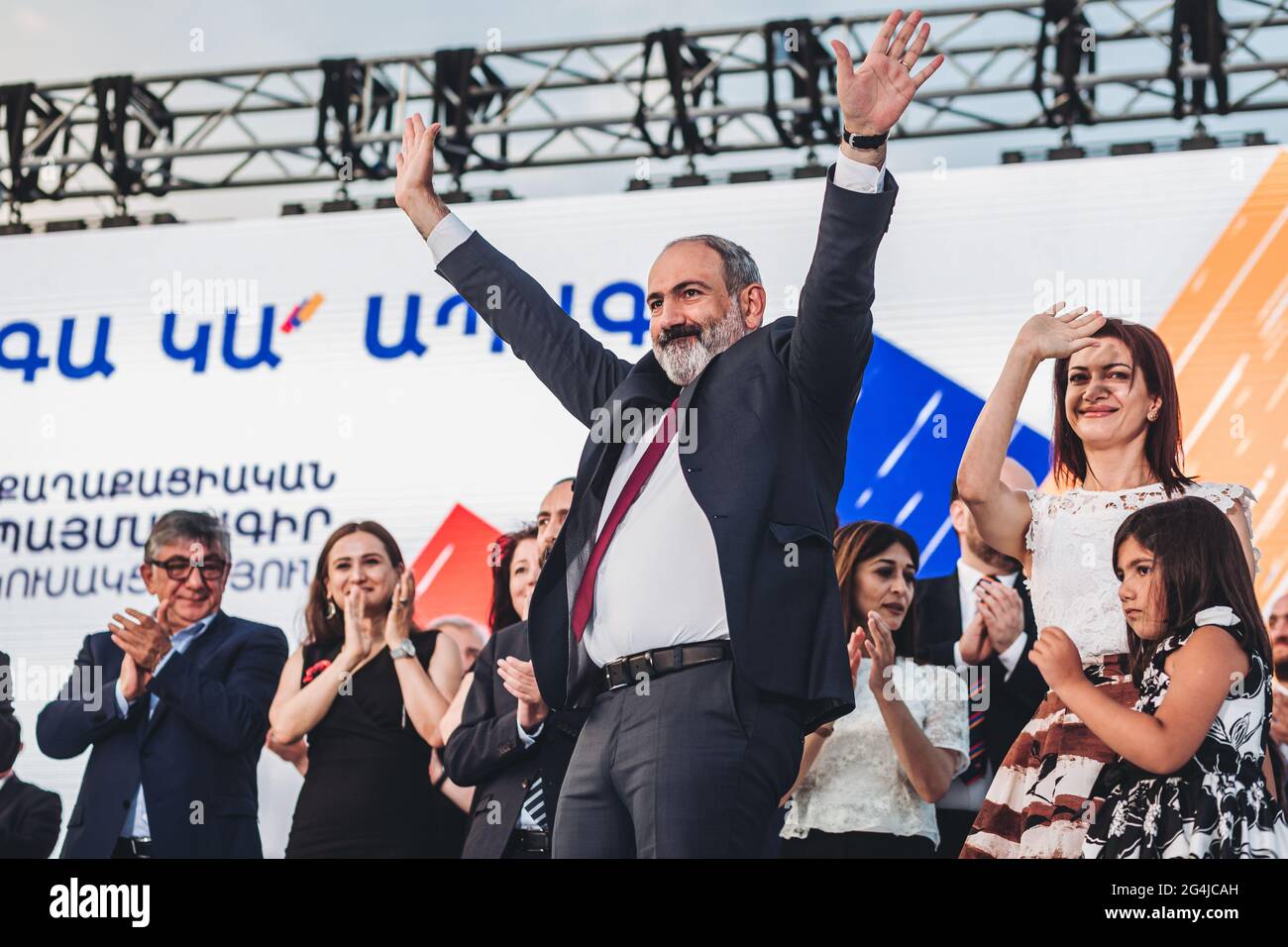
Armenian Prime Minister Nikol Pashinyan has declared a “historic victory” for his Civil Contract party following parliamentary elections, securing a decisive mandate to continue his governance. According to official results published by the Central Electoral Commission of Armenia, the incumbent party maintained its parliamentary majority, effectively distancing its political platform from the opposition alliance led by former President Robert Kocharyan, who ran under the “Armenia” bloc banner.
The election, held on June 20, 2021, served as a critical test for Pashinyan’s administration, which had faced significant public pressure following the 2020 Nagorno-Karabakh war. The Central Electoral Commission of Armenia confirmed that Civil Contract received approximately 53.9% of the vote, while the Armenia alliance secured roughly 21%.
Understanding the Electoral Outcome
The 2021 snap elections were initiated by Pashinyan to resolve a domestic political crisis that had simmered for months. By seeking a fresh mandate from the electorate, the Prime Minister aimed to stabilize the country’s political institutions. The results, as verified by the OSCE Office for Democratic Institutions and Human Rights (ODIHR), confirmed that the Civil Contract party would hold a comfortable majority in the National Assembly, allowing for the formation of a new government without the need for a coalition.
Observers noted that the campaign period was marked by sharp rhetoric, reflecting the deep polarization within Armenian society. Despite the intense nature of the political discourse, international monitors noted that the process allowed voters to express their choice in a competitive environment. The Armenia alliance, headed by Robert Kocharyan, challenged the results in the Constitutional Court, though the court ultimately upheld the election outcome in July 2021, as documented by the Constitutional Court of the Republic of Armenia.
Political Landscape and Future Governance
Pashinyan’s victory signals a continuation of his reformist agenda, although his administration faces daunting challenges, including national security concerns and economic recovery efforts in the wake of the pandemic and the post-war regional shift. The Prime Minister’s focus, as stated in his public addresses following the vote, remains on strengthening state institutions and navigating the complex geopolitical realities of the South Caucasus.
The opposition, led by former President Kocharyan, remains a vocal presence in the National Assembly. Their platform during the campaign emphasized national security and a critique of the government’s handling of the 2020 conflict. With the election results finalized and legal challenges resolved, the focus for the Armenian political leadership has shifted toward legislative priorities and the management of domestic social programs.
Impact on Regional Stability
The election result has implications that extend beyond Armenia’s borders, particularly regarding its diplomatic relations with neighboring countries. Analysts from the Carnegie Europe think tank have highlighted that the stability of the Armenian government is a key factor in the broader regional effort to maintain the ceasefire agreements established in November 2020. The government’s ability to maintain a clear mandate is expected to influence upcoming diplomatic negotiations concerning borders and economic corridors in the region.
As the government moves forward, it must balance the demands of a public seeking economic improvements with the constraints of an evolving regional security architecture. The international community, including the European Union and the United States, has monitored the situation closely, emphasizing the importance of democratic processes in maintaining long-term stability in the region.
The next major checkpoint for the administration involves the ongoing implementation of the government’s five-year program, which was presented to the National Assembly following the formation of the new cabinet. We will continue to track legislative developments and policy shifts as they occur. Please share your thoughts or questions in the comments section below.
Related reading