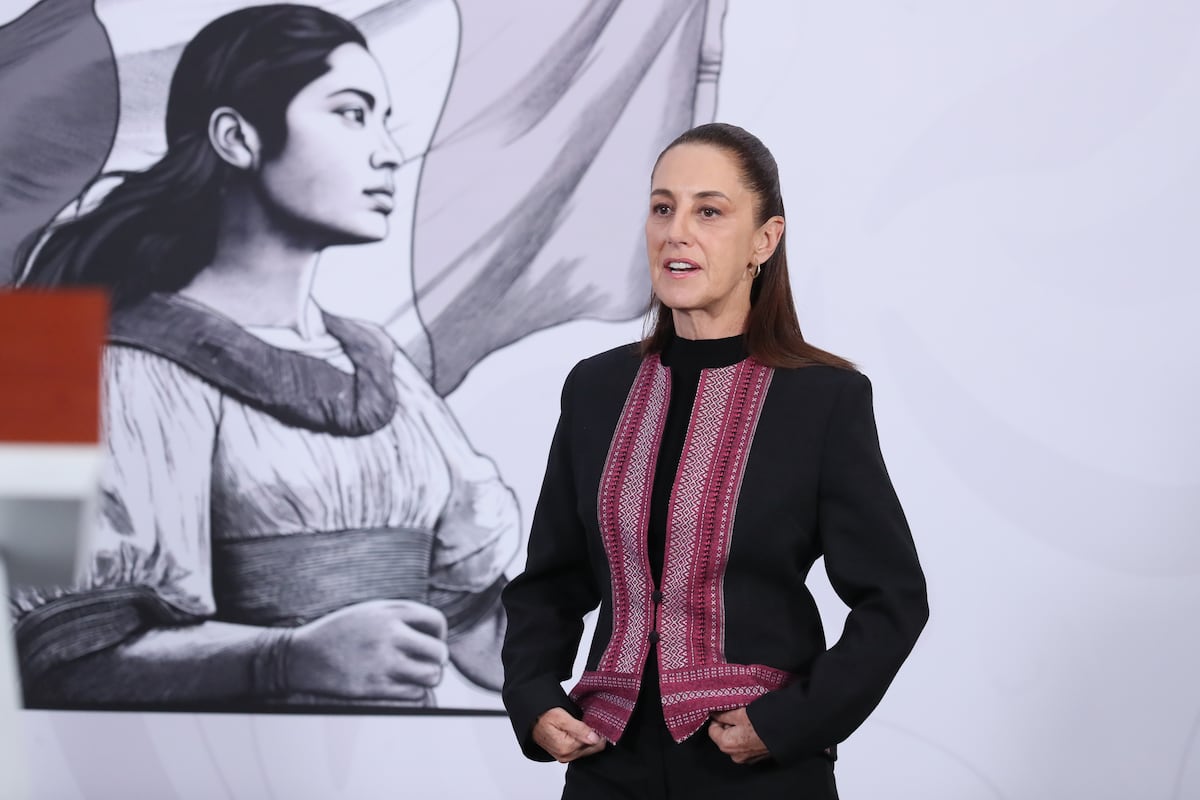
Mexican President Claudia Sheinbaum arrived in Barcelona on Thursday evening ahead of a series of bilateral meetings scheduled for Saturday with Spanish Prime Minister Pedro Sánchez, Brazilian President Luiz Inácio Lula da Silva, Colombian President Gustavo Petro, and Uruguayan President Yamandú Orsi. The visit marks the first official trip to Spain by a Mexican president since Enrique Peña Nieto’s administration in 2018.
Sheinbaum confirmed the meetings during her daily press conference in Mexico City, stating that the discussions would focus on strengthening democratic cooperation among progressive leaders. She emphasized that the gathering is not intended as a counterpoint to U.S. President Donald Trump’s policies, but rather as a dialogue centered on peace and multilateral engagement.
The visit is framed around the Global Progressive Mobilisation forum in Barcelona, an event bringing together leaders from across the world to discuss democratic resilience and international cooperation. Sheinbaum is set to participate in the forum’s head-of-state session on Saturday before holding her bilateral talks.
Following the forum, Sheinbaum will visit the Barcelona Supercomputing Center (BSC) on Sunday, where Mexico has an ongoing joint project to develop a supercomputer for national scientific and technological advancement. The BSC collaboration represents one of the key technological partnerships between Mexico and European research institutions.
Her itinerary includes a commercial flight to Spain on Thursday night and a return flight on Sunday, April 19, 2026. No official state visit ceremonies are planned, reflecting the working nature of the trip focused on policy dialogue and institutional engagement.
The renewal of high-level contact between Mexico and Spain comes after a period of diplomatic strain, which Sheinbaum has described as needing a “moment” to reset dialogue. Her administration has sought to reengage with traditional European partners while maintaining autonomy in foreign policy decisions.
Progressive leaders attending the Barcelona forum have increasingly positioned themselves as advocates for democratic norms in response to rising authoritarian tendencies globally. The meetings underscore efforts to build consensus on issues such as electoral integrity, human rights, and climate cooperation outside traditional multilateral frameworks that have faced gridlock.
While the specific agendas of the bilateral talks have not been disclosed, officials from participating nations have indicated that discussions will include regional security, trade coordination, and joint initiatives in science and technology. The Mexico-Spain relationship, in particular, is expected to address cultural exchange programs and educational partnerships that had slowed in recent years.
Sheinbaum’s engagement with Lula, Petro, and Orsi reflects broader alignment among left-leaning governments in Latin America on multilateralism and South-South cooperation. These leaders have frequently collaborated on regional initiatives through forums such as the Community of Latin American and Caribbean States (CELAC) and the Puebla Group.
The Uruguayan president, Yamandú Orsi, assumed office in March 2026 after a competitive election, marking a return to Broad Front leadership in Montevideo. His participation in the Barcelona talks highlights Uruguay’s renewed focus on international dialogue under his administration.
Colombia’s Gustavo Petro, who has pursued peace negotiations with armed groups and economic reforms focused on inequality, continues to advocate for a new global financial architecture that addresses the needs of developing nations. His meeting with Sheinbaum may touch on shared concerns about debt sustainability and climate financing.
Brazil’s Lula, serving his third non-consecutive term, has emphasized revitalizing Brazil’s role in global governance, particularly through BRICS and G20 platforms. His dialogue with Sheinbaum could explore coordination on Amazon preservation initiatives and sustainable development goals.
Spain’s Pedro Sánchez, leading a coalition government, has prioritized democratic defense and European strategic autonomy in his foreign policy. The meeting with Sheinbaum offers an opportunity to align on shared values regarding institutional resilience and rule of law, particularly in the face of external pressures on democratic systems.
The visit does not include stops in other European capitals, indicating a focused effort on the Barcelona forum and its associated bilateral engagements. No meetings with representatives of the European Commission or Council President António Costa were confirmed in Sheinbaum’s public remarks, though she expressed interest in engaging with EU leadership during the trip.
Security for the visit is being coordinated between Spanish authorities and Mexican diplomatic personnel, with no public disruptions reported during her arrival. Protests related to her policies have occurred in Mexico but have not accompanied her international travel in recent months.
As Sheinbaum prepares for her engagements in Barcelona, the trip stands as a symbolic renewal of Mexico’s diplomatic outreach to Europe after nearly a decade without a presidential-level visit to Spain. It reflects a broader strategy of diversifying international partnerships while navigating a complex global environment marked by geopolitical tensions and shifting alliances.
The outcome of the bilateral talks is expected to inform future cooperation frameworks, particularly in areas where Mexico seeks technological collaboration and investment. Official readouts of the meetings are anticipated following their conclusion on Saturday.
For ongoing updates on the visit and related developments, readers can refer to official communications from the Mexican Presidency and the Spanish Ministry of Foreign Affairs.
We encourage our readers to share their perspectives on this diplomatic engagement in the comments section and to share this article across social platforms to foster informed discussion.
Keep reading