
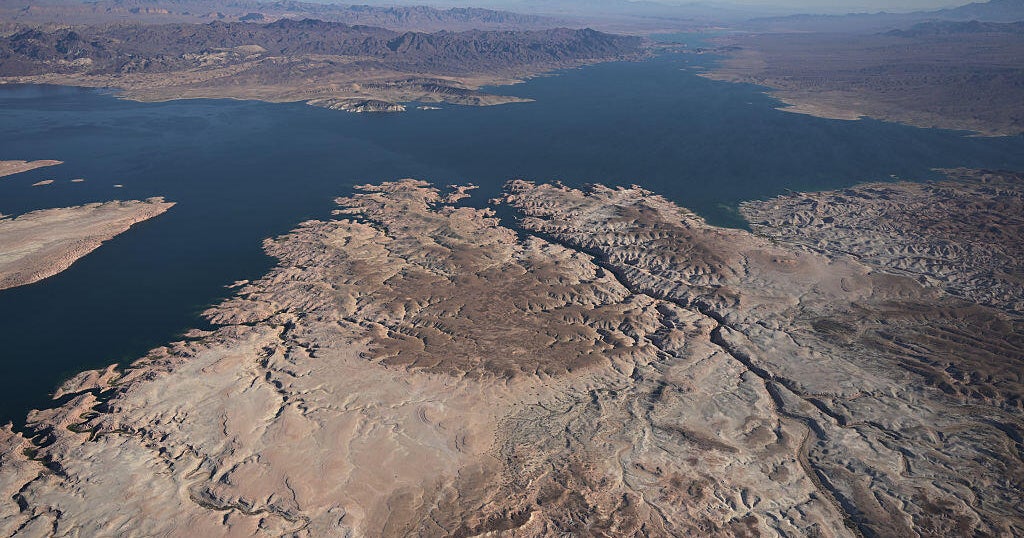
The United States government is moving toward a significant restructuring of water distribution for the Colorado River, a plan that could slash supplies to Arizona, California, and Nevada by as much as 40 percent. The proposed measures come as the waterway’s reservoirs continue to decline to critically low levels, threatening the stability of water security for millions in the American West.
Under the proposed 10-year framework, the annual volume of water delivered to the three lower-basin states could be reduced by up to 3 million acre-feet. This reduction is being framed as a necessary response to the ongoing drought and the systemic overuse of the river’s resources. The plan, which is expected to be finalized in June, would incorporate a mechanism to evaluate these water reductions every two years to account for changing environmental conditions.
The scale of the potential shortage is immense. According to Tom Buschatzke, the director of the Arizona Department of Water Resources, a reduction of 3 million acre-feet is equivalent to the amount of water required to supply between 6 million and 9 million households for a single year. This volume alone exceeds the total number of homes in both Arizona and Nevada combined.
A Critical Pivot in Western Water Management
The Colorado River is a vital lifeline for the American West, supplying water to approximately 40 million people. The proposed federal intervention follows a period in which the seven states drawing water from the drought-stricken river failed to reach a formal agreement on how to manage the dwindling supply.
The proposed federal plan is expected to be implemented either through existing Colorado River law or via new agreements negotiated among the states. Officials have indicated that any cuts across the three lower-basin states—Arizona, California, and Nevada—will be determined by the “priority of the law of the river.”
This legal framework refers to the 1922 Colorado River Compact, a foundational piece of water law that dictates how the river’s resources are shared. Under the terms of this compact, California maintains the highest priority for water use, a factor that will heavily influence how any mandated reductions are distributed among the competing states.
Impact on Arizona and the Central Arizona Project
For Arizona, the implications of the federal proposal are particularly acute. During a recent state meeting, Buschatzke described the proposed cuts as “sobering,” highlighting the potential for extreme scarcity in the state’s water infrastructure.
A primary concern for regional planners is the Central Arizona Project (CAP), a massive canal system designed to transport Colorado River water to the central and southern portions of the state. Buschatzke warned that the federal plan could potentially lead to water flows on the CAP “going to zero.”
The prospect of the CAP running dry represents a significant threat to the agricultural and urban sectors of Arizona, which rely heavily on the canal for consistent water access. The potential for such a total stoppage underscores the severity of the crisis currently facing the Colorado River basin.
Key Statistics of the Proposed Water Reductions
- Potential Supply Cut: Up to 40% for Arizona, California, and Nevada.
- Annual Volume Reduction: Up to 3 million acre-feet.
- Household Impact: Equivalent to 6 million to 9 million households for one year.
- Affected Population: Approximately 40 million people in the American West.
- Review Cycle: Water reductions to be evaluated every two years.
Understanding the Scale of the Crisis
To grasp the magnitude of the proposed 3 million acre-feet reduction, it is helpful to view it through the lens of domestic consumption. In many parts of the American West, water management is a delicate balance between municipal needs, industrial requirements, and agricultural stability. A loss of this magnitude could disrupt that balance entirely.
The fact that the reduction could impact more households than exist in Arizona and Nevada combined suggests that the plan is not merely a minor adjustment, but a fundamental shift in how the region must live with its water scarcity. As the reservoirs reach critically low levels, the federal government is prioritizing long-term sustainability over current consumption patterns.
| Metric | Details |
|---|---|
| Primary Target States | Arizona, California, Nevada |
| Proposed Annual Cut | Up to 3 million acre-feet |
| Maximum Supply Reduction | Up to 40% |
| Estimated Household Equivalent | 6 million to 9 million homes |
Frequently Asked Questions
Which states are most affected by the proposed Colorado River cuts?
The proposed federal plan specifically targets the three lower-basin states: Arizona, California, and Nevada. These states are expected to face cuts of up to 40% of their current supplies.

What is the “law of the river”?
The “law of the river” refers to the legal framework established by the 1922 Colorado River Compact. This compact dictates the priority of water use, notably granting California the highest priority for its water allocations.
When will the new water-sharing plan be finalized?
The US government is expected to finalize the 10-year plan in June.
How often will the water cuts be reviewed?
Under the proposed plan, the reductions in water delivery will be evaluated every two years to ensure they are responding accurately to the river’s conditions.
The next major development in this crisis will be the finalization of the federal plan, which is scheduled for June. This will provide the specific legal and operational roadmap for how the lower-basin states will manage the impending reductions.
What are your thoughts on the federal government’s approach to the Colorado River crisis? Should water priority be strictly based on historical compacts, or do we need a new legal framework? Share your views in the comments below and share this report with your network.