Signs of life on Mars and a Visitor From Beyond: what You Need to Know
The search for life beyond Earth is one of humanity’s most compelling endeavors. Recently,exciting developments have emerged from NASA,suggesting we may be closer than ever to uncovering evidence of past life on Mars.together, astronomers are intensely studying an interstellar comet, 3I/ATLAS, that’s currently journeying through our solar system. Let’s break down both of these engaging stories.
The Most Promising Martian Clues Yet
For years, missions to Mars have been diligently searching for ancient biosignatures – indicators of past microbial life. Now, NASA scientists believe they’ve found the clearest sign yet within samples collected by the Perseverance rover in Jezero Crater.
What makes this revelation so meaningful? The evidence centers around the detection of molecules associated with organic material in a region once teeming with water. While organic molecules aren’t proof of life (they can form through non-biological processes), their presence in this specific geological context is incredibly encouraging.
Here’s what you should understand:
* Jezero Crater was once a lake: This ancient lake environment would have been potentially habitable for microbial life.
* The rover found complex organic molecules: These aren’t simple compounds; they’re building blocks potentially linked to biological processes.
* Further analysis is crucial: Scientists are now meticulously analyzing the samples to rule out non-biological origins and confirm the findings.
This isn’t a definitive “we’ve found life” announcement, but it represents a major leap forward in our understanding of Mars’ potential to have once harbored life. You can expect continued updates as the investigation progresses.
An Interstellar Comet Captures Our attention
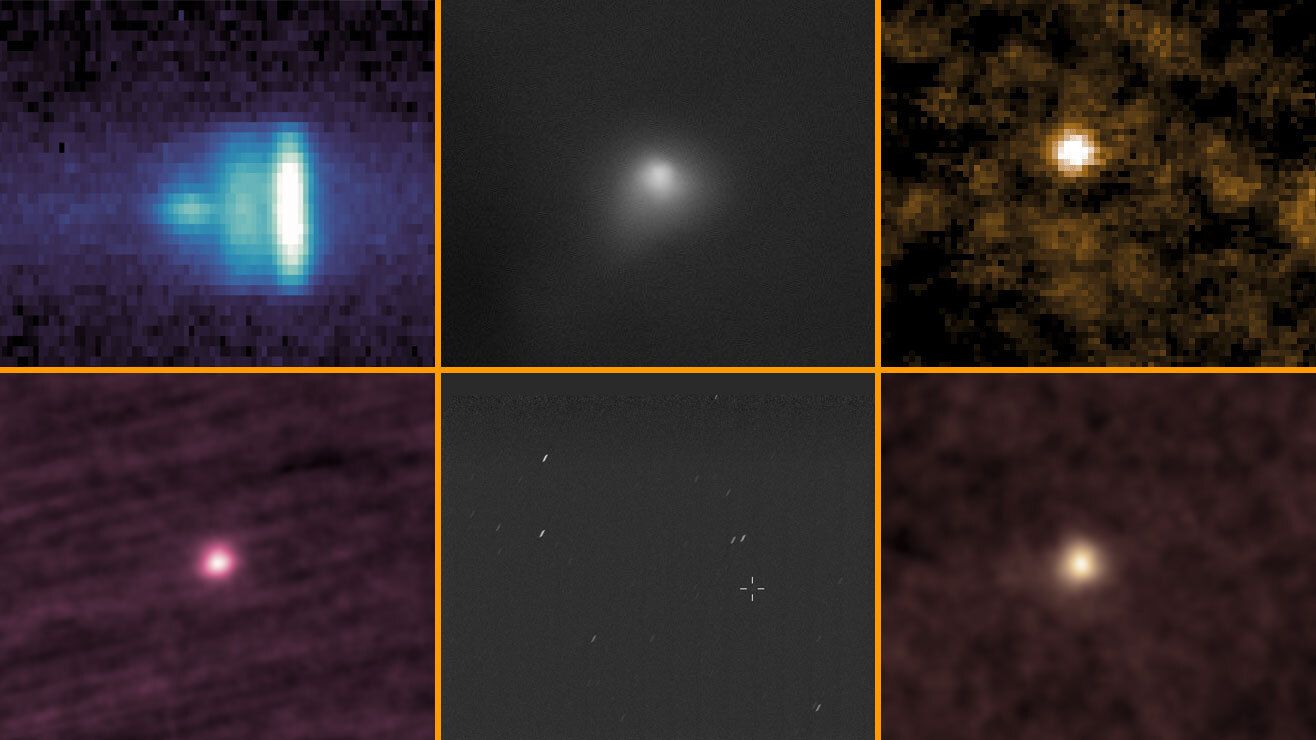
While searching for signs of past life on Mars, we’re also observing a visitor from another star system. Comet 3I/ATLAS, discovered in July, has sparked considerable interest – and even some speculation.
Initially, some theorized that 3I/ATLAS could be an alien spacecraft. However, the overwhelming consensus among astronomers is that it’s a natural comet originating from outside our solar system. NASA has been keen to emphasize this point, presenting detailed images and data during a recent public stream.
Here’s what makes this comet special:
* It’s interstellar: This means it didn’t form within our solar system, but originated from another star.
* It’s a natural phenomenon: Despite initial speculation,all evidence points to it being a typical comet,albeit one with an unusual origin.
* It offers a glimpse into other star systems: Studying 3I/ATLAS provides valuable insights into the composition and conditions of planetary systems beyond our own.
According to Amit Kshatriya, NASA Associate Administrator, “This object is a comet… It looks and behaves like a comet, and all evidence points to it being a comet. But this one came from outside the solar system, which makes it fascinating, exciting, and scientifically very important.”
What Does This Mean for the Future?
These two developments - the potential Martian biosignatures and the interstellar comet – highlight the incredible pace of discovery in space exploration. You’re witnessing a pivotal moment in our quest to understand our place in the universe.
The ongoing analysis of the Martian samples promises to reveal more about the planet’s past habitability. Simultaneously, continued observation of 3I/ATLAS will deepen our knowledge of interstellar objects and the potential for life elsewhere.
Ultimately, these investigations remind us that the universe is vast, mysterious, and full of possibilities. And the search for answers is far from over.
Worth a look