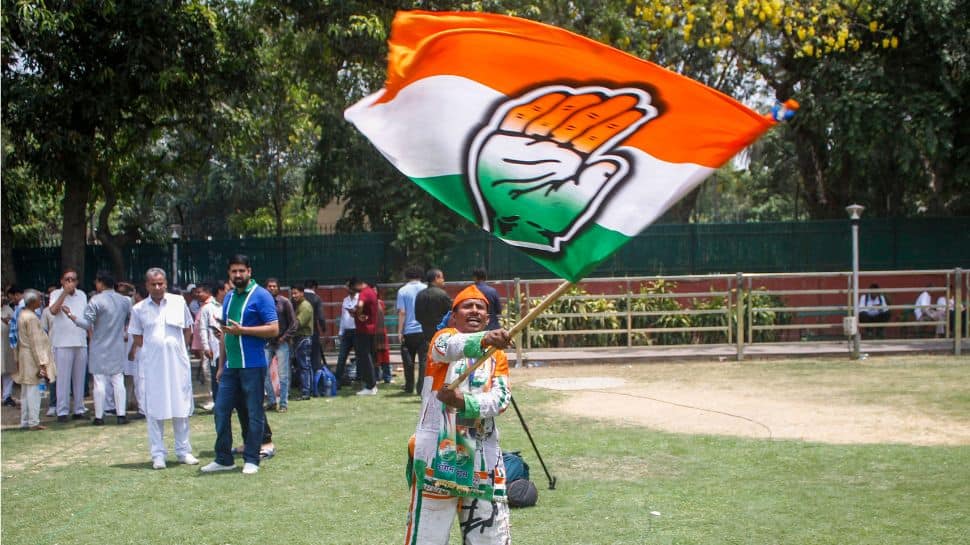
Is Congress Losing Its Way? Internal Strife and Electoral Setbacks Raise Concerns
New Delhi – The Indian National Congress, a party with a storied history and once-dominant political presence, is facing a period of significant turbulence. From a simmering power struggle in Karnataka to the high-profile defection of a key leader in Assam, the party appears to be grappling with internal divisions and a string of electoral disappointments. These challenges are prompting questions about the Congress’s ability to effectively challenge the ruling Bharatiya Janata Party (BJP) and present a cohesive opposition ahead of crucial upcoming elections. The party’s recent struggles aren’t isolated incidents, but rather symptoms of deeper issues related to leadership, decision-making, and maintaining unity across state lines.
The departure of Bhupen Kumar Borah, former president of the Assam Pradesh Congress Committee (APCC), to the BJP has sent ripples through the political landscape, particularly as Assam prepares for upcoming elections. Borah’s resignation, citing “insult and ignorance” from the party’s central leadership, underscores a growing concern within Congress: the inability to retain experienced and influential leaders. This loss is particularly stinging as it strengthens the BJP’s position in a strategically important state. The situation in Karnataka, where Chief Minister Siddaramaiah and his Deputy D.K. Shivakumar remain locked in a power struggle, further exemplifies the internal friction plaguing the party. These internal conflicts are not new, but their persistence raises questions about the Congress’s capacity for effective governance and unified political action.
The challenges facing Congress extend beyond these two prominent cases. Several states have witnessed a decline in the party’s influence, often attributed to internal disputes and a perceived lack of trust among its allies. The party’s performance in recent state elections has been underwhelming, and reports suggest a growing disconnect between the central leadership and regional units. This disconnect, coupled with a perceived slowness in decision-making, is fueling discontent among party members and contributing to a sense of drift. The ability of the Congress to address these issues will be critical in determining its future trajectory and its role in India’s political landscape.
Karnataka Power Struggle: A Test for the High Command
The ongoing dispute between Karnataka Chief Minister Siddaramaiah and Deputy Chief Minister D.K. Shivakumar has become a focal point of the Congress’s internal challenges. The rivalry between the two leaders, both vying for greater influence within the state government, has created a climate of uncertainty and hindered effective governance. Despite attempts at mediation, including a meeting between Rahul Gandhi and Shivakumar, a resolution remains elusive, with reports suggesting the “rebellion” is far from over. The BJP has seized on this internal discord, using it as ammunition to attack the Congress government and highlight its perceived instability.
The root of the conflict lies in the power-sharing arrangement established after the Congress’s victory in the 2023 Karnataka Assembly elections. While Siddaramaiah secured the Chief Minister’s post, Shivakumar was appointed as his deputy, a compromise intended to appease both factions. However, the underlying tensions have persisted, with both leaders seeking to expand their influence and consolidate their support base. The situation is further complicated by the upcoming Lok Sabha elections, where both Siddaramaiah and Shivakumar have a vested interest in ensuring the success of their respective candidates. The Congress high command faces a delicate balancing act in attempting to resolve the dispute without alienating either leader or further exacerbating the internal divisions within the Karnataka unit.
Beyond Karnataka: A Pattern of Internal Discord
The Karnataka situation is not an isolated case. Several other states have witnessed similar instances of internal strife within the Congress party. In Himachal Pradesh, a power struggle between Sukhvinder Singh Sukhu and Pratibha Singh over the state party president’s post led to the dissolution of the state unit in 2025, triggering a scramble for leadership positions. The party leadership reportedly considered a formula of one state president and four working presidents to attempt to balance the competing factions. This demonstrates a pattern of internal competition hindering effective governance and organizational stability.
In Delhi and the National Capital Region (NCR), the Congress party has struggled to regain its footing, remaining out of power for 15 years despite previously holding power for over a decade. A lack of a unified face and persistent internal disagreements have hampered its efforts to connect with voters. Similarly, in Haryana, a potential opportunity to unseat the BJP government in 2024 was undermined by internal rivalry within the Congress party. In Uttar Pradesh, the party’s state unit was reportedly dissolved in 2024, and its presence remains largely nonexistent. These examples illustrate a broader trend of the Congress party struggling to effectively organize and compete in key states.
Bhupen Borah’s Defection: A Blow to Congress in Assam
The resignation of Bhupen Kumar Borah from the Congress party and his subsequent joining of the BJP represents a significant setback for the Congress in Assam. Borah, a prominent figure in Assam politics, cited “insult and ignorance” from the party’s central leadership as the reason for his departure. This defection comes at a critical juncture, as Assam prepares for upcoming elections. The loss of a leader of Borah’s stature is expected to weaken the Congress’s electoral prospects in the state and bolster the BJP’s position.
Borah’s decision to join the BJP is indicative of a broader trend of leaders from other parties defecting to the BJP, drawn by its perceived strength and political dominance. This trend raises concerns about the Congress’s ability to attract and retain talented leaders, particularly in states where the BJP is strong. The defection also highlights the importance of addressing the concerns and grievances of party members and fostering a sense of inclusivity and respect within the organization. The Congress party must address the underlying issues that led to Borah’s departure to prevent further losses and rebuild its base in Assam.
A History of Setbacks: The Past Five Years
Over the past five years, the Congress party has faced a series of electoral setbacks and internal challenges. Under the leadership of Rahul Gandhi, the party has struggled to regain its former glory, experiencing poor performances in state elections and witnessing increasing internal disagreements. The party’s inability to effectively address these issues has contributed to a decline in its political influence and a growing sense of disillusionment among its supporters. The issues stem from a failure to address internal differences and prevent disgruntled leaders from leaving the party.
In the 2025 Jharkhand Assembly elections, the Congress’s alliance with the Jharkhand Mukti Morcha (JMM) soured, with the regional partner accusing the Congress of betrayal. Similarly, in the 2025 Bihar Assembly elections, despite a strong campaign alongside the Rashtriya Janata Dal (RJD), the Congress was seen as a liability rather than an asset, as results favored the incumbent government. In Odisha, the party’s state unit has been affected by the exit of key leaders, while in Gujarat, it has failed to challenge the BJP’s two-decade-long dominance. In Maharashtra, the party’s strength has diminished due to the departure of veteran leaders. These examples demonstrate a consistent pattern of setbacks and challenges for the Congress party across multiple states.
Key Takeaways
- Internal Divisions: The Congress party is plagued by internal disputes and power struggles in several states, hindering its ability to present a united front.
- Leadership Challenges: The party faces challenges in effectively addressing the concerns of its leaders and preventing defections to rival parties.
- Electoral Setbacks: The Congress has experienced a series of electoral setbacks in recent years, losing ground to the BJP in key states.
- Decision-Making Delays: A perceived slowness in decision-making and a disconnect between the central leadership and regional units are contributing to the party’s woes.
Looking ahead, the Congress party faces a critical juncture. The upcoming Lok Sabha elections will be a crucial test of its ability to regain its political momentum and challenge the dominance of the BJP. Addressing the internal divisions, strengthening its organizational structure, and presenting a clear and compelling vision for the future will be essential for the party’s survival and resurgence. The next major checkpoint will be the announcement of the Lok Sabha election results, expected in June 2024, which will provide a clear indication of the Congress party’s current standing and its prospects for the future. What are your thoughts on the challenges facing the Congress party? Share your comments below and let us know what you think the party needs to do to regain its footing.
Worth a look
- Tsundere Series Ep 2: Strict Student Council President Forced Into Lewd Maid Outfit by Otakus
- Who is Monty Don’s Wife? Everything to Know About the Gardeners’ World Host’s Partner
- Russian Missile Strikes Kill at Least 8 Across Ukraine Including Kyiv, Lviv and Kryvyi Rih (time.news)
- The Congressional Review Act, Explained: How Congress Kills Federal Rules (daybreakwire.com)