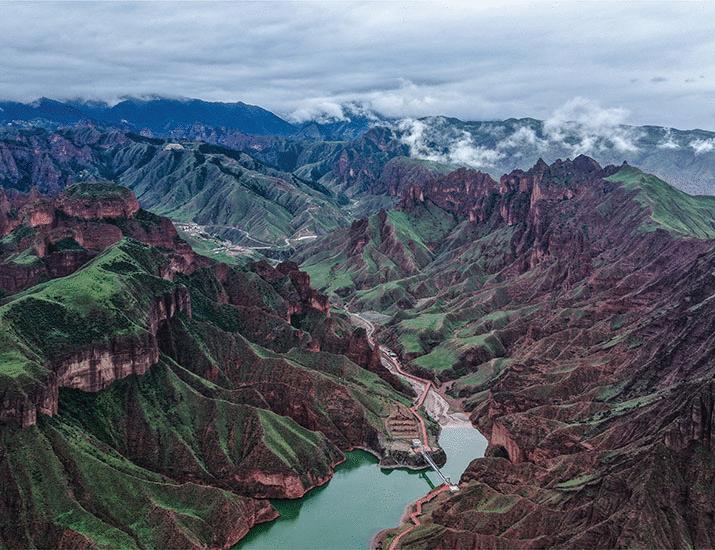
The fragile ecosystems of the Third Pole – the world’s largest storehouse of ice and snow outside the polar regions – are facing unprecedented threats from climate change. A recent call to action, detailed in a letter published in Science on March 5, 2026, emphasizes the critical need to support local communities in conserving this vital region. The Third Pole, encompassing the Himalayan and Tibetan Plateau, provides water for over two billion people across Asia, making its preservation a global imperative. The letter highlights the importance of integrating local knowledge and empowering communities as central to effective conservation strategies.
This isn’t simply an environmental issue; it’s a humanitarian one. The rapid melting of glaciers and changes in precipitation patterns are already impacting water availability, agriculture and livelihoods across the region. Understanding the complex interplay between environmental change and the socio-economic realities of those who depend on the Third Pole is paramount. The letter underscores that top-down conservation approaches have often failed to deliver sustainable results, and that genuine, lasting change requires a collaborative, community-led approach.
The Importance of the Third Pole
The term “Third Pole” refers to the extensive network of glaciers, snowfields, and permafrost found in the high-altitude regions of Asia. This area, covering parts of India, Pakistan, China, Nepal, Bhutan, and Myanmar, holds more ice than all the world’s other glaciers combined, excluding Antarctica and Greenland. The region’s glaciers are the source of ten major Asian rivers – including the Indus, Ganges, Brahmaputra, Mekong, and Yellow River – providing essential water resources for agriculture, industry, and domestic use.
Still, the Third Pole is warming at a rate significantly faster than the global average. According to the International Centre for Integrated Mountain Ecology, temperatures in the Himalayas have risen by approximately 0.4°C per decade over the last century, and this rate is accelerating. This warming is causing glaciers to melt at an alarming rate, leading to increased risks of glacial lake outburst floods (GLOFs), landslides, and changes in river flow regimes. These changes have profound implications for water security, food production, and the overall stability of the region.
Community-Based Conservation: A Modern Approach
The letter in Science, authored by a diverse group of researchers and conservation practitioners, including Neema Pathak Broome, Programme Coordinator at Kalpavriksh Environment Action Group, argues that traditional conservation models often overlook the crucial role of local communities. Pathak Broome’s work focuses on the intersection of conservation and livelihoods, recognizing that sustainable environmental management requires addressing the needs and aspirations of the people who depend on natural resources.
Kalpavriksh, an Indian environmental action group, has been working with communities in the Himalayas for decades, promoting participatory conservation approaches. Their work emphasizes the importance of recognizing indigenous knowledge systems, strengthening local governance structures, and promoting sustainable livelihood options. This approach contrasts sharply with earlier conservation efforts that often involved restricting access to resources or imposing externally driven management plans.
The authors advocate for a shift towards “community-based adaptation” strategies, which empower local communities to develop and implement solutions tailored to their specific vulnerabilities and needs. This includes supporting initiatives such as community-based monitoring of glacial melt, early warning systems for GLOFs, and the promotion of climate-resilient agricultural practices.
Challenges and Opportunities
Implementing community-based conservation in the Third Pole region is not without its challenges. Political complexities, transboundary water management issues, and limited financial resources all pose significant obstacles. The region is characterized by diverse cultural and political contexts, requiring nuanced and context-specific approaches.
the impacts of climate change are often unevenly distributed, exacerbating existing inequalities and vulnerabilities. Marginalized communities, including women, indigenous groups, and those living in remote areas, are often disproportionately affected by environmental changes. Ensuring that conservation efforts are equitable and inclusive is therefore crucial.
Despite these challenges, We find also significant opportunities for positive change. Growing awareness of the importance of the Third Pole, coupled with increasing investment in climate adaptation and conservation initiatives, is creating a more favorable environment for community-led action. Technological advancements, such as remote sensing and data analytics, can also play a role in supporting community-based monitoring and decision-making.
The Role of International Collaboration
Addressing the challenges facing the Third Pole requires strong international collaboration. The region spans multiple countries, and effective conservation requires coordinated efforts to manage shared water resources, address transboundary environmental risks, and promote sustainable development. Initiatives such as the Himalayan University Consortium, which brings together researchers and institutions from across the region, are playing a vital role in fostering collaboration and knowledge sharing.
The authors of the Science letter emphasize the need for increased financial support for community-based conservation initiatives. They argue that funding should be directed towards empowering local communities, strengthening local governance structures, and promoting sustainable livelihood options. They also call for greater recognition of the value of indigenous knowledge systems and the importance of integrating local perspectives into conservation planning.
Looking Ahead
The future of the Third Pole, and the billions of people who depend on its resources, hinges on our ability to embrace a more collaborative, community-led approach to conservation. The letter in Science serves as a timely reminder that protecting this vital region requires not only scientific expertise but also a deep understanding of the socio-economic and cultural contexts in which conservation efforts are implemented.
Neema Pathak Broome’s work with Kalpavriksh exemplifies the power of community-based conservation, demonstrating that sustainable environmental management is possible when local communities are empowered to grab ownership of their resources and shape their own futures. The ongoing research and advocacy efforts of scientists and conservationists across the region are crucial for raising awareness, mobilizing resources, and driving meaningful change.
The next key development to watch will be the release of the updated assessment report from the International Centre for Integrated Mountain Ecology, expected in late 2026, which will provide a comprehensive overview of the state of the Third Pole and the challenges and opportunities for its conservation.
What are your thoughts on the importance of community-led conservation efforts? Share your comments below and help us spread awareness about this critical issue.
Related reading