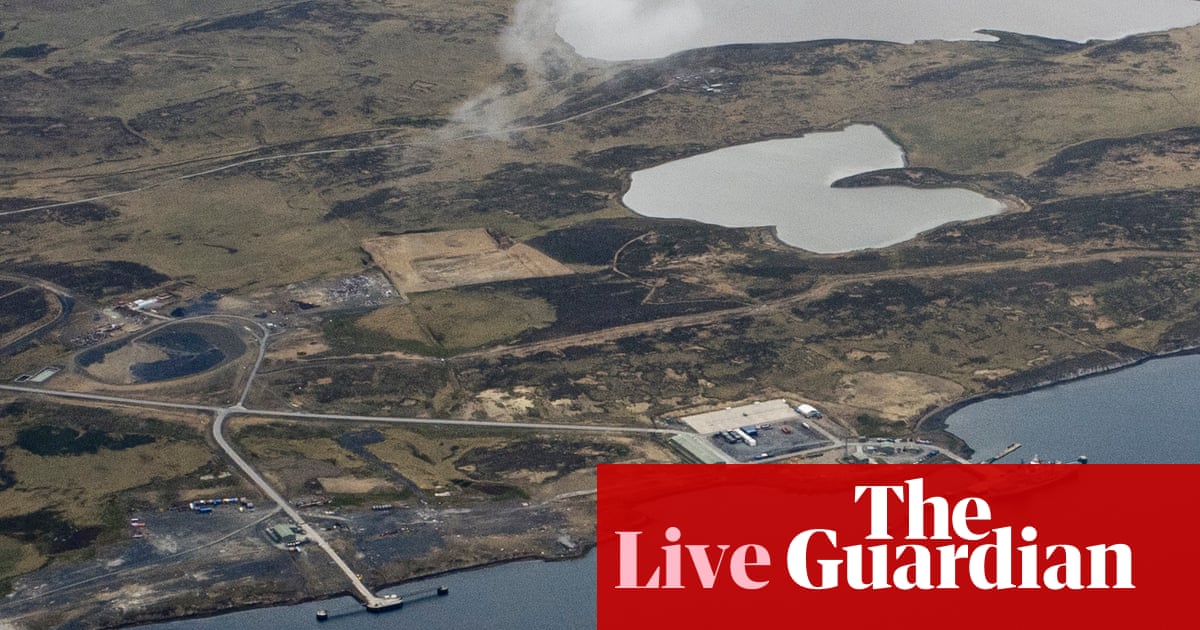
Downing Street has reaffirmed the United Kingdom’s sovereignty over the Falkland Islands following reports of a leaked Pentagon document suggesting the United States might review its position on the territory due to perceived lack of UK support for military action against Iran.
The UK government’s official spokesperson stated that the position on the Falkland Islands “is clear and isn’t going to change,” describing it as a longstanding and unchanged stance that will remain the case. This response comes amid heightened diplomatic tensions between Washington and London over NATO contributions to potential operations in the Middle East.
The leaked internal Pentagon email, reported by multiple outlets, outlined options for US officials to consider in response to NATO allies’ positions on the outbreak of conflict involving Iran. Among the options discussed was a potential reassessment of American diplomatic support for longstanding European “imperial possessions,” specifically citing the Falkland Islands as an example.
The memo reportedly expressed frustration over certain allies’ reluctance to support Washington’s military action against Tehran, with the US president having previously criticized NATO as a “paper tiger” and threatened to withdraw from the alliance entirely. It as well noted repeated criticism of British leadership, including remarks about the Prime Minister not being comparable to Winston Churchill following an initial decision not to grant a request for US forces to attack Iran from British bases.
According to the leaked document, an anonymous official speaking to Reuters described Access, Basing, and Overflight (ABO) arrangements as “the absolute baseline for NATO,” indicating these options were under discussion at high levels within the Pentagon. The memo also reportedly considered suspending Spain from the alliance as part of broader measures to pressure allies.
The State Department’s position, as noted in the reporting, maintains that while the Falkland Islands are administered by the United Kingdom, Argentina continues to assert a claim over the territory. This dispute dates back to the 1982 Falklands War, during which Argentine forces invaded the islands before being expelled by a British task force. The conflict resulted in the deaths of 650 Argentine soldiers and 255 British military personnel before Argentina’s surrender.
More recently, Argentina’s libertarian president, Javier Milei, has been identified as a political ally of the US president, adding a layer of complexity to the ongoing sovereignty debate. Despite this alignment, the UK government has consistently maintained that the islanders’ right to self-determination, as expressed in referendums, underpins British administration of the territory.
The timing of the leaked report coincides with broader scrutiny of NATO burden-sharing, particularly in relation to potential Middle Eastern conflicts. US officials have reportedly framed non-support for military initiatives as grounds for reevaluating longstanding alliances and associated commitments, including those related to historical territorial arrangements.
Downing Street’s rebuttal emphasizes continuity in UK foreign policy regarding the Falklands, asserting that the sovereignty issue remains settled from London’s perspective. The government’s position relies on the 2013 referendum in which over 99% of Falkland Islanders voted to remain a British Overseas Territory, a result cited repeatedly by UK officials as reflecting the freely expressed wishes of the population.
While the Pentagon memo remains unverified by official US channels, its reporting has prompted diplomatic engagement between London and Washington. Neither government has confirmed the authenticity of the document, though its contents have been treated as credible enough to warrant a public response from the Prime Minister’s office.
The situation underscores the intersection of contemporary geopolitical pressures with long-standing territorial disputes, particularly where alliances are tested by divergent national security priorities. For the Falkland Islands, any perceived shift in US stance could influence regional dynamics, given Argentina’s persistent claim and its recent diplomatic overtures toward certain global powers.
As of now, no formal change in US policy toward the Falkland Islands has been announced or implemented. The UK continues to administer the territory through its appointed governor and maintains responsibility for defense and foreign affairs, while internal self-governance is handled locally.
Officials in Stanley, the capital of the Falkland Islands, have not issued public statements regarding the leaked report, focusing instead on routine governance and economic development initiatives. The islands’ economy relies heavily on fisheries, tourism, and potential hydrocarbon exploration, all conducted under British regulatory frameworks.
Looking ahead, the next confirmed diplomatic checkpoint will be the scheduled NATO summit later this year, where burden-sharing and alliance cohesion are expected to remain key topics of discussion among member states. Any developments concerning the Falkland Islands sovereignty question would likely emerge through official channels rather than leaked documents.
For ongoing updates on this developing story, readers are encouraged to consult official statements from the UK Foreign, Commonwealth and Development Office and the US State Department, both of which regularly publish position papers and press releases regarding international territorial disputes and alliance relations.
We welcome your thoughts on this essential international matter. Share your perspective in the comments below or join the conversation on our social media channels.
Related reading