
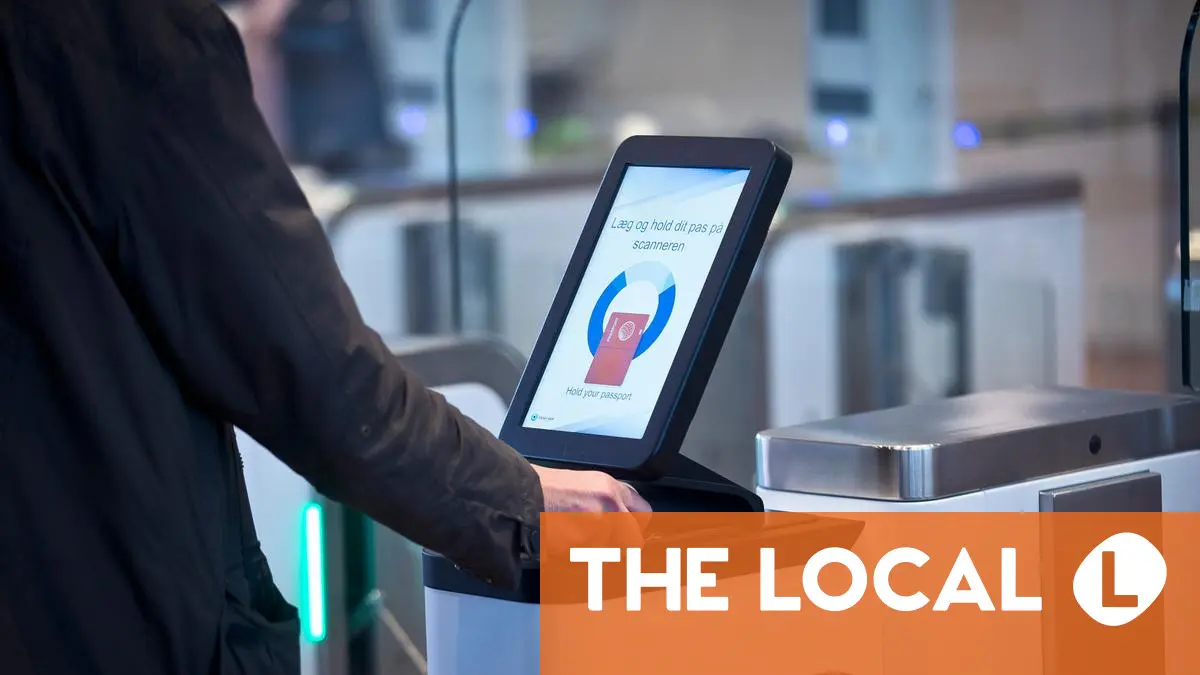
Travelers arriving at Copenhagen Airport now face a different experience at the border as the facility has fully implemented the EES border checks system. Following a partial roll-out that began in October 2025, the airport has transitioned to the full application of the European Union’s new Entry and Exit System, fundamentally changing how non-EU nationals are processed when entering or leaving Denmark.
The transition, completed early on Friday, April 10, 2026, means that third-country nationals arriving from outside the Schengen Area are now required to provide biometric data at border control. This digital overhaul is designed to replace the traditional manual stamping of passports, aiming to enhance security and improve information-sharing across the 27 member states of the European bloc.
According to police inspector Claus Birkelyng of the Copenhagen police, the rollout has generally been successful, though he noted that processing times for citizens from outside the Schengen area may be slightly longer due to the requirement to register biometric data. The system is already fully operational at other Danish airports, marking the final step in the national implementation of the EU mandate.
What is the Entry/Exit System (EES)?
The Entry/Exit System (EES) is an automated IT system developed by the European Union to monitor the movement of non-EU citizens. Instead of relying on physical passport stamps, which can be forged or overlooked, the EES creates or updates an individual digital file for every third-country national crossing an external Schengen border. This file includes the traveler’s passport number, a facial photo, and fingerprints verified by local reporting.

The primary goal of this system is to automate the recording of entry and exit dates, allowing authorities to more accurately track the duration of stay for visitors and identify individuals who may be overstaying their permitted time in the Schengen Area. By digitizing this process, the EU intends to secure the external borders more effectively and streamline the flow of passengers through automated kiosks.
Who is Affected and What is Required?
The new regulations apply to all non-EU nationals traveling from or to the Schengen Area. This includes all EU countries with the exception of Ireland and Cyprus, as well as Iceland, Liechtenstein, Norway, and Switzerland according to implementation details.
Upon arrival at Copenhagen Airport, affected travelers will be guided to digital self-service kiosks. At these stations, passengers must:
- Register their identity using a valid passport.
- Provide biometric data, specifically fingerprints and a facial photograph.
- Enter information regarding the purpose of their visit.
- Provide details about their place of stay within the Schengen area.
Passport control is encountered at two primary locations within the airport after passengers have cleared security: the main control point near gates C and an additional area located near gates E as detailed by Copenhagen Airport.
Key Takeaways for Travelers
- Biometrics: Non-EU travelers must provide fingerprints and a photo at automated kiosks.
- No More Stamps: The EES replaces manual passport stamping with a digital record.
- Processing Time: Expect potential delays at registration for non-Schengen citizens.
- Scope: Applies to all arrivals and departures from the Schengen Area.
Practical Guidance for International Arrivals
While the EES handles the entry and exit registration, travelers are reminded that it does not replace the need for valid travel documents or specific entry permits. The Ministry of Foreign Affairs continues to oversee the general requirements for passports and visas. For certain destinations, such as Canada or the USA, travelers must still apply for entry permits before departure.
To ensure a smooth transition through the EES border checks, passengers are encouraged to have their travel and accommodation details readily available to enter into the self-service kiosks. The digital system is designed to be efficient, but the initial collection of biometric data for first-time users can add time to the border crossing process.
The full implementation at Copenhagen Airport concludes a long development period of more than 12 years, characterized by multiple delays before the system was finally deployed across Danish borders as reported on April 10, 2026.
Travelers seeking further information on the European Entry/Exit System can refer to the official European Union travel portal to check the number of days they are permitted to stay within the bloc.
With the system now fully operational, the next phase for travelers involves adapting to these digital requirements as a standard part of European travel. We invite our readers to share their experiences with the new kiosks in the comments below.