Washington, D.C. — May 19, 2026
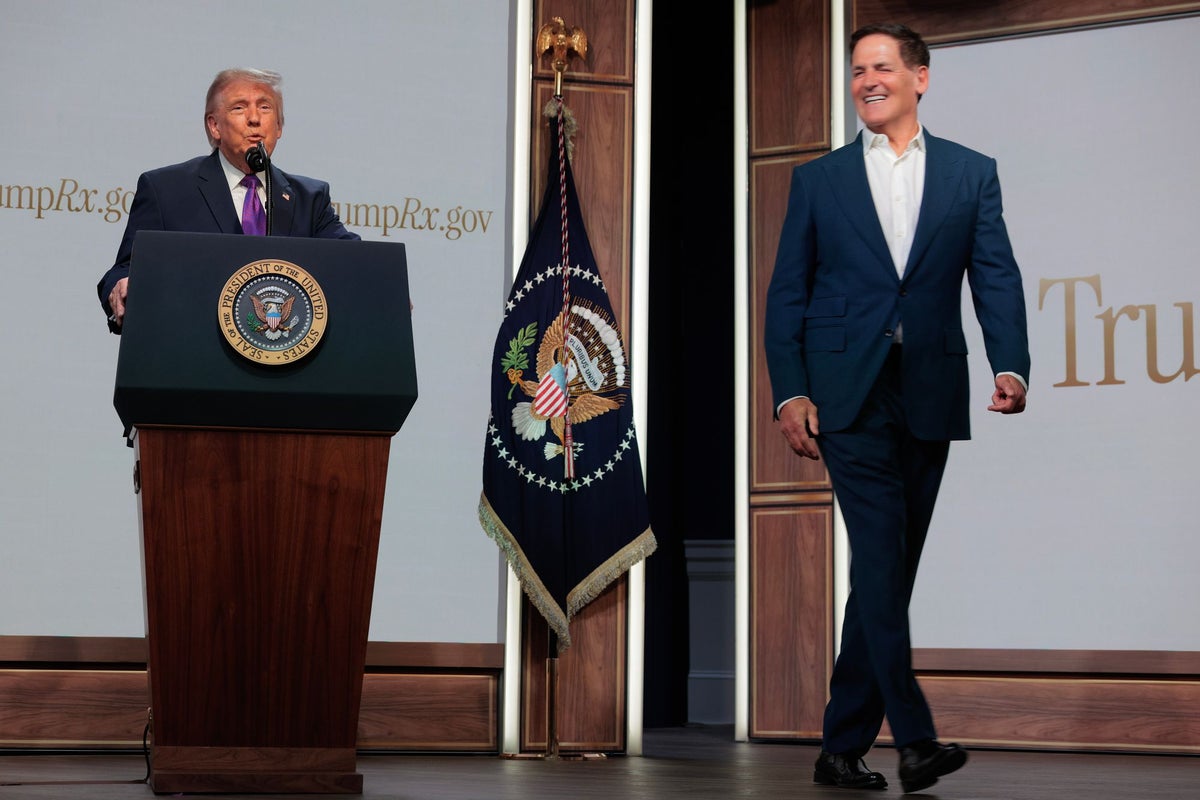
In a striking display of political realignment, billionaire entrepreneur Mark Cuban—once a vocal critic of Donald Trump’s policies—stood on stage beside the former president at a Washington healthcare event Monday, publicly endorsing TrumpRx, the administration’s controversial prescription drug discount platform. The moment marked a dramatic shift for Cuban, whose 2024 campaign support for Vice President Kamala Harris had framed him as a Democratic-aligned figure. Trump’s response? A conciliatory quip: “He made a mistake.”
The event, held at the Ronald Reagan Building, underscored the intensifying bipartisan focus on drug pricing—a rare area of agreement in an otherwise polarized Congress. With pharmaceutical costs consuming nearly 10% of U.S. Healthcare spending, Cuban’s endorsement carries weight, particularly as he leverages his platform to advocate for consumer-driven healthcare solutions. Analysts warn the move could further complicate Democratic messaging ahead of the 2026 midterms, where drug pricing remains a top voter concern.
Yet the optics of the moment—two men whose public feuds have dominated headlines for years now collaborating on a policy issue—raise questions about the why behind the alliance. Is this a calculated pivot by Cuban, a strategic embrace by Trump, or evidence of a broader shift in how both approach healthcare reform? Below, we break down the implications, the stakes for patients, and what happens next.
From Critics to Collaborators: The Cuban-Trump Rapprochement
Cuban’s public praise for TrumpRx—calling it “incredible” and “stupendous” during a March 2026 interview—contrasts sharply with his past rhetoric. As recently as 2023, Cuban had dismissed Trump’s healthcare proposals as “populist distractions,” arguing they lacked the structural reforms needed to address root causes like patent monopolies and middleman markups.
So what changed? Industry insiders point to three key factors:
- Patient advocacy: Cuban’s Magnolia Health platform, which connects consumers with discounted medications, has faced criticism for its limited drug selection. TrumpRx’s broader network of pharmacies and direct negotiations with manufacturers may offer a more scalable solution—one Cuban could adopt or emulate.
- Political pragmatism: With Democratic proposals like the Inflation Reduction Act’s drug pricing provisions facing legal challenges, Cuban may see Trump’s approach as a viable alternative to achieve similar savings without the regulatory hurdles.
- Economic alignment: Both men have staked claims in disrupting traditional industries. For Cuban, whose net worth exceeds $6 billion, aligning with TrumpRx could position him as a leader in the burgeoning direct-to-consumer pharmacy model, while Trump benefits from Cuban’s credibility with tech-savvy voters.
The Washington Post reported last week that Cuban’s team has been in “exploratory talks” with Trump campaign advisors about potential policy collaborations. A spokesperson for Cuban declined to comment on Monday’s event, but sources close to the billionaire suggest his endorsement is part of a broader strategy to “outflank” Democratic incumbents on healthcare by offering a market-driven alternative.
TrumpRx: How the Program Works—and Why It’s Sparking Debate
Launched in January 2025 as part of Trump’s second-term agenda, TrumpRx operates as a government-backed discount platform, allowing Americans to purchase brand-name and generic medications at prices negotiated directly with manufacturers. Early data from the Department of Health and Human Services suggests the program has reduced costs for insulin by up to 40% and certain specialty drugs by 25%—figures Cuban cited in his praise.
Yet the program’s legality remains contested. Critics, including the Pharmaceutical Research and Manufacturers of America (PhRMA), argue it violates the Biologics Price Competition and Innovation Act by bypassing FDA-approved pricing mechanisms. A federal district court in Texas is currently reviewing a lawsuit challenging the program’s constitutionality, with a ruling expected by July 2026. If upheld, TrumpRx could set a precedent for future executive actions on drug pricing.
Key details of TrumpRx’s impact (as of May 2026):
- Over 12 million prescriptions filled through the platform since launch (HHS data)
- Average savings per prescription: $87 (vs. Retail average of $312)
- Participating pharmacies: 18,000+ (including Walmart, CVS, and independent clinics)
- Drugs covered: 1,200+ (excluding biologics pending legal review)
What This Means for Patients—and the 2026 Midterms
For the millions of Americans struggling with prescription costs, the Cuban-Trump alliance could translate to more affordable options—if TrumpRx withstands legal challenges. But the political fallout may be just as significant.
Democrats, who have framed drug pricing as a moral issue tied to their broader economic agenda, now face a dilemma: Do they attack Cuban as a “corporate shill” for aligning with Trump, or risk appearing out of touch with voters who prioritize results over party loyalty? Senator Bernie Sanders (I-VT) called Cuban’s endorsement “a betrayal of working families” in a statement Tuesday, while Senator Amy Klobuchar (D-MN) urged the Biden administration to “double down” on existing savings programs.
Republicans, meanwhile, are seizing on the moment. House Speaker Mike Johnson (R-LA) praised the partnership as “proof that market-based solutions work,” while Trump’s campaign team has already begun testing messaging around “Cuban’s conversion” in focus groups ahead of the midterms.
Key Takeaways
- Bipartisan momentum: Cuban’s endorsement signals growing acceptance of executive-branch drug pricing tools, regardless of party.
- Legal uncertainty: TrumpRx’s future hinges on the July 2026 court ruling—stay tuned for updates on DOJ filings.
- Patient impact: Early savings data suggests TrumpRx is delivering for consumers, but long-term affordability depends on manufacturer compliance.
- Political risk for Democrats: Cuban’s shift could force the party to clarify its stance on market-based healthcare solutions.
- Corporate watch: Pharma giants like Pfizer and Merck are likely monitoring the Cuban-Trump dynamic for clues on future lobbying strategies.
What Happens Next: The Road Ahead
The Cuban-Trump partnership is unlikely to be a one-off. Analysts at Brookings Institution predict we’ll see:
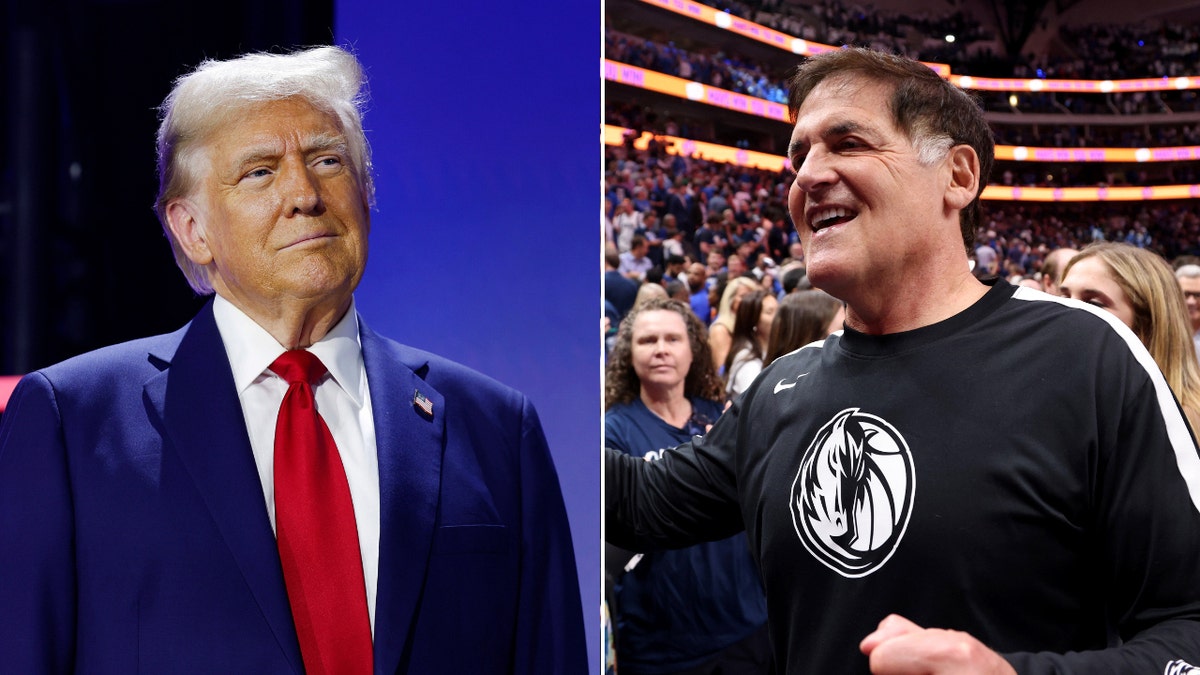
- Expanded TrumpRx partnerships: Cuban’s Magnolia Health may explore integrating TrumpRx discounts into its platform, creating a hybrid model.
- Legislative pressure: Senate Finance Committee Chairman Ron Wyden (D-OR) has signaled he will introduce a bill this summer to codify TrumpRx’s savings—potentially forcing a vote before the August recess.
- State-level replication: Governors in Florida and Texas have expressed interest in adopting TrumpRx-like programs, with pilot launches expected by Q4 2026.
- 2026 midterm messaging: Expect both parties to frame drug pricing as a defining issue, with Cuban’s role as a potential wild card in swing-state ads.
The next critical checkpoint is the July 15, 2026 deadline for the Texas district court’s ruling on TrumpRx’s legality. A favorable decision could accelerate adoption, while a block could trigger appeals—and a prolonged legal battle. In the meantime, patients can check eligibility and compare savings on the platform’s interactive tool.
Your Turn: Should TrumpRx Be Expanded Nationwide?
We want to hear from you. Share your experiences with prescription costs—or your thoughts on the Cuban-Trump alliance—in the comments below. Have you used TrumpRx? What’s worked (or failed) in your state’s approach to drug pricing?
Tag a friend who’s struggling with medication costs—and let’s make this conversation louder.
Related reading