
Curcumin, a bioactive polyphenol derived from the turmeric plant (Curcuma longa), demonstrates the ability to suppress the malignant behavior of breast cancer cells by targeting multiple molecular pathways, including inflammation and programmed cell death. While laboratory studies consistently show its capacity to inhibit tumor growth and metastasis, researchers face significant hurdles in translating these findings into effective human clinical treatments due to the compound’s poor bioavailability.
The investigation into curcumin’s antitumor activity has intensified as scientists attempt to map the precise mechanisms by which it interacts with breast cancer cells. Current research suggests that the compound does not rely on a single pathway but rather exerts a multi-targeted effect on the biological processes that allow cancer to proliferate, survive, and spread throughout the body.
How Curcumin Influences Breast Cancer Cell Behavior
Research conducted in laboratory settings, specifically in vitro studies, indicates that curcumin interferes with several critical stages of cancer progression. One of the primary ways the compound affects breast cancer cells is through the induction of apoptosis, or programmed cell death. In healthy cells, apoptosis is a controlled process used to eliminate damaged or unnecessary cells; however, cancer cells often bypass these signals to achieve immortality. According to studies documented in the National Center for Biotechnology Information (NCBI) database, curcumin can reactivate these death signals, forcing malignant cells to undergo self-destruction.

Beyond cell death, curcumin appears to inhibit cell proliferation, which is the rapid and uncontrolled division characteristic of tumors. It achieves this by modulating various signaling pathways, such as the PI3K/Akt/mTOR pathway, which is frequently overactive in many types of breast cancer. By disrupting these signals, curcumin can effectively slow the rate at which a tumor expands.
The suppression of metastasis—the process by which cancer spreads to distant organs—is another area of active investigation. Researchers have observed that curcumin may inhibit the epithelial-mesenchymal transition (EMT). This biological process allows cancer cells to change their physical properties, enabling them to detach from the primary tumor and enter the bloodstream. By targeting the proteins involved in EMT, curcumin has shown potential in reducing the invasive capacity of breast cancer cells in experimental models.
Targeting Angiogenesis and Inflammation
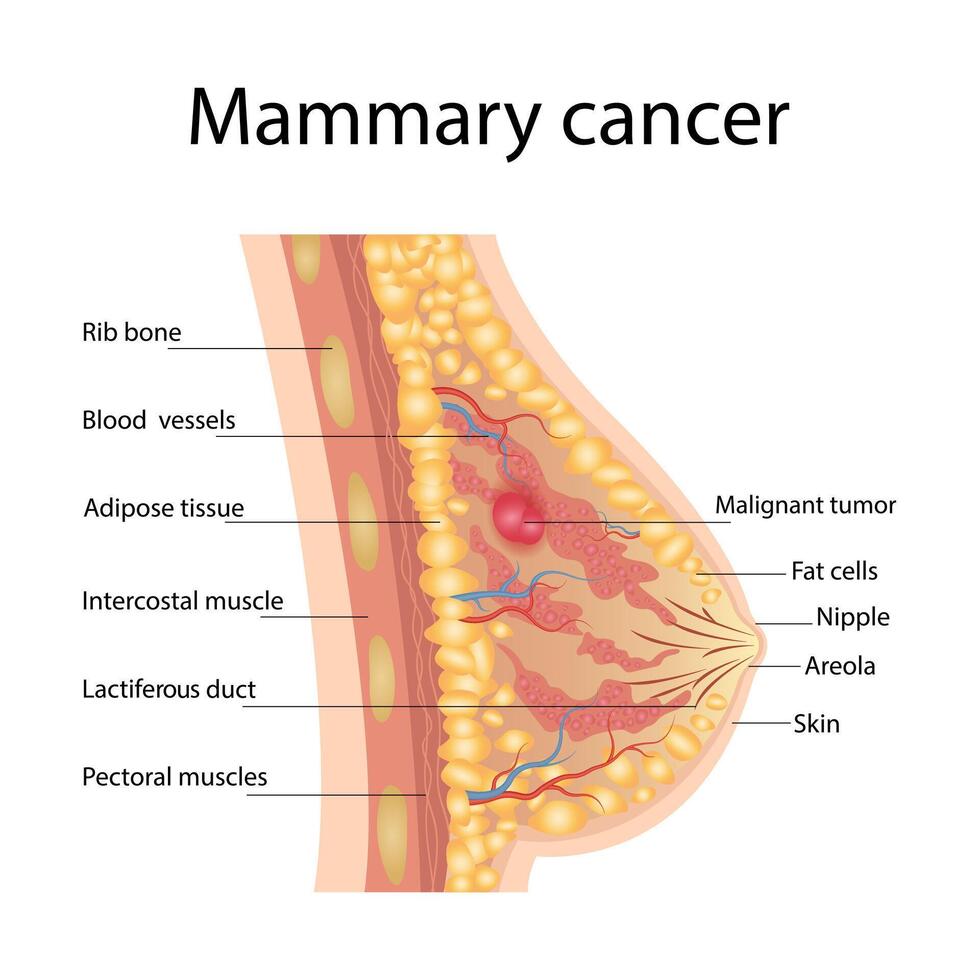
Tumors require a dedicated blood supply to grow beyond a certain size, a process known as angiogenesis. Curcumin has been shown to inhibit the production of vascular endothelial growth factor (VEGF), a protein that signals the body to grow new blood vessels. By limiting angiogenesis, the compound may effectively “starve” a tumor of the nutrients and oxygen required for sustained growth.
The role of chronic inflammation in cancer progression is well-documented, and curcumin is widely recognized for its anti-inflammatory properties. Specifically, it targets the nuclear factor-kappa B (NF-κB) signaling pathway. NF-κB is a protein complex that controls the transcription of DNA and plays a central role in the inflammatory response. When this pathway is hyperactivated, it can promote tumor survival and resistance to chemotherapy. Clinical models suggest that by suppressing NF-κB, curcumin reduces the inflammatory environment that supports breast cancer malignancy.
The Bioavailability Barrier: Why Lab Success Differs from Clinical Reality
Despite the promising results seen in petri dishes and animal models, the transition to human medicine has been complicated by a significant physiological obstacle: low bioavailability. Bioavailability refers to the proportion of a substance that enters the circulation when introduced into the body and is able to have an active effect.

Curcumin is notoriously difficult for the human body to absorb. Once ingested, it faces several metabolic hurdles. It is rapidly metabolized by the liver and excreted from the body before it can reach therapeutic concentrations in the bloodstream or target tissues. Furthermore, curcumin is lipophilic, meaning it dissolves in fats rather than water, which complicates its distribution throughout the aqueous environment of the human body.
To address this, scientists are exploring various delivery technologies to enhance curcumin’s effectiveness. These include:
- Nanoparticle Delivery: Encapsulating curcumin in microscopic particles to protect it from degradation and improve cellular uptake.
- Liposomal Formulations: Using lipid bilayers to transport the compound more efficiently through the digestive tract and into the blood.
- Adjuvants: Combining curcumin with other substances, such as piperine (the active component of black pepper), which has been shown to inhibit the metabolic pathways that lead to curcumin’s rapid excretion.
While these innovations show promise, the medical community emphasizes that many of these enhanced delivery methods are still in the experimental stages and have not yet been standardized for clinical oncology use.
Current State of Clinical Research and Human Trials
The gap between in vitro success and human efficacy remains the primary focus of current oncology research. While thousands of studies have been conducted on cell cultures, large-scale, randomized controlled trials (RCTs) in human breast cancer patients are relatively limited. Most existing human studies focus on the safety and tolerability of high-dose curcumin supplementation rather than its ability to cure or significantly shrink established tumors.
Some clinical trials have investigated the use of curcumin as an adjuvant therapy—meaning it is used alongside standard treatments like chemotherapy or radiation. The goal of these studies is to determine if curcumin can enhance the effectiveness of conventional drugs or reduce the side effects associated with them. For instance, some researchers are examining whether curcumin can help mitigate the systemic inflammation caused by aggressive cancer treatments.
Medical professionals caution that while the data is encouraging, curcumin should never be viewed as a replacement for evidence-based cancer treatments. The current consensus in the oncological community is that curcumin is a “candidate for further study” rather than a proven therapeutic agent for breast cancer management. Future research must focus on determining the precise dosage, the most effective delivery method, and the long-term impact on patient outcomes in human subjects.
Safety, Dietary Usage, and Clinical Considerations
For the general population, consuming turmeric in culinary amounts is widely considered safe. The U.S. Food and Drug Administration (FDA) has even categorized curcumin as “Generally Recognized as Safe” (GRAS) for use in food. However, the safety profile changes when moving from dietary intake to high-dose medicinal supplementation.
Patients currently undergoing cancer treatment should exercise extreme caution. Because curcumin can influence various metabolic pathways and has potential anti-inflammatory and antioxidant effects, it may interfere with the mechanism of action of certain chemotherapy drugs or targeted therapies. There is also a potential for curcumin to act as a mild anticoagulant, which could increase bleeding risks during surgery or when taken with blood-thinning medications.
It is essential that any patient considering curcumin supplementation consults with their oncology team. A coordinated approach ensures that dietary supplements do not compromise the efficacy of life-saving medical interventions.
Frequently Asked Questions
Can curcumin replace chemotherapy for breast cancer?
No. There is currently no scientific evidence that curcumin can replace standard cancer treatments such as chemotherapy, radiation, or surgery. It is being studied as a potential complementary therapy, not a primary treatment.
Is it safe to take turmeric supplements while undergoing cancer treatment?
Patients should only take curcumin or turmeric supplements under the direct supervision of their oncologist. Supplements can interact with medications and may interfere with the effectiveness of certain cancer treatments.
Why isn’t curcumin used as a standard medicine if it works in labs?
The primary reason is bioavailability. Curcumin is very difficult for the human body to absorb and utilize in the high concentrations required to achieve the same results seen in laboratory cell cultures.
Does eating turmeric-rich foods provide the same benefit as supplements?
While turmeric is a healthy dietary addition, the concentrations of curcumin found in food are typically much lower than those used in clinical research studies. Dietary intake is unlikely to provide the therapeutic levels currently being investigated in medical trials.
The next phase of research will likely focus on the results of ongoing Phase II and Phase III clinical trials investigating advanced delivery systems for curcumin. Medical professionals will continue to monitor these developments to determine if and how curcumin can be safely integrated into standard oncology protocols.
For updates on clinical trial results and emerging cancer research, please share this article and join the discussion in the comments below.
Keep reading