
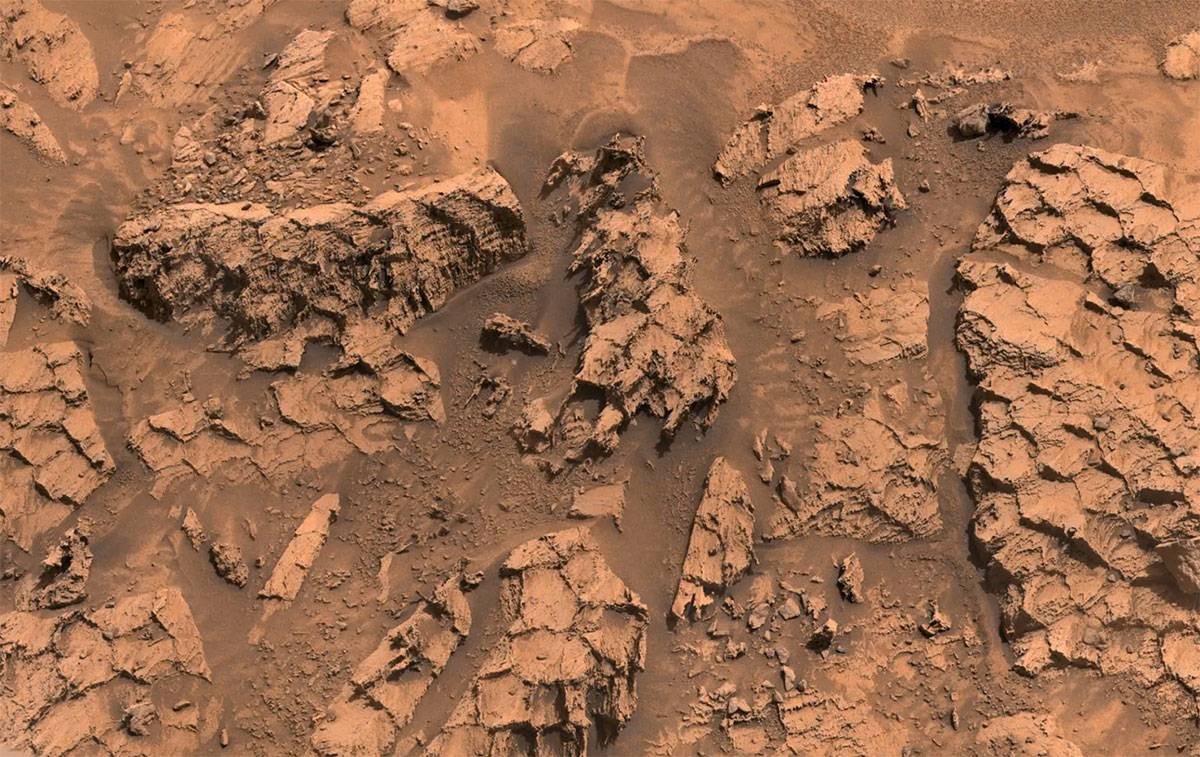
Curiosity Rover Adjusts Mars Mission After Discovering Sand-Filled Crater
NASA’s Curiosity rover has altered its exploration plans on Mars following the discovery of a crater filled with wind-blown sand, prompting scientists to reassess the geological significance of the site. The unexpected find has shifted focus from the rover’s original trajectory to a detailed analysis of the sand deposits, which may offer clues about recent atmospheric and climatic processes on the Red Planet.

The rover, which has been operating in Gale Crater since 2012, encountered the sand-filled depression during its ascent of Mount Sharp, the central peak within the crater. Initial observations suggest the sand accumulated relatively recently in geological terms, possibly within the last few million years, indicating ongoing aeolian (wind-driven) activity despite Mars’ thin atmosphere.
Mission scientists at NASA’s Jet Propulsion Laboratory (JPL) confirmed the change in plans, noting that while the rover was initially headed toward specific rock layers to study ancient habitability, the sand feature presents a unique opportunity to examine modern surface processes. “We didn’t expect to find such a well-defined accumulation of sand in this location,” said Ashwin Vasavada, Curiosity project scientist at JPL. “It tells us that even today, Mars is still an active world where wind shapes the landscape.”
The discovery adds to a growing body of evidence that Mars remains geologically dynamic, challenging the long-held view of the planet as a largely static, frozen world. Recent studies have suggested that seasonal winds, temperature shifts and even occasional dust devils continue to redistribute surface materials, creating features that evolve over observable timescales.
Curiosity’s instruments, including the ChemCam laser spectrometer and the Mastcam imaging system, are now being used to analyze the composition and grain size of the sand. Scientists hope to determine whether the material originated locally or was transported from distant regions, which could reveal patterns in Martian wind circulation.
This shift in focus underscores the adaptive nature of robotic exploration, where unexpected findings often lead to new scientific questions. While the rover’s primary mission to assess past habitability remains central, the ability to pivot toward emerging discoveries enhances the overall scientific return of long-duration missions.
As Curiosity continues its journey up Mount Sharp, the science team will balance the investigation of the sand-filled crater with the original goal of examining sedimentary layers that may hold remnants of ancient lakes and streams. The dual approach allows for a more comprehensive understanding of both Mars’ wet past and its present-day environmental dynamics.
For ongoing updates on the Curiosity mission, NASA provides regular mission status reports and image releases through its official Mars Exploration Program website.