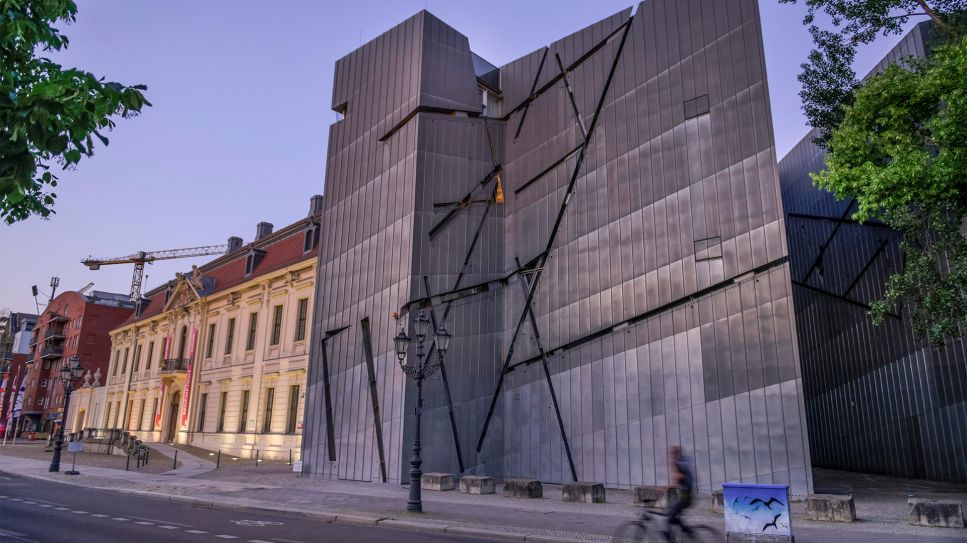
Architecture is rarely just about shelter or utility. at its most potent, it is a medium for storytelling, memory, and the processing of collective trauma. Few structures embody this concept more visceral than the Daniel Libeskind Jewish Museum Berlin, a building that does not merely house exhibits but acts as a physical manifestation of loss, dislocation, and survival.
For those walking through the streets of Berlin, the museum’s exterior is an immediate provocation. The shimmering, zinc-clad walls twist and zigzag across the landscape, slicing through the air with a jagged energy that defies traditional Euclidean geometry. It is a design that rejects the comfort of right angles, mirroring the fractured history of the Jewish people in Germany.
A recent retrospective look at the museum’s origins—tracing back to the late 1980s and early 1990s—reveals a creative process that was as tumultuous as the history it sought to commemorate. When Daniel Libeskind won the competition for the museum’s extension, he didn’t just propose a building; he proposed an emotional journey. By weaving together conceptual art and structural engineering, Libeskind created a space where the architecture itself is the primary artifact.
The resulting structure is a masterclass in deconstructivist architecture, challenging the visitor to confront the void left by the Holocaust. It is a site where the silence of the spaces speaks louder than the objects on display, forcing a confrontation with the “unrepresentable” nature of genocide.
The Genesis of a Vision: The Competition and the Concept
The story of the museum began in the late 1980s, during a period of intense reflection in a reunifying Germany. The city sought an expansion for its existing Jewish Museum—a Baroque-style building that had served as a repository for Jewish cultural history. The goal was not simply to add more square footage, but to create a landmark that could articulate the complexity of Jewish life and the catastrophe of the Shoah.
Daniel Libeskind’s approach to the architectural competition was fundamentally different from his peers. Rather than starting with a floor plan or a facade, he started with a map and a set of addresses. He identified key locations associated with Jewish citizens in Berlin, creating a web of invisible lines that connected the city’s Jewish past to its present. These lines formed the basis of the building’s erratic, zigzagging footprint, ensuring that the structure was organically tied to the urban fabric of Berlin.
This conceptual design process ensured that the building was not an isolated object dropped into a neighborhood, but a physical manifestation of the city’s own history. The “between the lines” approach allowed Libeskind to translate abstract data—names, dates, and locations—into concrete walls and corridors. The final design was approved and eventually realized as a bold statement of memory, officially opening its doors to the public in 1999 Jewish Museum Berlin.
The Architecture of Absence: Voids and Axes
To understand the Daniel Libeskind Jewish Museum Berlin, one must understand the concept of the “void.” Throughout the building, there are vertical shafts of empty space that cut through the floors and walls. These voids are not functional; they are architectural silences. They represent the people who are no longer there, the culture that was erased, and the gap in the historical record that can never be filled.
These voids are intersected by three primary axes, each representing a different narrative thread of the Jewish experience in Germany:
- The Axis of Continuity: This path leads the visitor through the history of Jewish life in Germany, connecting the old Baroque building with the new extension, symbolizing the endurance of the community.
- The Axis of Emigration: A path that reflects the forced departures and the longing of the diaspora, leading the visitor toward the outskirts of the museum’s footprint.
- The Axis of the Holocaust: The most harrowing of the three, this axis terminates in a space of absolute isolation and disorientation.
The intersection of these axes creates a sense of instability. The floors are often slightly tilted, and the walls lean at unsettling angles. This is a deliberate choice in deconstructivist architecture designed to induce a feeling of vertigo and anxiety, mirroring the psychological state of those living through systemic persecution. The building does not want the visitor to feel comfortable; it wants them to feel the instability of a world where the law is turned against the citizen.
Physicality of Grief: The Garden of Exile and the Holocaust Tower
While the interior galleries provide historical context, the museum’s most powerful moments occur in its specialized installations. The Garden of Exile serves as a transition from the urban noise of Berlin to the introspection of the museum. Here, 49 concrete pillars—arranged in a grid that mimics the layout of the museum’s interior—rise from a ground that slopes sharply in multiple directions.
As visitors walk through the pillars, the tilting ground causes a loss of balance. The towering concrete slabs loom overhead, blocking out the horizon and creating a sense of claustrophobia and disorientation. This installation is designed to evoke the feeling of exile: the sensation of being in a place where you no longer know which way is up or where you belong.
Further inside, the Axis of the Holocaust culminates in the Holocaust Tower. This is a stark, concrete room—cold, dark, and narrow. The only light enters through a thin sliver of a window high above, casting a sharp, distant beam into the gloom. The acoustics of the room are designed to amplify the sound of a visitor’s own footsteps or the distant noise of the city, which feels unreachable. It is a space of profound isolation, designed to evoke the crushing weight of the concentration camps and the loneliness of the victim.
A Cultural Landmark in the Modern Landscape
The impact of Libeskind’s design extends beyond its emotional weight; it has redefined Berlin’s urban landscape. The museum stands as a counterpart to other major memorials in the city, such as the Memorial to the Murdered Jews of Europe. While the Memorial uses a field of stelae to create a sense of systemic loss, the Jewish Museum uses a narrative structure to guide the visitor through a chronological and emotional evolution.
Critics and historians often point to the museum as a turning point in memorial architecture. It moved the conversation away from static monuments—statues or plaques—toward “experiential” architecture. In this model, the visitor is not a passive observer of history but an active participant in it. The act of walking, climbing, and feeling the tilt of the floor becomes a part of the historical witness.
The building also serves as a vital center for education. By housing one of the most comprehensive collections of Jewish art and artifacts in Europe, it balances the visceral experience of the architecture with the intellectual rigor of a world-class museum. The tension between the two—the emotional void and the material record—is where the museum’s true power lies.
Key Architectural Features of the Extension
| Feature | Architectural Intent | Emotional Effect |
|---|---|---|
| Zinc Facade | Jagged, irregular slits and angles | Sense of fragmentation and unrest |
| The Voids | Empty vertical shafts cutting through the building | Feeling of absence and irreplaceable loss |
| Tilted Floors | Non-orthogonal planes and sloping ground | Disorientation and psychological instability |
| Garden of Exile | 49 leaning concrete pillars on sloped earth | The physical sensation of dislocation/exile |
| Holocaust Tower | Cold, concrete, minimally lit vertical space | Isolation, confinement, and grief |
The Legacy of “Between the Lines”
Looking back at the sketches and models from the early 1990s, the Daniel Libeskind Jewish Museum Berlin was a gamble. At the time, the idea of a building that intentionally made visitors feel uncomfortable was controversial. However, that discomfort is precisely what makes the museum successful. It refuses to offer a neat, closed narrative of “healing” or “closure,” acknowledging instead that some wounds in history remain open.
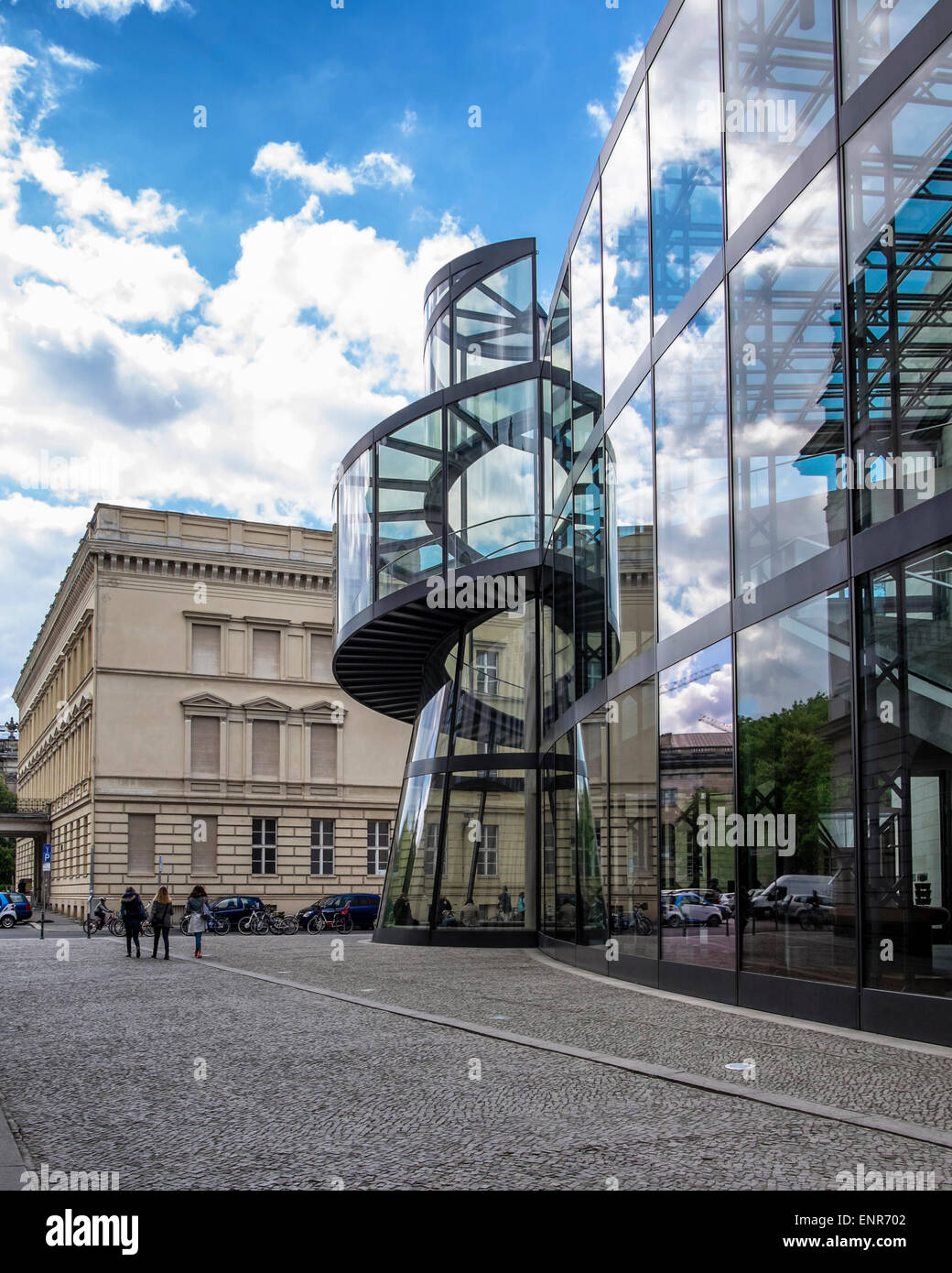
The museum continues to evolve, integrating new exhibitions and digital archives that expand on the original vision. Yet, the architecture remains the constant. Whether a visitor is exploring the intricacies of Jewish philosophy in the galleries or standing in the silence of the Holocaust Tower, they are always interacting with Libeskind’s lines.
By translating the intangible—fear, hope, absence—into steel, concrete, and zinc, Libeskind created more than a museum. He created a mirror in which the city of Berlin and the world at large must look at the scars of the past to understand the responsibilities of the present.
The Jewish Museum Berlin remains a critical site for anyone seeking to understand the intersection of art, history, and human rights. As the city continues to grow and change, the museum’s jagged silhouette remains a permanent reminder that memory is not a straight line, but a complex, often painful journey.
For those planning a visit, official schedules and ticketing information can be found through the museum’s primary portal. The site encourages visitors to engage with the architecture slowly, as the physical experience is designed to be a meditative process.
What are your thoughts on the use of architecture to convey historical trauma? Do you believe that physical space can help us process grief more effectively than traditional exhibits? Share your perspective in the comments below.
Keep reading