Messina’s Controversial “Democratic Hygiene” Plan Sparks Debate Over Local Governance in Italy
In the Sicilian city of Messina, a political storm is brewing over a phrase that has ignited fierce debate: “democratic hygiene.” The term, coined by local officials amid an early election cycle, has drawn sharp criticism from civic groups who argue it reflects an alarming shift toward authoritarianism under the guise of reform. What began as a rhetorical flourish in municipal politics has now become a flashpoint in Italy’s broader conversation about transparency, accountability, and the limits of executive power in local governance.
The controversy centers on the administration of Messina’s former mayor, Cateno De Luca, who resigned in April 2026 alongside his entire governing coalition, triggering snap elections. De Luca, a polarizing figure known for his confrontational style, had framed the early vote as an opportunity for a “new phase of democratic hygiene”—a term his critics say betrays a troubling vision of politics as a moral crusade, where dissent is treated as contamination. The phrase has since been seized upon by opposition groups, including the civic collective “Rispetto Messina,” which has accused the administration of attempting to establish what it calls a “Demokratura” (a portmanteau of “democracy” and “dictatorship”) in the city.
At its core, the debate raises critical questions about the health of Italy’s local democracies: How should cities balance the require for decisive leadership with the principles of pluralism and debate? And when does political rhetoric cross the line from robust governance into something more insidious?
The Origins of “Democratic Hygiene”
The term “democratic hygiene” first surfaced in official communications in early 2026, as Messina’s municipal government grappled with mounting tensions between the mayor’s office and the city council. According to statements from De Luca’s administration, the early dissolution of the council—nearly a year ahead of schedule—was necessary to overcome what officials described as “political ungovernability.” The phrase “democratic hygiene” was later invoked in campaign materials and public speeches as a metaphor for cleansing the city’s political system of obstructionism and inefficiency.
However, critics argue the term carries dangerous connotations. In a public statement released on April 26, 2026, the civic group Rispetto Messina condemned the language as “manichean,” framing politics as a battle between “the pure and the scoriae”—a reference to those who dared to oppose the administration’s agenda. The group’s statement, which was also published in the local outlet *Stampa Libera*, warned that the rhetoric risked normalizing a “totalizing” form of power, where dissent is pathologized rather than engaged with.
The timing of the resignations added fuel to the controversy. De Luca and his coalition stepped down en masse, including members of the city’s municipal companies and other institutional bodies, in what critics described as a coordinated effort to reset the political landscape. The move came after eight years of De Luca’s leadership, during which the city saw both high-profile infrastructure projects and repeated clashes with opposition council members. The resignations paved the way for new alliances, including partnerships with groups De Luca had previously criticized as “the strong powers” of Messina’s political and economic elite—a shift that Rispetto Messina called “a betrayal of the very principles the administration claimed to uphold.”
Why the Phrase Alarms Democracy Watchdogs
The backlash to “democratic hygiene” is not merely semantic. Political scientists and democracy advocates warn that the term reflects a broader trend in Italian—and European—politics, where populist leaders increasingly frame governance as a moral crusade. Dr. Maria Teresa Grillo, a professor of political science at the University of Messina, told *World Today Journal* that the phrase is part of a “dangerous lexicon” that equates political opposition with impurity. “When you describe dissent as something that needs to be ‘cleaned,’ you’re not just using a metaphor—you’re delegitimizing the very idea of pluralism,” she said. “It’s a short step from there to justifying measures that suppress debate.”
Grillo’s concerns are echoed by international observers. The Venice Commission, the Council of Europe’s advisory body on constitutional matters, has repeatedly warned about the erosion of checks and balances in local governments across Europe. In a 2023 report, the commission noted that “the concentration of executive power, combined with rhetoric that frames opposition as illegitimate, can create conditions for democratic backsliding.” While Messina’s situation does not yet rise to the level of a constitutional crisis, the commission’s findings underscore why the “democratic hygiene” controversy has resonated beyond Sicily.
The phrase also taps into long-standing tensions in Italian politics over the role of mayors. Since the 1990s, Italy’s municipal governments have operated under a “strong mayor” system, where the executive wields significant power over the city council. While this model was designed to streamline decision-making, critics argue it has also enabled mayors to bypass opposition, particularly in cities where coalitions are fragile. In Messina, De Luca’s administration frequently clashed with the council over budget allocations, urban planning, and the management of municipal companies—conflicts that culminated in the early dissolution of the council and the snap elections now underway.
The Broader Context: Italy’s Local Governance Crisis
Messina’s political turmoil is not an isolated case. Across Italy, local governments are grappling with similar challenges: declining public trust, fragmented coalitions, and the rise of populist leaders who position themselves as outsiders battling a corrupt establishment. In 2025 alone, at least 12 Italian cities held early elections due to political deadlock, including Palermo, Catania, and Reggio Calabria. The trend has raised concerns about the stability of Italy’s municipal democracies, particularly in the south, where economic stagnation and organized crime have long complicated governance.
For Messina, the stakes are particularly high. The city, home to nearly 230,000 residents, has struggled with persistent issues, including high unemployment (18.5% as of 2025), aging infrastructure, and the lingering effects of the 1908 earthquake, which destroyed much of the city. De Luca’s administration had promised to address these challenges through ambitious projects, such as the renovation of the city’s port and the expansion of public transportation. However, his confrontational approach—including public attacks on critics and the frequent leverage of emergency decrees—often overshadowed these efforts.
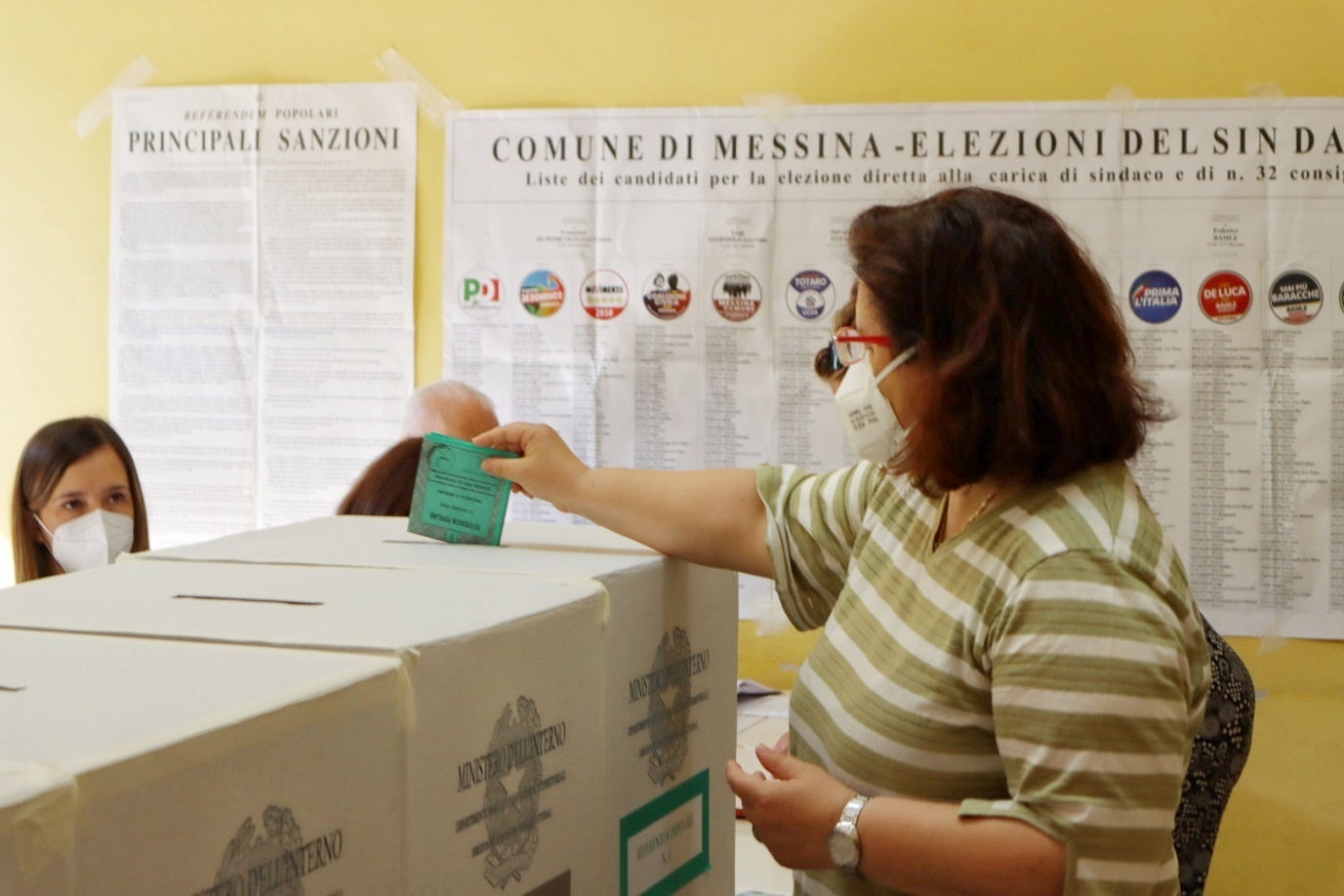
The “democratic hygiene” controversy has also highlighted the role of civic groups in holding local governments accountable. Rispetto Messina, which emerged in 2022 as a watchdog organization, has positioned itself as a counterweight to what it describes as the “oligarchic familism” of Messina’s political class. The group’s criticism of De Luca’s administration has resonated with residents frustrated by the city’s stagnation, even as some accuse the collective of being overly partisan. “We’re not against strong leadership,” said Rispetto Messina’s spokesperson in a recent interview. “We’re against leadership that treats democracy as a tool for personal power.”
What Happens Next?
Messina’s snap elections, scheduled for June 8, 2026, will serve as a referendum on De Luca’s legacy—and on the future of the city’s governance. The former mayor, who remains a dominant figure in local politics, is widely expected to run again, either as a candidate or as a kingmaker behind a proxy. His allies have already begun framing the election as a choice between “progress” and “obstruction,” a narrative that critics say mirrors the divisive rhetoric of “democratic hygiene.”
For voters, the election presents a hard dilemma. On one hand, De Luca’s administration delivered tangible results, including the completion of long-delayed infrastructure projects and a reduction in municipal debt. On the other, his governance style has left many residents wary of further centralization of power. “The question isn’t just about policies,” said Grillo. “It’s about whether Messina wants a leader who sees politics as a battle between excellent and evil, or one who accepts that democracy is messy, imperfect, and built on compromise.”
As the campaign unfolds, the phrase “democratic hygiene” is likely to remain a rallying cry—for both supporters and detractors. For De Luca’s allies, it symbolizes a necessary break from the past. For his opponents, it is a warning of what could come next: a city where dissent is not just unpopular, but unthinkable.
Key Takeaways
- The term “democratic hygiene” was coined by Messina’s former mayor, Cateno De Luca, to describe a “new phase” of governance following the early dissolution of the city council in April 2026. Critics argue the phrase reflects a dangerous trend of framing political opposition as a form of contamination.
- The controversy has sparked a broader debate about the health of Italy’s local democracies. Democracy watchdogs warn that rhetoric equating dissent with impurity can erode pluralism and justify the suppression of debate.
- Messina’s snap elections on June 8, 2026, will test public support for De Luca’s vision. The former mayor’s allies are framing the vote as a choice between “progress” and “obstruction,” while critics warn of further centralization of power.
- The city’s political turmoil is part of a larger pattern in Italy. At least 12 Italian cities held early elections in 2025 due to political deadlock, raising concerns about the stability of municipal governance.
- Civic groups like Rispetto Messina are playing an increasingly key role in holding local governments accountable. The collective has accused De Luca’s administration of attempting to establish a “Demokratura” (a democracy-dictatorship hybrid) in Messina.
FAQ
What does “democratic hygiene” mean?
The term was used by Messina’s former mayor, Cateno De Luca, to describe a “new phase” of governance aimed at overcoming political deadlock. Critics argue it frames dissent as a form of contamination, reflecting a troubling vision of politics as a moral crusade.
Why did Messina’s city council dissolve early?
The council was dissolved in April 2026 after months of clashes between the mayor’s office and opposition members. De Luca’s administration cited “political ungovernability” as the reason for the early elections, which are scheduled for June 8, 2026.
Who is Cateno De Luca?
De Luca is a polarizing figure who served as Messina’s mayor for eight years before resigning in April 2026. Known for his confrontational style, he has been both praised for delivering infrastructure projects and criticized for centralizing power and attacking opponents.
What is Rispetto Messina?
Rispetto Messina is a civic collective formed in 2022 to monitor local governance. The group has been a vocal critic of De Luca’s administration, accusing it of attempting to establish a “Demokratura” in the city.
How does this controversy fit into Italy’s broader political landscape?
Messina’s situation reflects a larger trend in Italy, where local governments are grappling with political fragmentation, declining public trust, and the rise of populist leaders. At least 12 Italian cities held early elections in 2025 due to similar deadlocks.
What Readers Can Do
For those interested in following the story, here are some verified resources:
- City of Messina’s official website (for election updates and municipal documents)
- National Association of Italian Municipalities (ANCI) (for data on local governance trends)
- Venice Commission (for reports on democratic backsliding in Europe)
The next major checkpoint in this story is the June 8, 2026, snap elections in Messina. Official results are expected to be announced within 48 hours of the vote. Until then, the debate over “democratic hygiene” serves as a reminder of the fragile balance between leadership and pluralism in local democracies.
What are your thoughts on the use of moralistic language in politics? Does it risk undermining democratic debate, or is it a necessary tool for reform? Share your views in the comments below—and don’t forget to share this article with others who care about the future of governance.