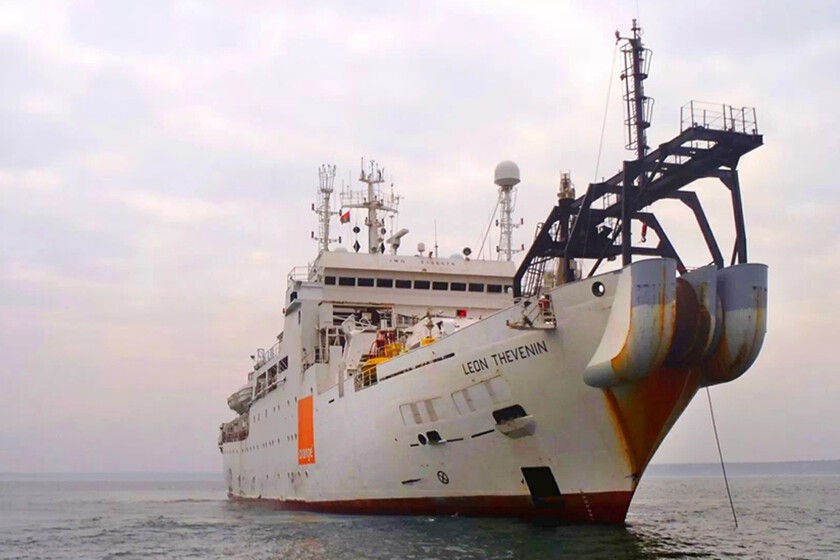
The Unsung Hero of Africa’s Internet: The 40-Year-Old French Ship Keeping a Continent Online
When internet outages strike Africa, the disruption is immediate and far-reaching. Banks freeze transactions, businesses halt operations, and millions of users find themselves cut off from the digital world. The cause? Often, it’s a damaged underwater cable—a lifeline that carries over 95% of the continent’s international data traffic. And when that happens, there’s only one solution: a call to the Léon Thévenin, a French cable-repair ship that has spent four decades quietly maintaining Africa’s digital infrastructure.
Operated by Orange Marine, a subsidiary of the French telecommunications giant Orange, the Léon Thévenin is a 107-meter vessel equipped with cutting-edge technology designed to fix broken submarine cables in some of the world’s most challenging waters. From the Atlantic coast of Ghana to the shores of Madagascar, this ship and its crew of 60 specialists work in shifts lasting weeks or even months, ensuring that Africa’s connection to the global internet remains intact. Without it, the continent’s digital economy—and the daily lives of its people—would grind to a halt.
“Submarine cables are the invisible backbone of the internet,” says TeleGeography, a research firm specializing in global internet infrastructure. “When one fails, the impact is felt within minutes.” And in Africa, where internet penetration is growing rapidly but infrastructure remains fragile, the stakes couldn’t be higher.
Why Africa Relies on a Single Ship
The Léon Thévenin isn’t just any repair vessel. Built in 1983, it was one of the first ships designed specifically for submarine cable maintenance, and it remains one of the few capable of operating in the rough waters off Africa’s coasts. Its advanced dynamic positioning system allows it to stay precisely in place—even in stormy conditions—although its remotely operated vehicles (ROVs) descend to the ocean floor to locate and repair damaged cables.
“The ship is a marvel of engineering,” says an Orange Marine spokesperson. “It combines decades of experience with modern technology to handle repairs that would be impossible for most vessels.” The Léon Thévenin is often the only option for countries along Africa’s western and eastern coasts, where cable breaks are frequent due to fishing activity, natural wear, and even sabotage.
In 2024 alone, Africa experienced at least 12 major submarine cable failures, disrupting internet access for millions. The most severe incidents occurred off the coast of West Africa, where multiple cables were damaged simultaneously, leading to widespread outages in countries like Nigeria, Ghana, and Senegal. In each case, the Léon Thévenin was dispatched to the scene, often arriving within days to begin repairs.
The High Stakes of Submarine Cable Failures
For most of the world, internet outages are an inconvenience. In Africa, they can be catastrophic. The continent’s digital economy is booming, with e-commerce, mobile banking, and remote work becoming essential to daily life. A single cable failure can cost businesses millions of dollars in lost revenue, disrupt government services, and even threaten financial stability.
“When the cables go down, everything stops,” says Akinwale Goodluck, Head of Sub-Saharan Africa at the GSMA, an industry organization representing mobile operators. “Banks can’t process transactions, hospitals can’t access patient records, and students can’t attend online classes. The economic impact is immediate.”
The financial sector is particularly vulnerable. In 2023, a cable break off the coast of South Africa caused a 24-hour outage that disrupted transactions for major banks, including Standard Bank and First National Bank. The incident highlighted just how dependent Africa’s financial systems are on a handful of underwater cables—and how fragile that dependence can be.
Even short delays in data transmission can have global consequences. In the Middle East, where cables pass through geopolitically sensitive areas like the Strait of Bab el-Mandeb, experts warn that sabotage could introduce latency of up to 110 milliseconds—enough to disrupt high-frequency trading and financial markets worldwide. While Africa’s cables are less exposed to geopolitical tensions, they remain vulnerable to accidental damage, natural disasters, and even shark bites (a surprisingly common cause of cable failures).
The Human Side of Cable Repairs
Behind the Léon Thévenin’s technical prowess is a crew of 60 engineers, technicians, and sailors who spend months at sea, often in isolation. Their missions can last anywhere from a few weeks to three months, depending on the complexity of the repair. The work is grueling: teams operate around the clock, using ROVs to locate and splice damaged cables in waters that can be thousands of meters deep.
“It’s not just about fixing cables—it’s about keeping a continent connected,” says Captain Jean-Luc Moreau, who has commanded the Léon Thévenin for over a decade. “When we arrive at a repair site, we know that millions of people are counting on us. That’s a huge responsibility.”
The ship’s crew includes specialists in fiber optics, robotics, and deep-sea navigation. Many have spent their entire careers working on submarine cables, traveling from one repair site to the next with little fanfare. Their work is largely invisible to the public, but without it, Africa’s digital future would be at risk.
One of the biggest challenges they face is the sheer scale of the cables they repair. The Medusa cable, for example, spans 8,760 kilometers and connects five European countries with North Africa. When a section of Medusa was damaged in 2025, the Léon Thévenin spent 47 days at sea repairing it—a mission that required precision engineering and near-perfect weather conditions.
The Future of Africa’s Internet Infrastructure
Africa’s reliance on a single repair ship is unsustainable in the long term. As internet demand grows—driven by everything from mobile banking to artificial intelligence—the continent needs more redundancy in its digital infrastructure. That’s why governments and private companies are investing in latest cables and repair capabilities.
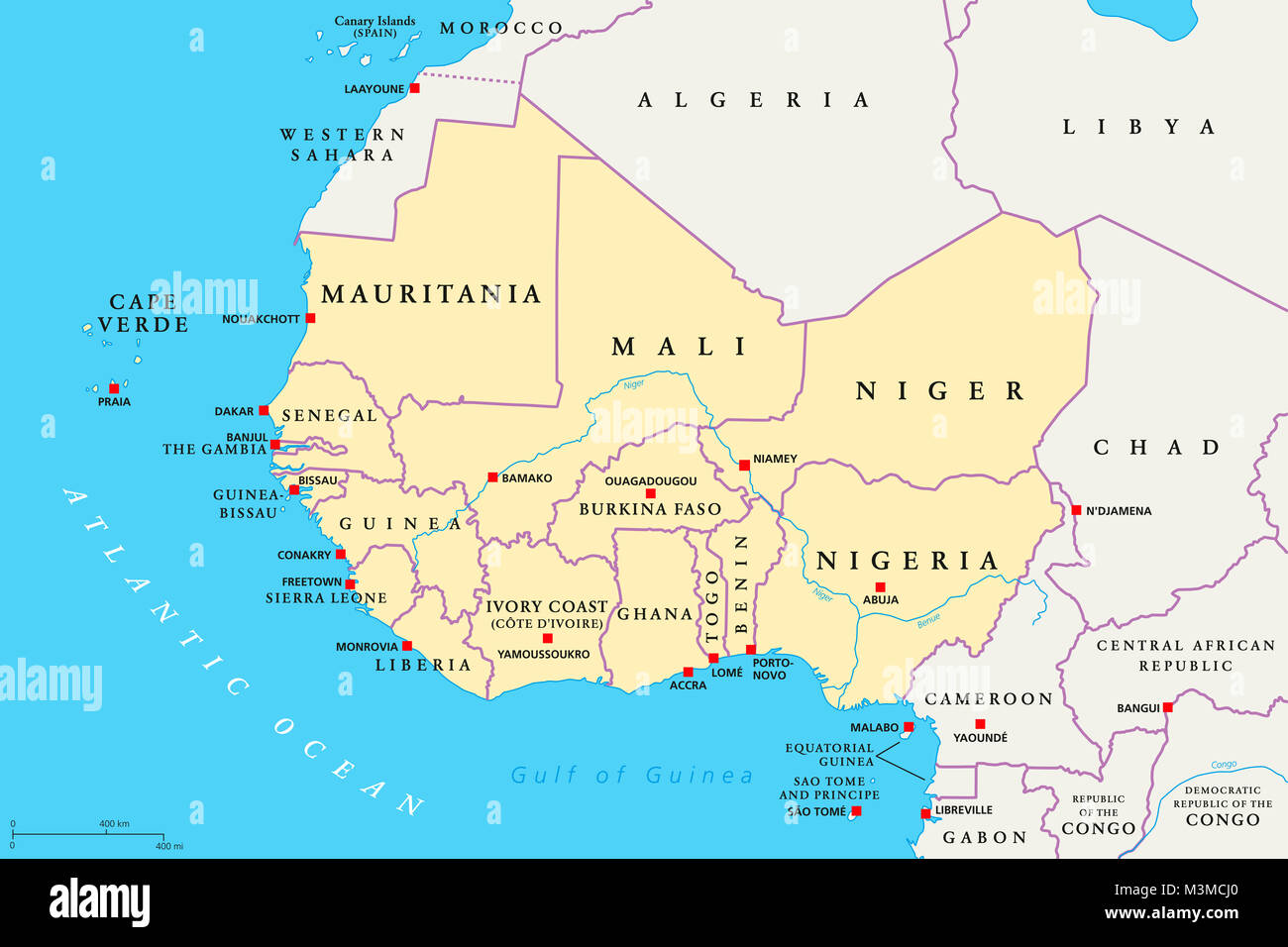
In 2025, the U.S. Government announced funding for a feasibility study to extend the Medusa cable along Africa’s Atlantic coast, potentially connecting 22 countries and improving digital access for millions. The project, led by AFR-IX Telecom, aims to create a “trusted” infrastructure aligned with Western standards—a response to concerns about reliance on cables controlled by non-Western entities.
“This is about more than just connectivity,” says AFR-IX CEO Miguel Geraldes. “It’s about economic growth, innovation, and security. A single cable failure shouldn’t be able to cripple an entire region.”
For now, though, the Léon Thévenin remains Africa’s digital lifeline. As the ship prepares for its next mission—likely another cable repair off the coast of West Africa—its crew knows that their work is more important than ever. In a world where the internet is as essential as electricity, they are the unsung heroes keeping the lights on.
What Happens Next?
The Léon Thévenin is currently docked in Cape Town, South Africa, undergoing routine maintenance before its next deployment. Orange Marine has not disclosed the ship’s next mission, but industry analysts expect it to be sent to the Gulf of Guinea, where cable failures have been frequent in recent months.
For Africa’s internet users, the message is clear: the next time your connection drops, remember that somewhere in the Atlantic or Indian Ocean, a 40-year-old French ship might be the only thing standing between you and digital darkness.
Have you experienced an internet outage due to a submarine cable failure? Share your story in the comments below.
- Overwatch New Tank Hero D.Mon Gameplay Trailer: Plasma Saber & Power Barrier Revealed
- Circle’s Cross-Chain Protocol: Enabling Seamless USDC Transfers
- South Africa Xenophobic Violence Threatens Intra-African Trade And Travel (archyworldys.com)
- China-Africa Trade Hits Record $208B Driven by Zero-Tariff Policy (time.news)