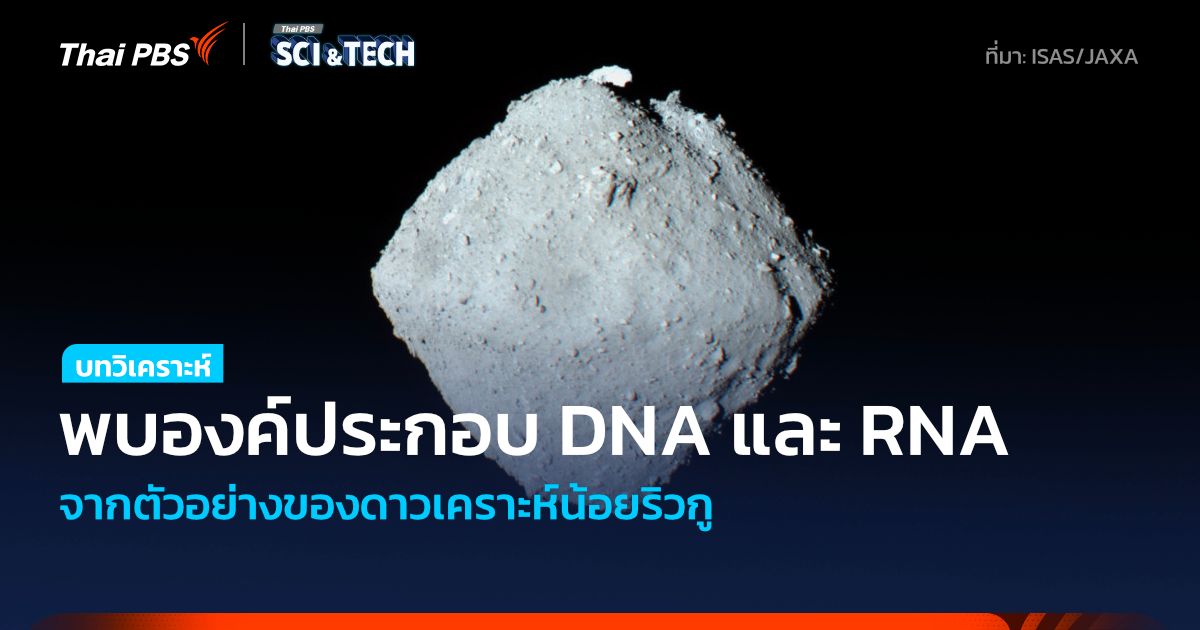
Scientists analyzing samples returned from the asteroid Ryugu have confirmed the presence of organic compounds essential to life as we know it, including nucleobases found in DNA and RNA. The discovery, made by researchers examining material collected by Japan’s Hayabusa2 mission, adds significant weight to the hypothesis that the building blocks of life may have been delivered to early Earth via extraterrestrial sources such as asteroids and comets.
The findings, published in peer-reviewed journals following detailed laboratory analysis, represent a milestone in planetary science and astrobiology. Rather than detecting complex genetic material, scientists identified specific nitrogen-containing molecules—uracil, a key component of RNA, and niacin (vitamin B3)—within the rocky fragments brought back to Earth in 2020. These substances are not evidence of life itself, but they demonstrate that prebiotic chemistry can occur and persist in space environments.
Uracil is one of the four nucleobases that make up RNA, playing a critical role in translating genetic instructions for protein synthesis. Its detection in extraterrestrial material suggests that some of the fundamental chemistry underlying biology may be widespread in the solar system. Niacin, while not a nucleobase, is vital for metabolic processes in living organisms and its presence further underscores the chemical richness of Ryugu’s regolith.
The Hayabusa2 mission, operated by the Japan Aerospace Exploration Agency (JAXA), launched in 2014 and rendezvoused with the near-Earth asteroid Ryugu in 2018. After conducting remote sensing and deploying minor landers, the spacecraft collected surface and subsurface samples using a projectile impactor to excavate material from beneath the asteroid’s weathered exterior. The sealed sample capsule returned to Earth in December 2020, landing in the Woomera Prohibited Area in Australia before being transported to JAXA’s curation facility in Sagamihara, Japan.
Initial characterization of the Ryugu samples revealed a composition rich in carbon-bearing minerals, water-bearing clays, and various organic molecules, including amino acids—previously reported in 2021. The more recent identification of uracil and niacin was achieved through advanced solvent extraction techniques followed by high-resolution mass spectrometry, allowing scientists to detect trace quantities of these compounds despite potential contamination risks.
To ensure the integrity of the findings, researchers compared the asteroid material with control samples and conducted blank tests to rule out terrestrial contamination. The consistent detection of uracil across multiple sample fractions, along with its absence or minimal presence in procedural blanks, supports the conclusion that these molecules originated from Ryugu itself. The results were published in Nature Communications in March 2023, detailing the analytical methods and contextualizing the discovery within broader theories of solar system chemistry.
This discovery does not imply that life existed on Ryugu or that the asteroid harbored biological activity. Instead, it highlights how carbonaceous asteroids—like Ryugu, which is classified as a C-type asteroid—can serve as reservoirs of organic material formed through abiotic processes in the early solar system. Such bodies may have delivered similar compounds to Earth during its formative years, potentially contributing to the prebiotic soup from which life emerged.
The implications extend beyond Earth. Understanding the inventory of organic molecules in asteroids informs the search for life elsewhere in the solar system, particularly on icy moons like Europa and Enceladus, where subsurface oceans may interact with rocky cores enriched in similar chemistry. It also aids in interpreting data from telescopic observations of distant protoplanetary disks and exoplanetary systems.
Future missions aim to build on Hayabusa2’s success. NASA’s OSIRIS-REx mission returned samples from asteroid Bennu in September 2023, and early analysis has already revealed abundant carbon and water-bearing minerals. Comparative studies between Ryugu and Bennu samples will help scientists determine how common such organic compounds are across different types of asteroids and whether variations in formation history or orbital path affect their composition.
Meanwhile, JAXA is preparing for the Martian Moons eXploration (MMX) mission, scheduled for launch in the mid-2020s, which will attempt to collect samples from Phobos, one of Mars’ moons. Scientists hope to determine whether Phobos is a captured asteroid or a fragment ejected from Mars by an ancient impact, with its composition offering clues about the transmission of organic material in the inner solar system.
As laboratory techniques continue to improve, the detection of increasingly complex organic molecules in extraterrestrial samples becomes more feasible. While the jump from nucleobases to functional genetic material remains vast, each discovery refines our understanding of how universal the ingredients of life might be—and whether the cosmos is pre-seeded with the chemistry necessary for biology to arise under the right conditions.
For ongoing updates on asteroid sample analysis and planetary science missions, readers can follow official releases from JAXA’s Hayabusa2 project page and NASA’s Astromaterials Research and Exploration Science (ARES) division, which curates extraterrestrial samples for scientific study.
What does this discovery mean for our understanding of life’s origins? Share your thoughts in the comments below, and help spread awareness of this milestone in space science by sharing the article with others interested in the frontiers of scientific exploration.
Worth a look