
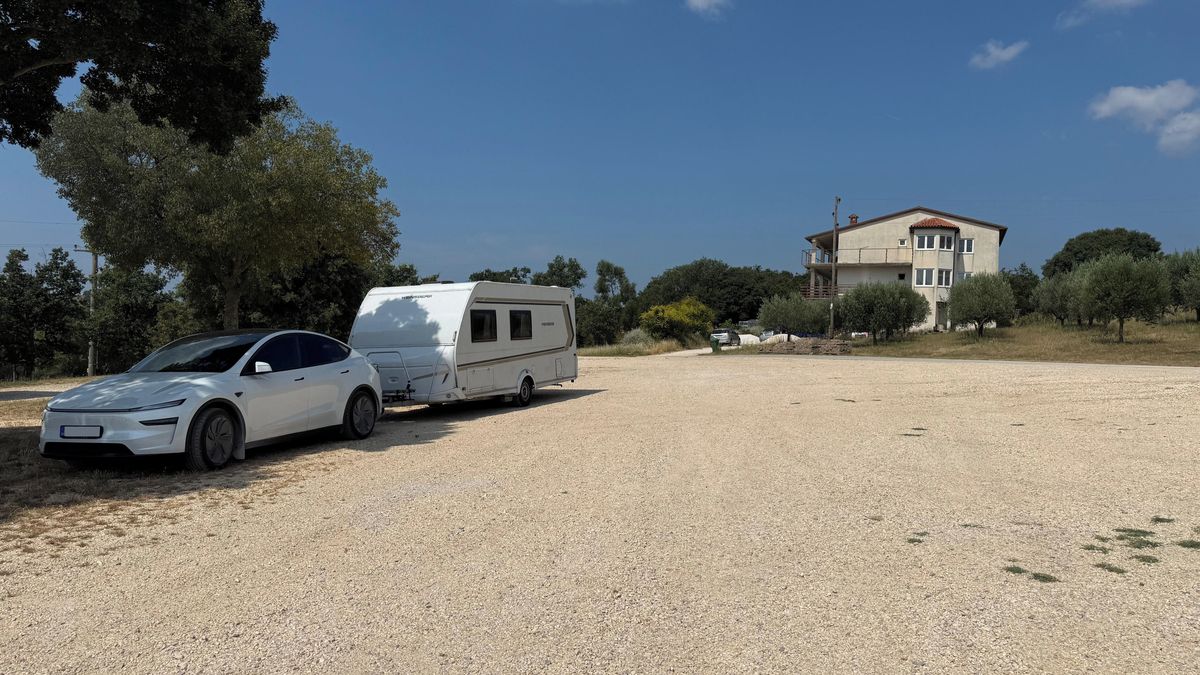
Driving an electric vehicle (EV) across Europe while towing a caravan presents a unique set of logistical challenges, particularly regarding range efficiency and charging infrastructure. A recent 1,700-kilometer journey from the Czech Republic to the Croatian coast using a Tesla Model Y and a caravan provides real-world data on how modern battery technology handles the increased aerodynamic drag and weight associated with recreational towing.
For long-distance travelers, the primary concern remains the significant reduction in range when towing. According to data from the Tesla support documentation, factors such as speed, weather, and load weight directly impact energy consumption. When a caravan is attached, the vehicle’s drag coefficient increases substantially, forcing the electric drivetrain to work harder and requiring more frequent stops at charging stations compared to standard passenger travel.
Managing Energy Consumption and Charging Logistics
The practical reality of towing with an EV involves a shift in strategy. During a 1,700-kilometer round trip, the driver must account for a reduced range, often seeing efficiency drop by 40% to 50% depending on the size and shape of the trailer. Planning is essential, as not all charging stations are designed to accommodate the combined length of an electric car and a caravan.

Drivers often utilize tools like the A Better Route Planner (ABRP) or Tesla’s in-car navigation, which calculates energy usage based on real-time consumption. However, these systems sometimes struggle to account for the specific wind resistance of a caravan. Experts in EV infrastructure, such as those at the International Energy Agency (IEA), emphasize that while the charging network across Europe has expanded significantly, the “pull-through” charging stalls—which allow vehicles to charge without unhooking a trailer—remain limited in many regions.
The Impact of Aerodynamics on Range
Physics dictates that at highway speeds, aerodynamic drag becomes the dominant force resisting the vehicle. For an EV, which relies on a finite battery capacity, this is the most significant hurdle. A standard Tesla Model Y, which might achieve an efficiency of approximately 16–18 kWh per 100 kilometers under optimal conditions, can see that figure climb significantly while towing.

To mitigate this, many experienced EV towers adopt a “slow and steady” approach. By reducing speeds from the standard 130 km/h to approximately 90–100 km/h, the energy drain is noticeably lower. This adjustment is necessary to reach the next Tesla Supercharger location without risking a depleted battery, a scenario known as “range anxiety” that continues to influence consumer sentiment regarding EVs for long-haul travel.
Infrastructure and Accessibility Challenges
One of the most frequent complaints from drivers towing caravans is the layout of charging hubs. Most stations are arranged for cars to pull in front-first. When towing, a driver may be forced to disconnect the caravan in a busy parking lot just to reach the charging cable, which adds time and physical effort to the journey.
The European Union has introduced new regulations aimed at improving this experience. Under the Alternative Fuels Infrastructure Regulation (AFIR), member states are mandated to ensure that public charging infrastructure becomes more accessible and user-friendly for all vehicle types, including those with trailers. These rules, which began taking effect in 2024, require a minimum level of service and payment interoperability across the trans-European transport network.
Future Outlook for EV Towing
As battery energy density improves and charging speeds increase, the friction associated with towing will likely decrease. Manufacturers are increasingly testing vehicles with higher towing capacities and software updates that better predict energy consumption when a trailer is detected. For now, the 1,700-kilometer trip to Croatia serves as a benchmark for what is possible with current technology: it is entirely achievable, provided the driver is willing to plan for more frequent, shorter stops and adapt their driving style to the limitations of the current charging grid.

The next major update for European charging infrastructure is expected to arrive as part of the ongoing implementation of AFIR requirements, which will be monitored by the European Commission throughout the coming year. Travelers planning similar trips are encouraged to check for the latest station layouts and use community-driven apps to verify which chargers currently offer trailer-friendly access.
Have you attempted a long-distance road trip with an electric vehicle and a trailer? Share your experiences and charging tips in the comments below.