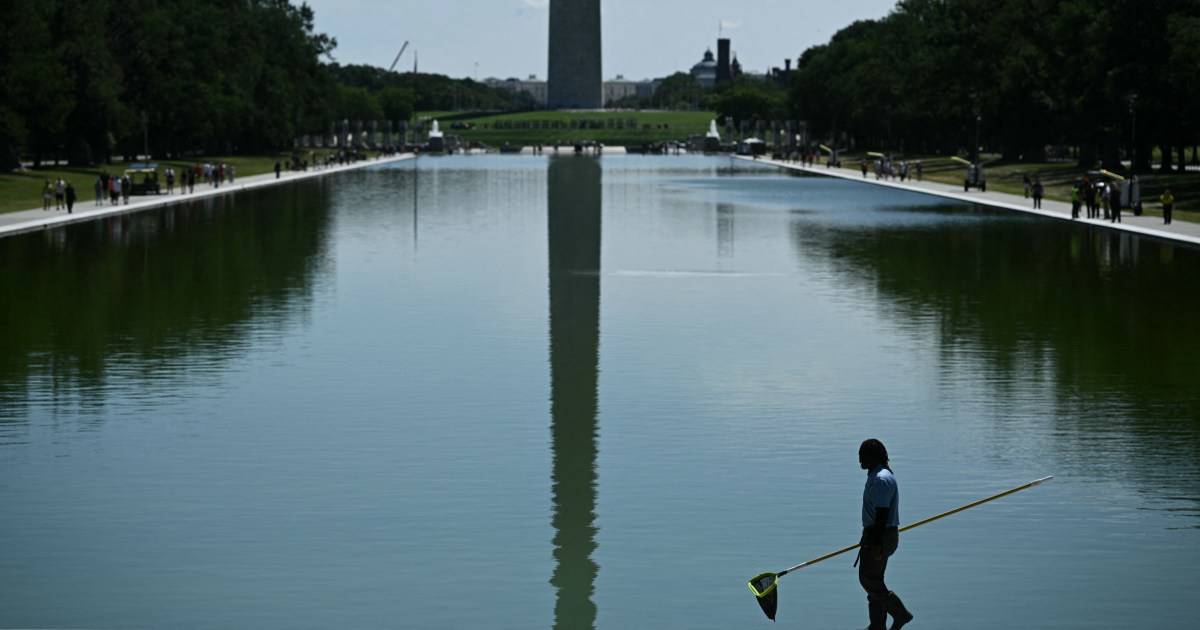
Federal prosecutors filed court documents seeking to drop all charges against former Olympic canoeist David Hearn, who had been accused of damaging the historic site during an incident in Washington, D.C. According to court filings reported by NPR, the administration acknowledged that the pool's deterioration resulted from a botched installation rather than illegal activity by Hearn.
Hearn, a former Olympian, had faced federal charges after authorities initially claimed he caused harm to the water feature. As detailed by The New York Times, federal prosecutors reassessed the physical evidence and engineering reports surrounding the site, concluding that the concrete and lining failures blamed on external vandalism were actually the product of faulty installation work predating or coinciding with the structure’s recent updates.
The path toward dismissing the case began when independent structural evaluations called initial law enforcement assumptions into question. As noted by Axios, prosecutors reviewed expert findings that indicated the cracking and shifting observed at the Reflecting Pool stemmed from substandard installation techniques and materials rather than deliberate vandalism or reckless behavior by visitors.
In this instance, subsequent engineering reviews demonstrated that installation flaws caused the physical displacement initially mistaken for a deliberate attack. According to NPR, the government formally moved to dismiss the indictment in federal court once these technical discrepancies came to light, effectively ending the prosecution.
Impact on the Accused and Public Reaction
For David Hearn, the dismissal concludes a stressful ordeal that paired his athletic legacy with an unexpected federal criminal case. Media outlets and legal observers pointed out the irony of the initial allegations, which had painted an elite athlete as a destructive force against a cherished monument. Publications such as New York Magazine highlighted the absurdity of the original narrative once the administration conceded that the pool simply suffered from structural installation issues.
Related reading