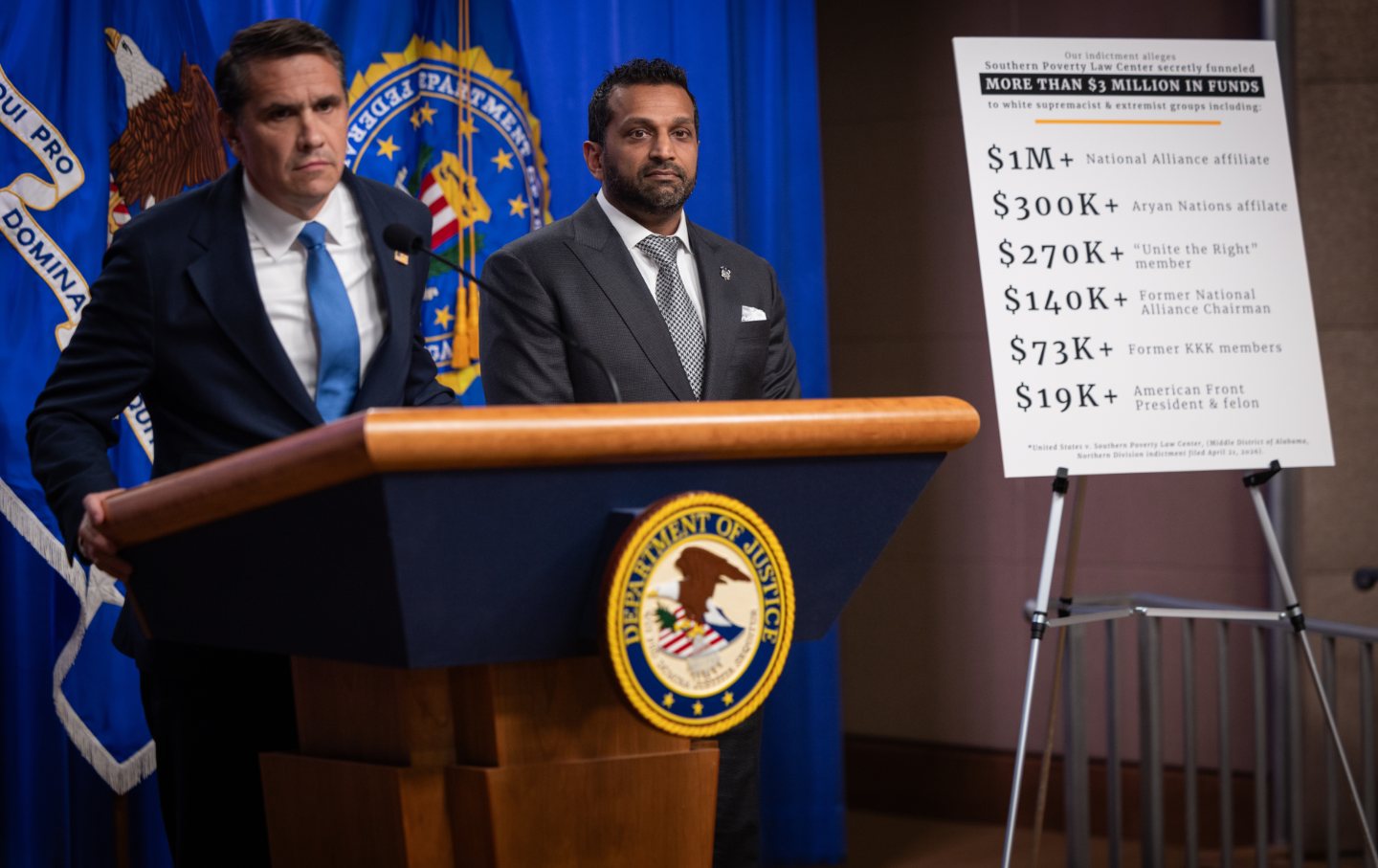
DOJ Indictment of Southern Poverty Law Center Sparks Controversy Over Political Motives
In a move that has sent shockwaves through civil rights and legal communities, the U.S. Department of Justice (DOJ) has indicted the Southern Poverty Law Center (SPLC) on 11 counts of wire fraud, bank fraud, and money laundering. The indictment, unsealed on April 21, 2026, alleges that the nonprofit organization secretly funneled more than $3 million in donor funds to individuals associated with violent extremist groups—including the Ku Klux Klan, Aryan Nations, and National Socialist Party of America—between 2014 and 2023. Yet critics argue the charges are politically motivated, designed to undermine an organization that has spent decades tracking and exposing white nationalist groups.
The SPLC, a 50-year-old civil rights organization known for its Hate Map and legal battles against extremist groups, has long been a target of conservative criticism. But the DOJ’s indictment marks an unprecedented escalation, with Acting Attorney General Todd Blanche accusing the organization of “manufacturing racism to justify its existence” during a press conference. FBI Director Kash Patel went further, claiming the SPLC “lied to their donors, vowing to dismantle violent extremist groups, and actually turned around and paid the leaders of these extremely extremist groups.”
However, the indictment itself does not accuse the SPLC of paying extremists to commit violence—a claim central to the DOJ’s public narrative but absent from the legal filing. This discrepancy has fueled accusations that the case is less about fraud and more about a broader political agenda, particularly as the Trump administration’s DOJ has faced scrutiny for its approach to civil rights enforcement.
The Charges: What the Indictment Actually Says
The 32-page indictment, returned by a grand jury in Montgomery, Alabama, outlines a complex scheme in which the SPLC allegedly misrepresented how donor funds were used. According to the DOJ, the organization paid at least eight individuals—some with ties to white supremacist groups—under the guise of “field source” payments, while publicly denouncing the same groups on its website and in fundraising materials. The indictment claims these payments were concealed through a network of shell companies and falsified bank records, constituting wire fraud, bank fraud, and money laundering.
Key allegations include:
- Between 2014 and 2023, the SPLC transferred over $3 million to individuals associated with the Ku Klux Klan, United Klans of America, National Socialist Party of America, Aryan Nations-affiliated Sadistic Souls Motorcycle Club, and American Front.
- The payments were allegedly funneled through third-party entities to obscure their true purpose, with some funds used to facilitate “the commission of state and federal crimes,” though the indictment does not specify what those crimes were.
- The SPLC is accused of making false statements to federally insured banks to secure loans and lines of credit, which were then used to sustain the payments.
The DOJ has also filed two forfeiture actions seeking to recover the alleged proceeds of the scheme, including properties and bank accounts linked to the SPLC. The case is being investigated by the FBI and IRS Criminal Investigation (IRS-CI), with the U.S. Attorney’s Office for the Middle District of Alabama leading the prosecution.
A Legal Strategy or a Political Attack?
The SPLC has vehemently denied the charges, calling the indictment a “politically motivated assault” on its mission. In a statement released on April 22, 2026, SPLC President and CEO Margaret Huang said, “For nearly five decades, the SPLC has fought to expose and dismantle hate groups. This indictment is an attempt to silence that operate and distract from the very real threat of white nationalism in America.” Huang emphasized that the organization’s “field sources” are critical to its intelligence-gathering efforts, a practice common among watchdog groups and law enforcement agencies.
Critics of the DOJ’s case argue that the timing and rhetoric surrounding the indictment suggest a broader agenda. The SPLC has been a frequent target of conservative media and politicians, particularly for its designation of certain anti-LGBTQ+ and anti-immigrant groups as “hate groups.” In 2019, the organization faced internal turmoil after allegations of workplace discrimination and mismanagement, leading to the ouster of its co-founder, Morris Dees. However, the current indictment focuses on financial practices, not workplace culture.

Legal experts note that the case hinges on whether the SPLC’s payments to extremist-linked individuals were part of legitimate investigative work or a fraudulent scheme. “The line between undercover journalism and fraud is thin,” said Jonathan Turley, a constitutional law professor at George Washington University, in an interview with Reuters. “If the SPLC can demonstrate that these payments were part of its mission to track hate groups, the charges may not hold. But if prosecutors can prove intent to deceive donors, it could be a different story.”
Adding to the controversy is the DOJ’s own history with the SPLC. In October 2025, FBI Director Kash Patel announced that the bureau would sever ties with the organization, calling it a “partisan smear machine.” The move was widely seen as part of a broader effort by the Trump administration to distance federal agencies from groups perceived as left-leaning. The SPLC has also been a vocal critic of the administration’s immigration policies and its response to far-right violence, including the 2024 Charlottesville anniversary rally that turned deadly.
Donors and Supporters Rally Behind the SPLC
Despite the indictment, the SPLC has seen an outpouring of support from donors and civil rights organizations. Maya Lenox, a Texas-based SPLC donor, told The Nation that she views the charges as “farcical” and remains confident in the organization’s work. “The SPLC has been instrumental in bankrupting hate groups through civil litigation,” Lenox said. “This indictment feels like a desperate attempt to discredit them.”
The organization’s legal defense fund has reportedly received over $5 million in donations since the indictment was announced, with contributions coming from high-profile figures in the civil rights and philanthropic communities. The American Civil Liberties Union (ACLU) has also condemned the DOJ’s actions, calling the case “a dangerous overreach that threatens the ability of nonprofit organizations to hold extremists accountable.”
However, not all reactions have been supportive. Some former SPLC employees and whistleblowers have come forward with allegations of financial mismanagement, though these claims predate the current indictment. In 2020, a group of former staffers published an open letter accusing the organization of prioritizing fundraising over its core mission, though the letter did not allege fraud or illegal activity.
What Happens Next?
The SPLC has until May 12, 2026, to enter a plea in the U.S. District Court for the Middle District of Alabama. If convicted, the organization could face fines, restitution, and the forfeiture of assets tied to the alleged scheme. More broadly, the case could set a precedent for how nonprofit organizations interact with extremist groups, particularly those that rely on undercover sources to gather intelligence.
Legal observers note that the case is likely to hinge on two key questions:
- Intent: Did the SPLC intend to deceive donors about how their money was being used, or were the payments a legitimate part of its investigative work?
- Transparency: Did the organization take adequate steps to disclose its financial relationships with extremist-linked individuals, even if those relationships were part of its mission?
The DOJ has indicated that the investigation is ongoing and that additional indictments may be forthcoming. In the meantime, the SPLC has vowed to continue its work, including its annual Year in Hate and Extremism report, which is scheduled for release in June 2026.
Why This Case Matters Beyond the Courtroom
The indictment of the SPLC comes at a time of heightened polarization in the United States, with far-right extremism on the rise and civil rights organizations facing increasing scrutiny from conservative lawmakers. The case has turn into a flashpoint in the broader debate over free speech, hate speech, and the role of nonprofit organizations in tracking extremist groups.
For supporters of the SPLC, the indictment is a clear attempt to silence an organization that has successfully used civil litigation to bankrupt hate groups. Since its founding in 1971, the SPLC has won landmark cases against the Ku Klux Klan, neo-Nazi organizations, and other extremist groups, often securing multimillion-dollar judgments that have crippled their operations. The organization’s Teaching Tolerance program, which provides educational materials to schools, has also been a target of conservative critics who argue it promotes a left-wing agenda.

For critics, the indictment is long overdue, reflecting concerns about the SPLC’s financial transparency and its influence over public discourse. Some argue that the organization’s “hate group” designations have been used to smear mainstream conservative organizations, including religious groups and think tanks. In 2018, the SPLC paid $3.375 million in a settlement to Maajid Nawaz, a Muslim reformist, after incorrectly labeling his organization as an “anti-Muslim extremist” group.
Regardless of the outcome, the case is likely to have far-reaching implications for nonprofit organizations, particularly those that engage in investigative work or undercover reporting. If the DOJ’s charges hold, it could force other watchdog groups to reevaluate their financial practices and relationships with sources. Conversely, if the SPLC prevails, it could embolden similar organizations to continue their work without fear of legal reprisal.
Key Takeaways
- The Southern Poverty Law Center (SPLC) has been indicted on 11 counts of wire fraud, bank fraud, and money laundering, with the DOJ alleging the organization secretly funneled over $3 million to individuals linked to extremist groups between 2014 and 2023.
- The indictment does not accuse the SPLC of paying extremists to commit violence, despite claims made by DOJ officials during a press conference.
- The case has sparked accusations of political motivation, with critics arguing the Trump administration’s DOJ is targeting an organization that has long tracked and exposed white nationalist groups.
- The SPLC denies the charges, calling the indictment a “politically motivated assault” on its mission, and has received millions in donations since the charges were announced.
- The case could set a precedent for how nonprofit organizations interact with extremist groups and gather intelligence, with broader implications for free speech and civil rights advocacy.
What’s Next?
The SPLC’s arraignment is scheduled for May 12, 2026, in the U.S. District Court for the Middle District of Alabama. The organization has not yet indicated whether it will enter a plea at that time. The DOJ has stated that the investigation is ongoing, and additional indictments may be forthcoming.
For readers seeking updates, the DOJ’s official press release and the SPLC’s website are the most reliable sources for verified information. The case is expected to draw significant attention from legal experts, civil rights advocates, and watchdog groups as it progresses.
What are your thoughts on the DOJ’s indictment of the SPLC? Do you believe the charges are justified, or do they represent a political attack on civil rights organizations? Share your perspective in the comments below, and don’t forget to subscribe to World Today Journal for more in-depth coverage of global business and legal developments.
Keep reading