
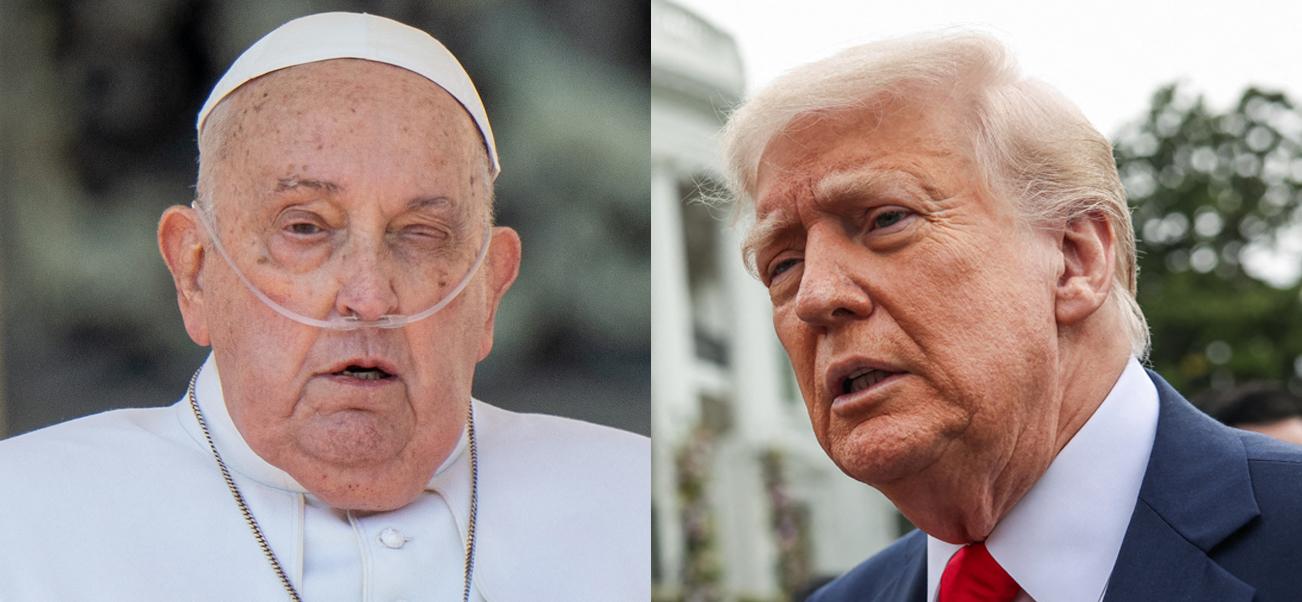
Relations between the Trump administration and the Holy See have entered a period of significant volatility following a series of public clashes involving President Donald Trump and the papacy. The friction has escalated into what some observers describe as a crisis with American Catholics, triggered by the president’s direct attacks on the Pope and the sharing of provocative AI-generated imagery.
The tension reached a peak when President Trump shared a photomontage—an AI-generated image—that appeared to represent him as Jesus. While the image initially garnered attention, Trump later deleted the post, reportedly stating, “I thought it was me.” This digital incident has sparked an unusual backlash from the “MAGA religious right,” with some conservative supporters labeling the imagery as unacceptable.
The diplomatic fallout has extended beyond the United States, drawing a sharp reaction from key European allies. Italian Prime Minister Giorgia Meloni, typically a close ally of the Trump administration, has described the president’s criticisms of Pope Leo XIV as “unacceptable.” This rare public disagreement highlights the growing strain on U.S. Relations with Europe, as the Trump administration continues to challenge the established rules-based order of international diplomacy.
Adding to the complexity is the role of Vice President JD Vance. A fervent Catholic, Vance has also been reported to have “realigned” or corrected the Pope’s positions, further complicating the administration’s relationship with the Vatican. These developments occur against a backdrop of broader geopolitical shifts, where traditional alliances are being tested by a fresh brand of Western nationalism.
Diplomatic Friction and the Vatican Conflict
The current rift is not merely a matter of social media posts but reflects a deeper ideological clash. The administration’s approach to foreign policy and social issues has frequently collided with the teachings and diplomatic priorities of the Holy See. The criticisms leveled by President Trump against Pope Leo XIV have created a precarious situation for Catholic voters in the U.S., who often locate themselves torn between their religious faith and their political loyalty to the MAGA movement.
The reaction from Rome has been notably stern. Prime Minister Giorgia Meloni’s condemnation of the attacks on the Pope serves as a critical indicator of where the “red lines” exist, even for the administration’s most steadfast international supporters. Meloni, who has maintained a close relationship with Trump, found the rhetoric directed at the papacy to be a bridge too far, signaling that the intersection of faith and nationalism has its limits.
The tension was further evidenced during Vice President JD Vance’s recent diplomatic activities. While Vance has attempted to balance his role as a representative of the Trump administration with his personal identity as a devout Catholic, his reported attempts to “recadrer” (reframe or correct) the Pope suggest a shift in how the U.S. Executive branch interacts with religious authority. Instead of traditional deference, there is a growing trend toward ideological confrontation.
The Role of AI and the ‘Religious Right’ Backlash
The incident involving the AI-generated image of President Trump as Jesus provides a window into the internal dynamics of the American religious right. For years, the MAGA movement has successfully blended political populism with evangelical and Catholic identity. However, the apply of AI to blur the line between a political leader and a divine figure has crossed a threshold for some believers.
The “fronde” (rebellion) from the religious right suggests that while these supporters are loyal to Trump’s policy agenda, they remain sensitive to perceived blasphemy or the overstepping of religious boundaries. The deletion of the image by the president indicates a recognition—perhaps delayed—that the imagery was counterproductive to his standing with a core constituency.
This episode underscores the volatility of digital diplomacy in the modern era. The speed at which an AI-generated image can be disseminated, combined with the high emotional stakes of religious faith, creates a high-risk environment for leaders who utilize social media as their primary means of communication. The resulting crisis is not just a PR failure but a theological dispute that threatens to alienate a significant portion of the American electorate.
Geopolitical Implications and European Relations
The friction with the Vatican is mirrored in the broader strain between the U.S. And Europe. During a recent trip to Italy for the Olympic Games, Vice President JD Vance met with Prime Minister Giorgia Meloni at the Prefettura di Milano. While the meeting was intended to bolster bilateral cooperation and discuss “western civilization,” it took place in an atmosphere of heightened tension.
The meeting, which included a bilateral session and a closed-door lunch, was a attempt to maintain a bridge between Washington and Rome. However, the underlying conflict regarding the Pope remains a point of contention. The contrast is stark: while Meloni and Vance discuss the values that keep Italy and the U.S. Together, the president’s rhetoric continues to alienate the very institutions that underpin those shared Western values.
Secretary of State Marco Rubio also accompanied Vance during the visit, emphasizing the administration’s desire to maintain strategic ties despite the ideological turbulence. The visit combined sports and diplomacy, but the logistical headaches of the Olympics—including traffic closures and security measures mentioned by U.S. Ambassador Tilman Fertitta—served as a metaphor for the current state of U.S.-European relations: cumbersome, strained, and fraught with obstacles.
Key Developments in the Trump-Vatican Tension
| Event | Key Action | Impact |
|---|---|---|
| AI Image Post | Trump shares AI image of himself as Jesus | Backlash from religious right. image later deleted |
| Criticism of Pope | Trump attacks Pope Leo XIV | Giorgia Meloni labels comments “unacceptable” |
| Vance’s Intervention | VP JD Vance challenges papal positions | Increased tension between the White House and Holy See |
| Milan Meeting | Vance meets Meloni during Olympics | Attempt to stabilize bilateral relations amid strain |
What So for American Catholics
For millions of American Catholics, the current crisis creates a profound identity conflict. The Catholic Church emphasizes the authority of the papacy, yet the political movement they support is increasingly antagonistic toward that same authority. This creates a “crisis of loyalty” where voters must decide if their political alignment outweighs their religious adherence.
The impact is most visible among the “religious right,” where the reaction to the AI imagery shows that there is still a boundary that cannot be crossed. If the administration continues to attack the papacy, it risks transforming a reliable voting bloc into a source of opposition. The role of JD Vance as a “fervent Catholic” was likely intended to mitigate this risk, but his own reported clashes with the Pope suggest that the administration is more interested in reshaping the Church’s influence than in adhering to its traditions.
the international dimension adds another layer of pressure. When a foreign leader like Giorgia Meloni—who shares many of Trump’s political instincts—publicly defends the Pope against the U.S. President, it validates the concerns of those Catholics who feel that the administration’s rhetoric has gone too far.
Looking Ahead: The Path to Reconciliation
The resolution of this crisis will likely depend on whether the Trump administration chooses to pivot back toward traditional diplomatic norms or continues its path of ideological confrontation. The deletion of the AI image was a tiny step toward damage control, but it does not address the fundamental disagreements regarding the role of the Church in public life and the authority of the Pope.
As the administration continues to navigate its relationships with European allies and religious constituencies, the Vatican remains a critical, if volatile, partner. The ability of the U.S. To maintain a stable relationship with the Holy See is not only a matter of faith but a matter of global diplomacy, given the Pope’s influence on issues ranging from migration to international peace.
The next critical checkpoint for these relations will be any official communication or formal meeting between the White House and the Vatican, as well as the ongoing diplomatic efforts by Vice President Vance and Secretary of State Rubio to smooth over tensions with European partners.
We invite our readers to share their perspectives on the intersection of faith and politics in the comments below. How should diplomatic relations be handled when religious and political ideologies clash?