
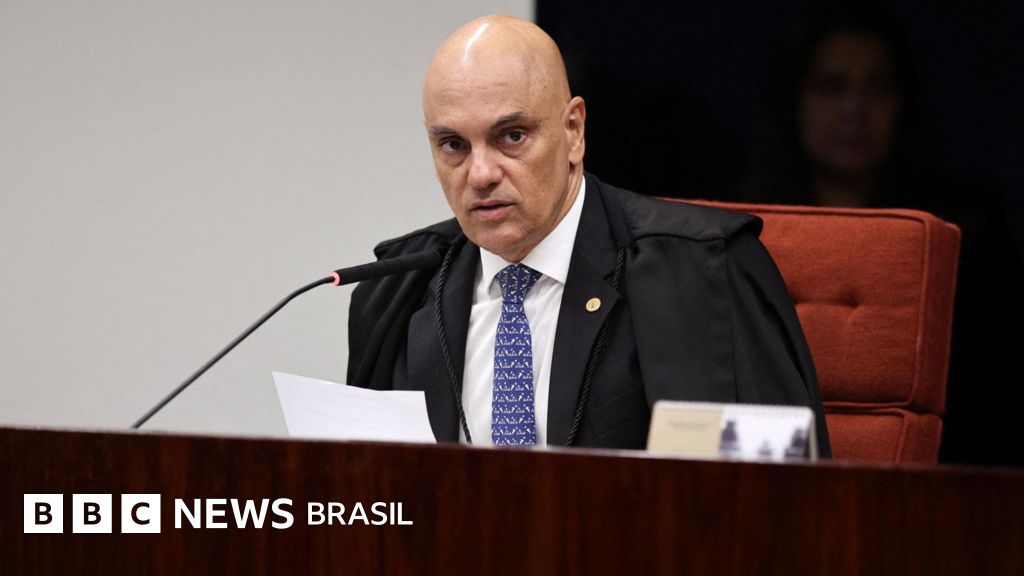
In a decisive move that underscores the ongoing legal volatility in Brazil, Supreme Court Justice Alexandre de Moraes has suspended the application of the recently enacted “Lei da Dosimetria” (Dosimetry Law). The ruling, issued on Saturday, May 9, 2026, effectively freezes a legislative effort designed to reduce the sentences and shorten the time spent in closed-regime prisons for those convicted in connection with the January 8, 2023, attacks on government buildings in Brasília.
The suspension arrives as a significant blow to former President Jair Bolsonaro and hundreds of other defendants who had hoped the new law would provide an immediate path toward leniency. By halting the law’s effects, Justice Moraes has ensured that the current, more stringent sentencing guidelines remain in place until the full plenary of the Supremo Tribunal Federal (STF) can rule on the law’s constitutionality.
The timing of the intervention is particularly stark. The Dosimetria Law was promulgated on Friday, May 8, by Senate President Davi Alcolumbre, following a Congressional effort to override a veto imposed by President Luiz Inácio Lula da Silva. The legislative victory for the opposition was viewed by many analysts as a symptom of the deteriorating relationship between Brazil’s executive branch and its legislature. However, the celebration for the convicts was short-lived, as the judiciary stepped in less than 24 hours later.
For a global audience, this clash represents more than a local legal dispute. it is a window into the struggle for institutional stability in Brazil. The tension between a legislature seeking to mitigate the punishment of political allies and a judiciary determined to uphold the severity of the January 8 convictions continues to define the country’s political landscape.
The Mechanics of the Dosimetria Law and the Legislative Clash
To understand the gravity of Justice Moraes’ decision, one must first understand what the “Lei da Dosimetria” intended to achieve. In legal terms, “dosimetria” refers to the process by which a judge determines the specific length and nature of a sentence based on the crime’s severity and the defendant’s history. The new law sought to recalibrate these calculations for the January 8 convicts, offering a reduction in total sentence lengths and easing the transition from closed-regime prisons to semi-open or open regimes.
The path to the law’s promulgation was fraught with political conflict. President Lula had originally vetoed the measure, arguing that reducing penalties for those who attempted to overturn the 2022 election results would undermine the rule of law and encourage future democratic instability. However, on April 30, the Brazilian Congress exercised its power to override that veto, signaling a shift in the legislative balance of power.
The subsequent promulgation by Senate President Davi Alcolumbre on May 8 was intended to make these benefits immediate. Under Brazilian legal principles, when a new criminal law is more favorable to the defendant (known as lex mitior), it is generally applied retroactively. This triggered a wave of urgent petitions from defense attorneys seeking the immediate reduction of sentences for their clients.
Moraes’ Intervention: Constitutionality and the STF
Justice Alexandre de Moraes, who has served as the central judicial figure in the investigations into the January 8 riots, acted swiftly to block these requests. In his ruling, Moraes cited new legal challenges questioning the particularly constitutionality of the Dosimetria Law. He argued that the potential for irreparable harm—or the premature release of individuals deemed a threat to democratic institutions—necessitated a suspension until the Supremo Tribunal Federal (STF) could conduct a full review.
The suspension is not a final strike against the law but a “monocratic” (individual) decision intended to preserve the status quo. Moraes indicated that the application of the law must wait for a judgment by the court’s plenary, where all justices will vote on whether the legislature exceeded its authority or if the law violates constitutional mandates regarding the protection of the state.
Up to the point of the suspension, Justice Moraes had already reviewed and denied eight individual requests for sentence reduction based on the new legislation. These denials set a precedent that the court would not allow the law to be implemented piecemeal before its overall legality was confirmed.
Legal Backlash and the Defense’s Perspective
The decision has sparked immediate condemnation from the legal teams representing the January 8 defendants. The defense argues that the suspension is a bureaucratic maneuver that ignores fundamental principles of criminal law, specifically the right of a prisoner to benefit from a more lenient law as soon as it is promulgated.

Hélio Júnior, a prominent lawyer representing several convicts—including Débora Rodrigues, widely known as “Débora do Batom”—expressed deep concern over the ruling. Júnior characterized the move as a “bureaucratic suspension” and questioned why Justice Moraes opted to block the effects of a beneficial penal law before a definitive plenary decision was reached. According to the defense, the immediate application of such laws is a standard legal expectation, and the suspension represents an undue delay in the administration of justice.
This friction highlights a recurring theme in recent Brazilian jurisprudence: the tension between the “letter of the law” as passed by Congress and the “interpretive authority” of the Supreme Court. While the defense sees a violation of legal rights, the court sees a necessary safeguard against the political dilution of justice for crimes against the state.
Institutional Implications: Executive vs. Legislative vs. Judiciary
The saga of the Dosimetria Law serves as a microcosm of the broader power struggle currently playing out in Brasília. The sequence of events—a presidential veto, a congressional override, and a judicial suspension—illustrates a government in a state of constant institutional friction.
- The Executive: President Lula’s failed veto suggests a waning ability to control the legislative agenda, particularly on issues regarding the accountability of the previous administration.
- The Legislative: The Congress’s success in overriding the veto demonstrates a strong desire among lawmakers to provide a legal “off-ramp” for those convicted in the January 8 events, likely reflecting the political pressures of their constituencies.
- The Judiciary: Justice Moraes’ suspension reinforces the STF’s role as the ultimate arbiter of Brazilian politics, capable of neutralizing legislative wins that it deems contrary to the constitutional order.
For observers of international law, this dynamic is reminiscent of other global trends where judiciaries are increasingly called upon to resolve deep political polarizations that legislatures are unable or unwilling to settle through compromise.
What This Means for the Convicted
For the hundreds of individuals currently incarcerated or under judicial supervision, the suspension means that the “clock” on their current sentences continues to run without the benefit of the reductions promised by the Dosimetria Law. Those who were hoping for a transition to semi-open regimes or a full release will remain in their current status for the foreseeable future.
The impact is particularly significant for high-profile figures, including former President Jair Bolsonaro, whose legal battles continue to mount. The suspension ensures that any potential reduction in his penalties—should he be convicted in other ongoing probes—will not be automatically granted via this specific legislative shortcut until the STF gives its final approval.
Key Legal Timeline of the Dosimetria Conflict
| Date | Event | Outcome |
|---|---|---|
| April 30, 2026 | Congressional Vote | President Lula’s veto of the Dosimetria Law was overturned. |
| May 8, 2026 | Promulgation | Senate President Davi Alcolumbre officially promulgated the law. |
| May 9, 2026 | Judicial Suspension | Justice Alexandre de Moraes suspended the law’s application. |
| TBD | STF Plenary Review | The full court will decide the law’s constitutionality. |
The Path Forward: The Plenary Judgment
The next critical checkpoint in this legal drama will be the scheduling of the STF plenary session. Unlike a monocratic decision, which is issued by a single justice, a plenary decision involves the collective vote of the court’s members. This process is typically more rigorous and carries the full weight of the judiciary’s authority.
Legal experts suggest that the court will focus on whether the Dosimetria Law constitutes an “unconstitutional interference” in the judicial process. If the court finds that the law was designed specifically to protect a small group of political actors rather than to reform sentencing guidelines generally, it could be struck down entirely.
Conversely, if the court finds the law constitutional, the suspension will be lifted, and a massive wave of sentence recalculations will begin, potentially leading to the release of dozens, if not hundreds, of prisoners.
As Brazil moves toward this inevitable confrontation, the world remains watchful of how the country balances the need for legal leniency with the imperative of protecting democratic institutions from violent disruption.
Next Update: We are monitoring the STF docket for the announcement of the plenary hearing date. Further updates will be provided as the court releases its schedule for the constitutionality review.
Do you believe the judiciary is overstepping its bounds, or is this a necessary check on legislative influence? Share your thoughts in the comments below or share this article to join the conversation.