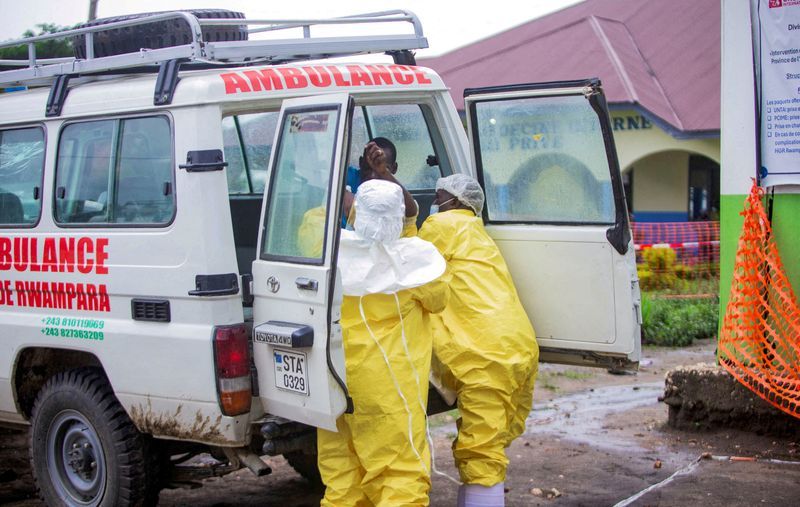
The Democratic Republic of Congo has reported a surge in Ebola cases to 4,120, with 1,887 deaths, according to the Ministry of Communication. While official data from July 26 cited 3,200 cases, health authorities are now managing an intensified outbreak that has strained treatment centers to 139 percent capacity.
Escalating Case Counts and Fatality Rates
Government figures released by the Congolese Ministry of Communication indicate a significant rise in the Ebola epidemic. Data collected through August 6 places the fatality rate at 45.8 per cent.
Health officials report that treatment centers in the region are currently operating at 139 percent capacity.
Containment Challenges and Surveillance Gaps
Efforts to control the virus face significant operational hurdles.

Health officials have noted challenges in early testing, which may have contributed to delays in response efforts. The National Institute of Biomedical Research confirmed that all suspected cases from a quarantined river boat tested negative for the Bundibugyo strain, easing concerns about the virus spreading to Kinshasa.
In mid-July, authorities addressed fears regarding the potential spread of the rare Bundibugyo virus strain to Kinshasa. Over 200 passengers on a river boat were placed in quarantine at the port of Maluku, roughly 65 kilometers from the capital, following the death of a traveler who exhibited symptoms consistent with the disease. However, the National Institute of Biomedical Research confirmed that all suspected cases from the vessel tested negative for the virus, easing immediate concerns for the capital.
International Response and Funding Initiatives
In response to the accelerating spread of the pathogen, the World Health Organization (WHO) officially declared the outbreak a Public Health Emergency of International Concern (PHEIC) on May 17. WHO Director-General Dr. Tedros Adhanom Ghebreyesus has emphasized the necessity of a more robust international intervention.

To support these efforts, the WHO and the Africa Centres for Disease Control and Prevention (Africa CDC) launched a joint $518 million continental preparedness and response plan on June 5.
As the epidemic intensifies with sustained transmission, the focus remains on closing the gap in contact tracing and expanding medical capacity. While the government urges the public to remain calm, the ongoing monitoring efforts continue to struggle against the pace of the virus’s spread in eastern territories.
Related reading