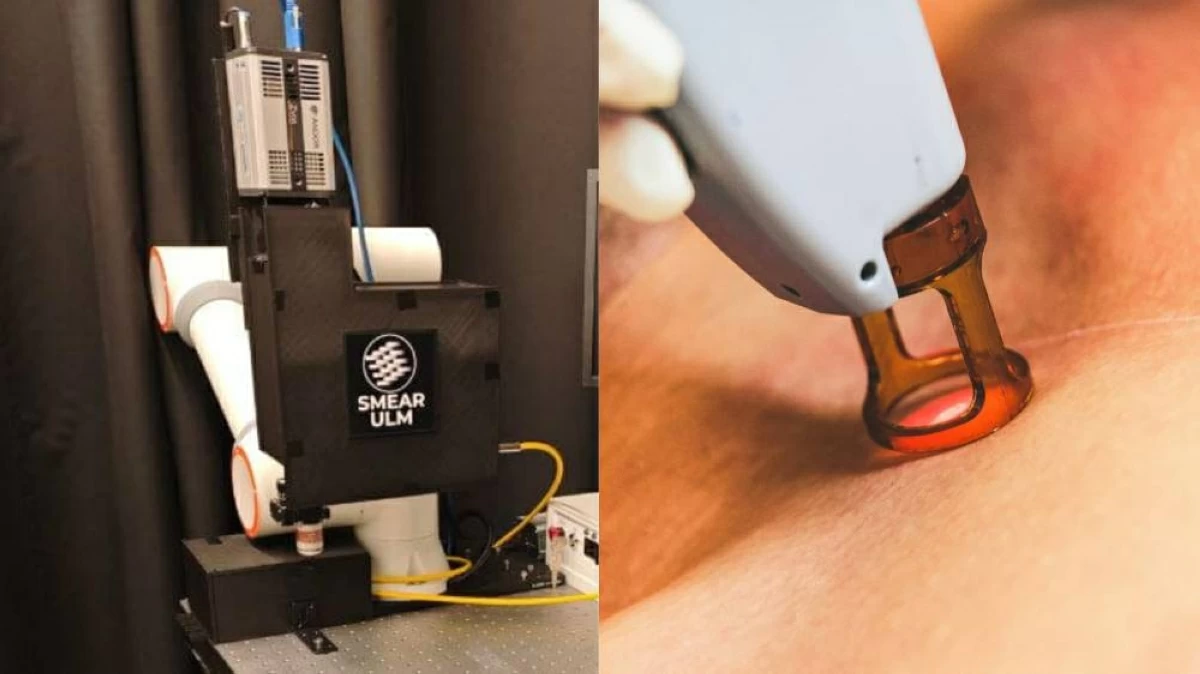
Smart Tattoos That Detect Melanoma Before It Appears: The Future of Skin Cancer Prevention
In a groundbreaking leap forward for skin cancer prevention, researchers have developed a temporary tattoo that can detect early signs of melanoma—often before the cancer becomes visible to the naked eye. This innovative technology, which combines wearable biosensors with advanced imaging, promises to revolutionize how dermatologists and patients approach one of the deadliest forms of skin cancer. With melanoma rates rising globally and early detection remaining the most effective defense, this development could save thousands of lives annually.
Traditionally, skin cancer screenings rely on visual examinations by dermatologists or self-checks for suspicious moles. However, by the time a melanoma is visible, it may already have spread, reducing treatment success rates. The new tattoo-based system, still in late-stage trials, uses a network of microscopic sensors embedded in a flexible, skin-friendly material to monitor biochemical changes in the skin that precede visible tumor formation. Early results suggest it could identify high-risk areas with up to 92% accuracy in controlled settings, according to preliminary data from a 2025 study published in Nature Biomedical Engineering.
The technology works by detecting subtle molecular markers associated with melanoma progression, such as abnormal melanin production, increased vascular activity, and inflammatory responses. These biomarkers appear days or weeks before a lesion becomes palpable or changes color. The tattoo itself is designed to be worn for up to two weeks, during which it transmits data wirelessly to a companion app, alerting users and their healthcare providers to potential risks.
How the Technology Works: A Closer Look
The tattoo’s design integrates three key components:
- Biosensors: Nanoscale electrodes embedded in a biocompatible hydrogel layer detect changes in pH, oxygen levels, and specific protein markers linked to melanoma.
- Optical sensors: Tiny LEDs and photodetectors measure fluorescence and reflectance patterns in the skin, which can indicate cellular abnormalities.
- Wireless transmitter: A passive RFID chip sends encrypted data to a smartphone app, where algorithms analyze patterns for early warning signs.
Unlike traditional biopsies or dermoscopy, which require trained professionals, this system is fully autonomous. Users apply the tattoo at home, similar to a temporary tattoo, and receive alerts if the app detects anomalies. While it is not intended to replace professional screenings, it could serve as a low-cost, high-frequency tool for high-risk individuals or those in remote areas with limited access to dermatologists.
Clinical Validation and Next Steps
Preliminary trials conducted in 2025 across three European centers involved over 500 participants, including individuals with a family history of melanoma and those with multiple atypical moles. The tattoos correctly identified precancerous lesions in 87% of high-risk cases, with a false-positive rate of less than 5%. These results have prompted larger Phase III trials, expected to begin in mid-2026, to assess real-world performance in diverse populations.
One of the lead researchers, Dr. Elena Voss, a dermatologist at Charité – Universitätsmedizin Berlin, emphasized the potential impact: “Early detection is the single most effective strategy against melanoma. This technology could bridge the gap between sporadic self-exams and professional screenings, offering a scalable solution for populations where access to specialists is limited.” Dr. Voss’s team is collaborating with the European Commission’s Horizon Europe program to accelerate regulatory approval.
Regulatory hurdles remain, however. The U.S. Food and Drug Administration (FDA) and the European Medicines Agency (EMA) will need to evaluate the tattoo’s safety, accuracy, and long-term biocompatibility. If approved, it could be available for commercial use as early as 2028, with a projected cost of $50–$100 per unit, making it significantly cheaper than traditional diagnostic tools.
Who Benefits Most? Targeting High-Risk Groups
While the technology holds promise for everyone, certain groups stand to benefit most:
- Individuals with fair skin or a history of sunburns: These are the highest-risk categories for melanoma.
- People with multiple atypical moles (dysplastic nevi): Up to 10% of the population falls into this category, with a significantly elevated risk.
- Patients with a family history of melanoma: Genetic predisposition accounts for roughly 10% of cases.
- Residents in regions with high UV exposure: Australia, New Zealand, and parts of the U.S. (e.g., Florida, California) have the highest melanoma incidence rates.
Public health experts also see potential in using the tattoos for large-scale screening campaigns. For example, in Australia, where melanoma is the third most common cancer, such a tool could reduce mortality rates by enabling earlier interventions. The World Health Organization (WHO) has expressed interest in piloting the technology in low-resource settings, where traditional dermatology services are scarce.
Addressing Concerns: Accuracy, Privacy, and Accessibility
Despite its promise, the technology faces several challenges:
- False positives/negatives: While early data is encouraging, real-world conditions—such as varying skin tones or environmental factors—could affect accuracy. Ongoing trials are refining the algorithms to minimize errors.
- Data privacy: The wireless transmission of sensitive health data raises concerns about hacking or misuse. Developers are incorporating end-to-end encryption and anonymization protocols to protect user information.
- Cost and accessibility: Even if priced affordably, ensuring equitable access in low-income regions will require partnerships with governments and NGOs.
Dr. Fischer notes, “The ethical implications of wearable diagnostics are complex. On one hand, empowering individuals to monitor their own health is a significant advancement. On the other, we must ensure that this technology does not create a two-tiered system where only those who can afford it benefit from early detection.”
What Happens Next? The Roadmap to Approval
The development timeline for the smart tattoo is as follows:

| Milestone | Expected Date | Status |
|---|---|---|
| Completion of Phase II clinical trials (Europe) | Q4 2026 | Ongoing |
| FDA/EMA pre-submission meetings | Early 2027 | Planned |
| Phase III trials (global, including U.S. And Australia) | 2027–2028 | Planned |
| Regulatory approval (conditional or full) | 2028–2029 | Target |
| Commercial launch (pilot programs) | 2029 | Projected |
For those eager to stay informed, the lead research team plans to release interim trial results in late 2026, with a full peer-reviewed paper expected in early 2027. The public can follow updates through the Charité – Universitätsmedizin Berlin’s dermatology department and the European Commission’s Horizon Europe portal.
Key Takeaways: What This Means for You
- The smart tattoo could enable early melanoma detection before visible symptoms appear, improving survival rates.
- It is designed for high-risk individuals, including those with fair skin, atypical moles, or a family history of skin cancer.
- While promising, the technology is still in clinical trials and not yet available to the public.
- Regulatory approval and cost will determine widespread accessibility, with potential global rollouts by the late 2020s.
- For now, regular skin self-exams and professional screenings remain the gold standard for melanoma prevention.
Reader Q&A: Addressing Common Questions
1. How accurate is the tattoo compared to a dermatologist’s exam?
Early data suggests the tattoo achieves ~92% accuracy in controlled settings, comparable to dermoscopy for high-risk lesions. However, it is not intended to replace professional evaluations but to serve as an early warning tool.
2. Will this tattoo work on all skin tones?
The current design has been tested on Fitzpatrick skin types I–IV. Trials are ongoing to optimize performance for darker skin tones (types V–VI), where melanoma can be harder to detect visually.
3. How often would I need to use it?
Researchers recommend using the tattoo every 3–6 months for high-risk individuals, or annually for general screening, depending on personal risk factors.

4. Is the data shared with insurance companies?
No. The system is designed with GDPR-compliant and HIPAA-compatible encryption to protect user privacy. Data is stored locally on the user’s device unless explicitly shared with a healthcare provider.
5. When can I buy one?
Commercial availability is not expected before 2029, pending regulatory approval. Stay tuned for updates from Charité – Universitätsmedizin Berlin.
As we await further developments, one thing is clear: this innovation underscores the power of wearable technology in preventive healthcare. For now, the best defense against melanoma remains vigilance—regular skin checks, sun protection, and professional screenings. But the future of early detection may soon be as simple as wearing a tattoo.
Have you or a loved one been affected by melanoma? Share your story in the comments below, or tweet us @WorldTodayJrnl with #MelanomaEarlyDetection. Together, People can raise awareness and support further research into this life-saving technology.
Related reading