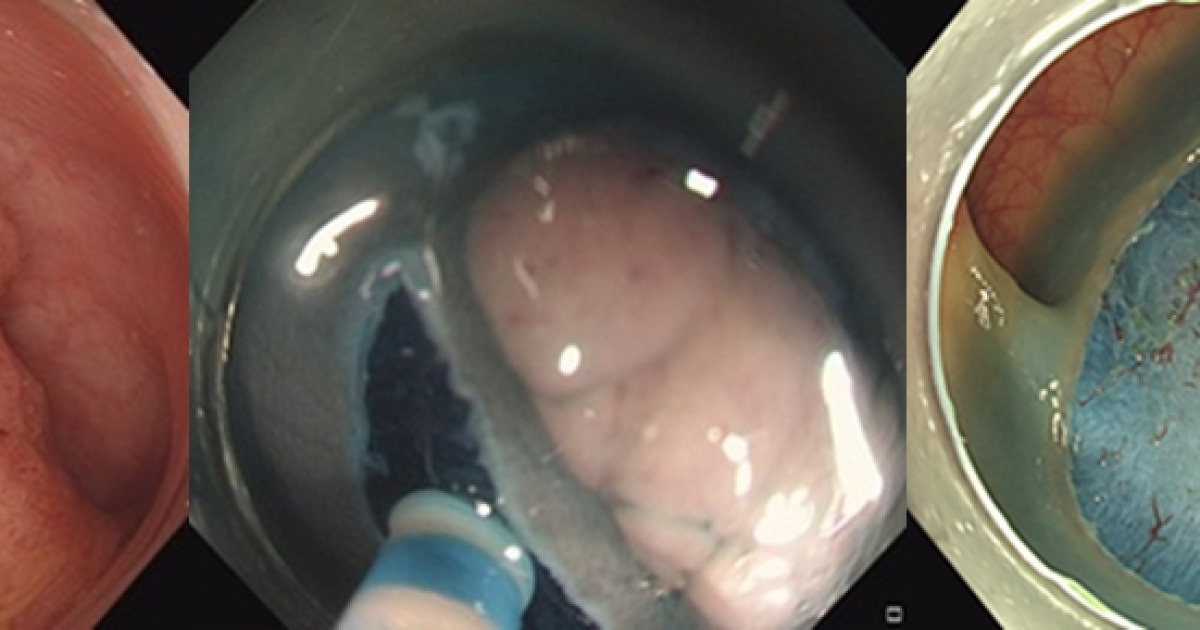
Colon Cancer in Young Adults: How Endoscopic Treatment Is Changing the Game
Berlin, April 28, 2026 — When a woman in her 30s was diagnosed with early-stage colon cancer, her medical team faced a critical decision: traditional surgery or a minimally invasive endoscopic procedure. The choice to proceed with endoscopic submucosal dissection (ESD) not only removed the tumor completely but also spared her the physical and emotional toll of open surgery. This case highlights a growing trend in oncology—one that is offering modern hope to younger patients and reshaping how we treat early-stage gastrointestinal cancers.
ESD, a precision technique developed in Japan in the late 1990s, has gained global recognition as a safe and effective alternative to surgery for select cases of early-stage colon, stomach, and esophageal cancers. Unlike conventional surgery, which often requires large incisions and lengthy recovery times, ESD uses a flexible endoscope to remove cancerous tissue layer by layer—without ever opening the abdomen. The procedure is performed entirely through the body’s natural openings, reducing complications, hospital stays, and long-term scarring.
“This isn’t just about avoiding a scar,” said Dr. Minoru Kato, a gastroenterologist at Osaka University Hospital and a pioneer in ESD research. “For many patients, especially younger ones, it’s about preserving quality of life, fertility, and even mental well-being. When you can treat cancer without surgery, you’re not just removing a tumor—you’re giving people their lives back.”
What Is Endoscopic Submucosal Dissection (ESD)?
Endoscopic submucosal dissection is an advanced endoscopic procedure designed to remove superficial tumors in the digestive tract. Using a high-definition endoscope equipped with specialized tools, physicians inject a solution beneath the tumor to lift it away from the underlying muscle layer. A compact electrosurgical knife then carefully dissects the tissue, allowing the entire lesion to be removed in one piece—what clinicians call an en bloc resection.
This technique is particularly valuable for early-stage cancers confined to the mucosal or submucosal layers of the colon, stomach, or esophagus. Unlike older methods like endoscopic mucosal resection (EMR), which often requires piecemeal removal of larger tumors, ESD enables complete removal of even large or irregularly shaped lesions in a single session. This not only improves the accuracy of pathological assessment but also reduces the risk of recurrence.

According to a 2024 meta-analysis published in Gastrointestinal Endoscopy, ESD achieves en bloc resection rates exceeding 90% for early colorectal cancers, with curative resection rates above 85% in well-selected patients. The study, which reviewed data from over 12,000 procedures across 45 centers, also found that ESD had a lower recurrence rate (1.2%) compared to EMR (5.8%) over a five-year follow-up period.
Why Younger Patients Are at Risk—and Why ESD Matters
Colon cancer has long been associated with older adults, but recent data display a troubling rise in cases among people under 50. A 2023 study in JAMA Network Open found that the incidence of colorectal cancer in adults aged 20–49 in the U.S. Has been increasing by 1%–2% annually since the mid-1990s. In South Korea, where the case of the 30-year-old woman was reported, the trend is even more pronounced: the National Cancer Center of Korea estimates that 1 in 5 new colorectal cancer cases now occur in people under 50.
While the exact causes remain unclear, experts point to a combination of genetic predisposition, dietary changes, sedentary lifestyles, and environmental factors. What is clear, however, is that younger patients often face unique challenges. Many are in the prime of their careers, raising families, or planning for parenthood—making the prospect of major surgery particularly daunting.
“For a 35-year-old woman, the idea of a colostomy or a six-week recovery from open surgery can be devastating,” said Dr. Elena Vasquez, a colorectal surgeon at the Mayo Clinic. “ESD offers a way to treat the cancer effectively while minimizing disruption to their lives. It’s not just a medical decision—it’s a quality-of-life decision.”
However, ESD is not a one-size-fits-all solution. Its success depends on several factors, including the size, location, and depth of the tumor, as well as the skill of the endoscopist. According to guidelines from the European Society of Gastrointestinal Endoscopy (ESGE), ESD is recommended for colorectal lesions larger than 20 mm that are suspected to be cancerous but have not invaded the muscle layer. For deeper or more aggressive tumors, surgery remains the standard of care.
The Procedure: What Patients Can Expect
ESD is typically performed under sedation in an endoscopy suite. The procedure lasts between 1 and 3 hours, depending on the complexity of the lesion. Patients are usually discharged the same day or after an overnight observation, with minimal discomfort. Most can return to normal activities within a few days, compared to weeks or months for surgical recovery.
Complications, while rare, can include bleeding or perforation. However, a 2025 study in Clinical Gastroenterology and Hepatology found that the overall complication rate for colorectal ESD was just 3.8%, with most cases managed endoscopically without the need for surgery. Long-term outcomes are also promising: a Japanese study tracking 1,800 ESD patients over a decade reported a 95% five-year survival rate for early-stage colon cancer treated with the procedure.
For the 30-year-old patient in South Korea, the outcome was life-changing. After a thorough pre-procedure evaluation—including imaging and biopsy—her medical team determined that her tumor was confined to the mucosal layer and measured less than 30 mm. The ESD was performed successfully, and pathology confirmed complete removal with clear margins. Six months later, she remains cancer-free and has returned to work and her daily routine.
Global Adoption and Challenges
While ESD has become the standard of care in Japan and South Korea, its adoption in Western countries has been slower. The technique requires specialized training and a high level of technical skill, and not all hospitals have the necessary equipment or expertise. In the U.S., for example, ESD is still considered an advanced procedure, with only a handful of centers offering it routinely.
“The learning curve for ESD is steep,” acknowledged Dr. Kato. “It takes years of practice to master the technique, and even then, outcomes depend on patient selection and procedural volume. That’s why it’s so essential for hospitals to invest in training and for patients to seek out experienced providers.”
To address this gap, professional societies like the American Society for Gastrointestinal Endoscopy (ASGE) have launched training programs and certification pathways for ESD. In Europe, the ESGE has published detailed guidelines to standardize the procedure and improve access. Meanwhile, technological advancements—such as artificial intelligence-assisted endoscopy and improved imaging tools—are making the procedure safer and more accessible.
What This Means for Patients and the Future of Cancer Care
The rise of ESD reflects a broader shift in oncology toward less invasive, more precise treatments. As screening programs expand and early detection improves, more patients are being diagnosed at stages where minimally invasive procedures like ESD can be effective. Here’s particularly important for younger patients, who may face decades of follow-up care and the long-term effects of more aggressive treatments.
For those at risk, experts emphasize the importance of regular screening, especially for individuals with a family history of colorectal cancer or symptoms such as unexplained weight loss, blood in the stool, or persistent abdominal pain. The American Cancer Society recommends that average-risk adults begin screening at age 45, while those with higher risk factors may need to start earlier.
“The message isn’t just ‘get screened,’” said Dr. Vasquez. “It’s ‘recognize your options.’ If you’re diagnosed with early-stage cancer, ask about ESD. Ask about the risks and benefits. And most importantly, ask about the experience of the team treating you. This isn’t just about survival—it’s about living well after cancer.”
Key Takeaways
- ESD is a minimally invasive procedure that removes early-stage gastrointestinal tumors without surgery, offering faster recovery and fewer complications.
- It is most effective for tumors confined to the mucosal or submucosal layers of the colon, stomach, or esophagus, with en bloc resection rates exceeding 90%.
- Colon cancer is rising in younger adults, making early detection and less invasive treatments increasingly important for quality of life.
- Not all patients are candidates for ESD—selection depends on tumor size, location, depth, and the skill of the endoscopist.
- Global adoption is growing, but access remains limited in some regions due to training and resource constraints.
- Regular screening is critical, especially for those under 50 with risk factors or symptoms.
What’s Next?
The next major milestone in ESD development is likely to come from ongoing clinical trials evaluating its long-term efficacy and safety in larger, more diverse patient populations. Researchers are also exploring the use of ESD in combination with other therapies, such as immunotherapy, for more advanced cases. In the meantime, patients and providers are encouraged to consult guidelines from organizations like the American Society for Gastrointestinal Endoscopy and the European Society of Gastrointestinal Endoscopy to stay informed about best practices.
For those facing a diagnosis, the story of the 30-year-old woman in South Korea offers a powerful reminder: cancer treatment doesn’t always have to mean surgery. With advances like ESD, the future of oncology is not just about surviving—it’s about thriving.
Have you or someone you know undergone ESD? Share your experience in the comments below, and assist us raise awareness about this life-changing procedure.