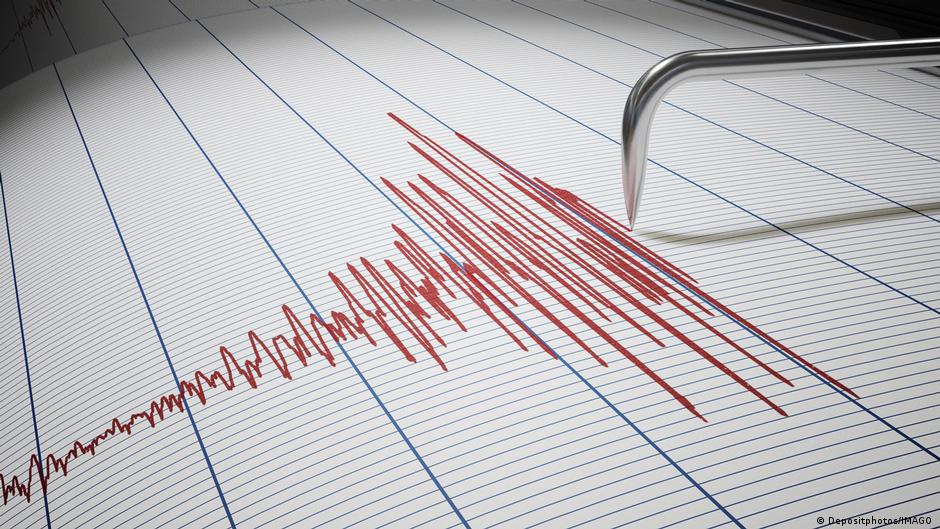
A powerful 6.2-magnitude earthquake struck southern Italy’s Calabria region late on June 1, 2026, sending shockwaves through coastal communities and prompting urgent emergency responses. The quake, centered approximately 38 kilometers west of Cosenza in the province of Cosenza, occurred at 23:12 local time (21:12 UTC) and was felt across much of the region, including the capital Catanzaro. While initial reports suggest significant structural damage, authorities are still assessing casualties and the full extent of the disaster.
Calabria, Italy’s southernmost peninsula, is no stranger to seismic activity. Located along the complex tectonic boundary where the African and Eurasian plates converge, the region experiences frequent earthquakes, though most are of moderate strength. This latest quake, however, stands out due to its depth—approximately 250 kilometers below the surface—and its proximity to densely populated areas. The combination has raised concerns about potential aftershocks and long-term infrastructure vulnerabilities.
As rescue teams and emergency services mobilize, questions remain about the immediate impact on local communities, the response capacity of regional authorities, and whether this event signals heightened seismic activity in the Mediterranean. For residents and travelers alike, understanding the risks and preparedness measures is critical. Here’s what we know so far and what steps are being taken to address the crisis.
Earthquake Details: Magnitude, Depth, and Location
According to the United States Geological Survey (USGS), the earthquake registered a moment magnitude of 6.2, with its epicenter located 38 kilometers west of Cosenza, near the Tyrrhenian Sea coast. The quake occurred at a significant depth of approximately 250 kilometers, which is unusual for the region. Most earthquakes in Calabria occur at shallower depths (typically less than 50 kilometers), making this event particularly notable for its depth and potential to generate stronger ground motion over a wider area.
The depth of the quake may have contributed to its widespread felt effects. While deeper earthquakes generally cause less damage at the surface, the energy released can travel farther through the Earth’s crust, increasing the area over which tremors are felt. Residents as far north as Basilicata and as far east as Sicily reported shaking, though no significant damage has been reported outside of Calabria.
“The depth of this earthquake is unusual for the region and suggests it may have originated from a subducting slab deeper in the mantle. This could indicate increased tectonic stress along the Calabrian Arc fault system.”
— Dr. Marco Mucciarelli, Seismologist, Istituto Nazionale di Geofisica e Vulcanologia (INGV)
Immediate Impact: Damage, Casualties, and Emergency Response
As of June 2, 2026, emergency services in Calabria are reporting widespread structural damage, particularly in the provinces of Cosenza and Catanzaro. The Italian Civil Protection Department (Dipartimento della Protezione Civile) has activated its national emergency protocol, deploying rescue teams, medical personnel, and military support to affected areas. The Italian Red Cross (CRI) has also set up temporary shelters and is coordinating food and water distribution.
Initial reports indicate that at least three people have been confirmed dead, with dozens injured requiring hospitalization. The exact number of casualties remains uncertain due to ongoing assessments in remote mountainous areas. The province of Cosenza, where the earthquake was most strongly felt, has declared a state of emergency, suspending non-essential services and urging residents to avoid damaged structures.

Power outages and disrupted telecommunications have complicated response efforts in some areas. The Italian government has pledged full support, with Prime Minister Giorgia Meloni visiting the region to oversee relief operations. The European Union’s Civil Protection Mechanism has also been activated, with offers of assistance from neighboring countries, including France and Greece.
Aftershocks and Ongoing Risks
The USGS has issued a warning that aftershocks are likely to continue for days, with the potential for additional strong tremors. Authorities are advising residents to remain vigilant and avoid returning to damaged buildings until structural assessments are completed. The Italian National Institute of Geophysics and Volcanology (INGV) has reported a series of smaller aftershocks, including a 4.5-magnitude tremor recorded at 02:47 local time on June 2.
Seismologists are monitoring the situation closely, as the depth and location of the main quake could indicate increased stress along the Calabrian Arc fault system. While there is no immediate indication of a larger seismic event, the region’s history of earthquakes—such as the 1905 Messina earthquake, which killed over 80,000 people—serves as a reminder of its vulnerability.
Calabria’s Seismic History and Preparedness
Calabria sits at the junction of the African and Eurasian tectonic plates, making it one of Italy’s most seismically active regions. Historical records document devastating earthquakes, including:
- The 1783 Calabria earthquake (magnitude ~6.2), which caused widespread destruction.
- The 1905 Messina earthquake (magnitude ~7.1), one of Italy’s deadliest natural disasters.
- The 2016 Amatrice earthquake (magnitude 6.2), which killed nearly 300 people in central Italy.
In response to these risks, Italy has implemented strict building codes in seismic zones, including Calabria. However, older structures—particularly in rural and mountainous areas—remain vulnerable. The Italian Civil Protection Department conducts regular drills and maintains a network of seismic monitoring stations to improve early warning capabilities.
For travelers and expatriates in the region, understanding earthquake preparedness is essential. Key steps include:
- Identifying safe zones in buildings (e.g., under sturdy tables or doorframes).
- Having an emergency kit with water, food, and medical supplies.
- Registering with the Italian Civil Protection Department’s emergency alerts system (protezionecivile.gov.it).
- Monitoring official updates via local radio stations or the INGV’s earthquake monitoring portal (ingv.it).
International Response and Solidarity
The earthquake has drawn international attention, with offers of aid from across Europe and beyond. The European Union’s Emergency Response Coordination Centre (ERCC) has activated its mechanism, coordinating assistance from member states. France has dispatched a medical team, while Greece has offered search-and-rescue personnel. The United Nations Office for the Coordination of Humanitarian Affairs (OCHA) is also monitoring the situation and stands ready to provide additional support if needed.
In a show of solidarity, Italy’s neighbors have extended condolences. Spanish Prime Minister Pedro Sánchez tweeted his support, while German Chancellor Olaf Scholz offered Germany’s assistance in relief efforts. The global response highlights the interconnected nature of disaster management in an era of increasing international cooperation.
Key Takeaways
- Magnitude and Location: A 6.2-magnitude earthquake struck 38 km west of Cosenza, Calabria, at a depth of ~250 km on June 1, 2026.
- Casualties: At least three deaths confirmed; dozens injured. Exact toll still being assessed.
- Damage: Widespread structural damage in Cosenza and Catanzaro provinces; power outages and telecom disruptions.
- Aftershocks: Ongoing seismic activity; authorities warn of potential strong aftershocks for days.
- Response: Italian Civil Protection and EU mechanisms activated; international aid offers from France, Greece, and others.
- Preparedness: Calabria is a high-seismic-risk zone; residents urged to follow safety protocols and monitor updates.
What’s Next: Recovery and Long-Term Planning
In the immediate aftermath, the focus remains on search-and-rescue operations, medical care for the injured, and providing shelter and supplies to displaced residents. The Italian government has pledged €50 million in emergency funding to support relief efforts, with additional resources expected from the EU’s Solidarity Fund.
Longer-term, authorities will need to address infrastructure repairs, particularly in rural areas where older buildings may have suffered severe damage. This earthquake serves as a critical reminder of the need for continued investment in seismic resilience, including retrofitting vulnerable structures and improving early warning systems.
For those affected, the Italian Red Cross and local municipalities are setting up assistance centers. Residents are advised to:
- Contact CRI Calabria for shelter and supplies.
- Report structural damage to local authorities or via the Civil Protection hotline (+39 06 8790 1).
- Follow updates from INGV for seismic activity.
Stay Informed: For real-time updates, monitor official sources:
Have you been affected by the earthquake? Share your experiences or ask questions in the comments below. Your insights may help others in the region.
This article will be updated as new information becomes available. Last verified: June 2, 2026, 14:30 UTC.
Related reading