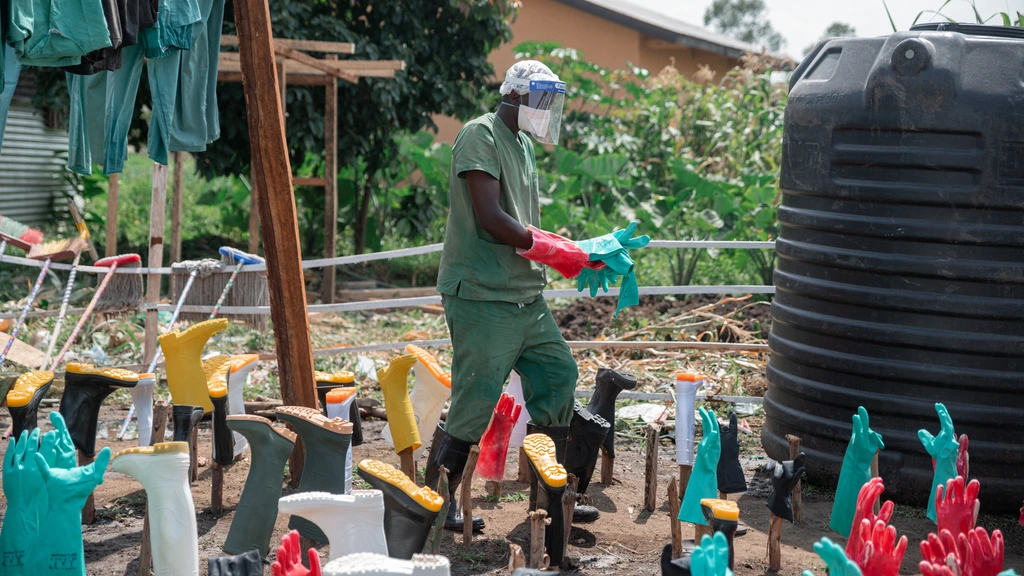
Health authorities in the Democratic Republic of the Congo (DRC) are currently managing a high-risk situation following reports of Ebola virus disease (EVD) cases within a displacement camp, heightening concerns regarding the potential for rapid transmission in densely populated humanitarian settings. Public health monitoring has intensified as teams work to isolate contacts and prevent further spread of the virus among vulnerable populations residing in temporary shelters.
The Democratic Republic of the Congo has faced numerous outbreaks of Ebola in recent decades, with the virus often appearing in remote, forested regions before reaching urban or camp environments. According to the World Health Organization (WHO), Ebola is a severe, often fatal illness in humans, characterized by the sudden onset of fever, fatigue, muscle pain, headache, and sore throat, followed by vomiting, diarrhea, and in some cases, both internal and external bleeding. The high mortality rate associated with the virus necessitates immediate containment strategies whenever a case is detected in a crowded setting.
Managing Outbreaks in High-Density Settings
When Ebola is identified in a camp for displaced persons, the primary challenge for medical responders is the lack of traditional infrastructure required for infection control. Proper isolation of patients, the use of personal protective equipment (PPE), and the rigorous tracking of contacts are complicated by the mobility of displaced populations and the limited access to clean water and sanitation. The U.S. Centers for Disease Control and Prevention (CDC) emphasizes that transmission occurs through direct contact with the blood or body fluids of an infected person, or through contact with objects contaminated with these fluids.
In response to such threats, local health ministries and international partners typically implement a surveillance system known as “contact tracing.” This involves identifying every individual who has had physical contact with a symptomatic patient within the last 21 days—the standard incubation period for the virus—and monitoring them daily for symptoms. If a contact develops a fever, they are immediately moved to an isolation unit to break the chain of transmission.
Public Health Infrastructure and Vaccination
Medical innovation has significantly altered the landscape of Ebola response in recent years. The development and deployment of the rVSV-ZEBOV vaccine have become cornerstones of outbreak management in the DRC. According to the Gavi, the Vaccine Alliance, this vaccine has demonstrated high efficacy in preventing the Zaire ebolavirus species, which is the most common and deadliest strain in the region. Vaccination strategies often utilize a “ring vaccination” approach, where the contacts and contacts-of-contacts of a confirmed case are prioritized for immunization to create a buffer zone around the virus.
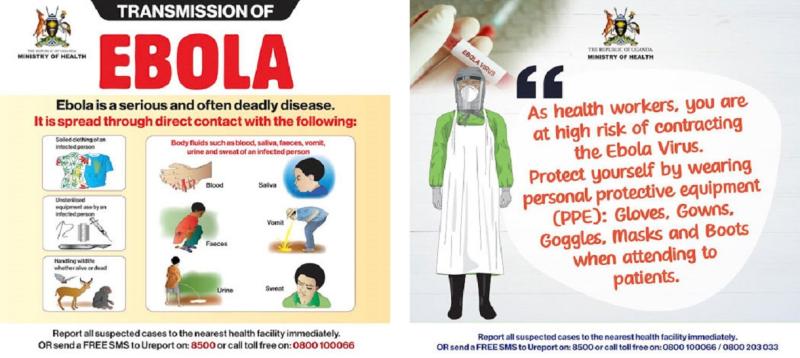
However, the effectiveness of these measures relies heavily on community trust. In many regions of the DRC, health workers face significant hurdles in educating residents about the necessity of safe burial practices and the importance of seeking early medical care. When families hide symptomatic relatives due to fear or cultural beliefs, the virus can spread undetected, making the current situation in the displacement camp a critical test for local health authorities.
Current Surveillance and Next Steps
The situation remains fluid, with ongoing updates provided by the DRC Ministry of Health and the regional offices of the WHO. Public health experts continue to monitor the camp for new symptomatic cases while simultaneously scaling up the availability of testing kits and treatment supplies. The WHO Regional Office for Africa maintains regular situation reports that detail the current status of outbreaks, laboratory confirmation rates, and the number of individuals currently under observation.

For those interested in the latest developments, the WHO Disease Outbreak News portal serves as the authoritative source for verified data on Ebola cases globally. As responders continue their efforts to contain the virus, the focus remains on rapid detection and the maintenance of a robust cold chain for vaccine distribution. We will continue to monitor official statements from the health authorities regarding the status of the camp and the implementation of further containment measures.
If you have questions about the current public health situation in the region, please check the official bulletins from the Democratic Republic of the Congo’s health ministry. We welcome your thoughts and engagement below; please share this report to help spread awareness regarding the importance of supporting humanitarian health efforts in the DRC.
Keep reading