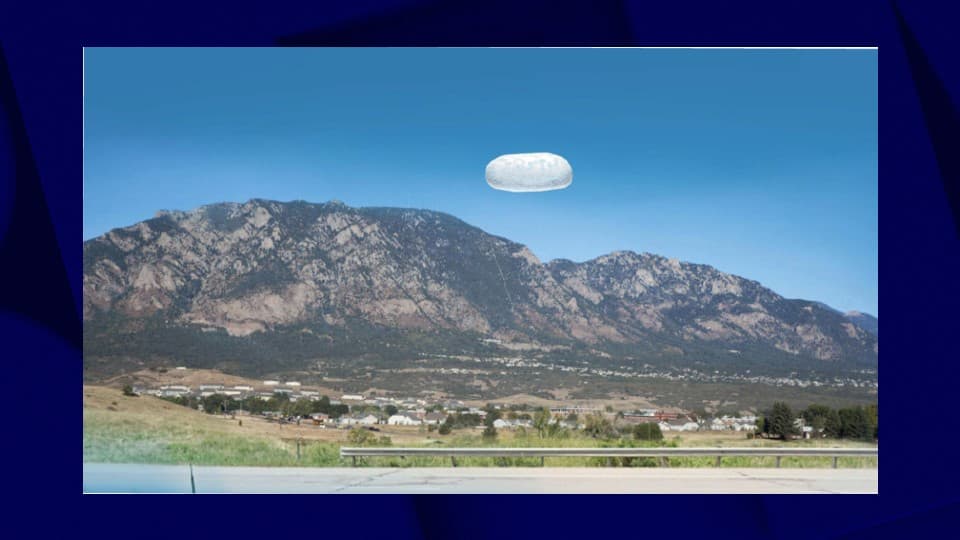
Recent declassifications and testimonies regarding Unidentified Anomalous Phenomena (UAP) have introduced new descriptions of aerial objects, ranging from spherical “orbs” to irregular, non-aerodynamic shapes, while reigniting interest in historical anomaly reports from the Soviet era. These disclosures, driven by both government transparency initiatives and Congressional oversight, aim to clarify the nature of objects that evade conventional radar and visual identification.
The focus on these phenomena has shifted from fringe speculation toward formalized intelligence analysis. Organizations such as the All-domain Anomaly Resolution Office (AARO) are tasked with investigating these sightings to determine if they represent foreign adversary technology, natural phenomena, or something else entirely. The recent influx of data includes not only modern sensor readings but also historical accounts that suggest a long-standing pattern of anomalous activity across different geopolitical eras.
As the United States government continues to release redacted files and witness testimonies, the conversation has moved into the halls of Congress. Lawmakers are increasingly focused on the potential national security implications of these objects, specifically how they interact with restricted airspace and whether they indicate a gap in current domestic defense capabilities.
What are the latest UAP disclosures revealing about object shapes?
Recent reports and whistleblower testimonies have provided a more diverse catalog of UAP descriptions than previously acknowledged by official military channels. While earlier discourse often focused on “flying saucers,” contemporary descriptions include “orbs”—spherical objects that appear to move with high velocity—and more irregular, non-aerodynamic forms. Some witnesses have described objects with shapes that resemble irregular masses, occasionally characterized in media reports by colloquial terms like “flying potatoes” to describe their lack of visible propulsion or standard flight surfaces.
According to the AARO annual report, many of these sightings involve objects that demonstrate “transmedium” capabilities, meaning they can move seamlessly between space, the atmosphere, and the ocean. This ability to transition between environments without a visible change in flight mechanics is a primary focus of current scientific and military investigation.
The variety of shapes reported can be categorized into several distinct types:
- Spherical orbs: Often reported by pilots and sensor operators, these objects appear to hover or move rapidly without engine noise.
- Disc-shaped objects: A traditional category of UAP that continues to appear in modern sensor data.
- Irregular or “blob-like” shapes: Objects that lack defined edges or aerodynamic wings, challenging current understandings of fluid dynamics.
- Tic-tac shapes: A term popularized by Navy pilot testimonies involving elongated, white objects with no visible flight control surfaces.
Military analysts are working to determine if these diverse shapes are the result of advanced “cloaking” technologies used by foreign powers or if they represent a class of physical phenomena that current human technology cannot yet replicate. The Department of Defense maintains that while many sightings remain unexplained, there is currently no verified evidence that any UAP represents extraterrestrial technology.
How does Soviet-era research connect to modern UAP reports?
The investigation into modern UAP is increasingly looking backward to historical records, including those from the former Soviet Union (USSR). During the Cold War, both the United States and the Soviet Union maintained significant interest in anomalous aerial phenomena, viewing them through the lens of intelligence and national security. Declassified documents from that era suggest that Soviet scientists and military officials conducted extensive studies on “anomalous” sightings that occurred near sensitive military installations.
Historically, the Soviet approach to these phenomena often integrated them into broader studies of atmospheric science and electronic warfare. Researchers in the USSR documented numerous cases of “strange lights” and “unidentified objects” that behaved in ways inconsistent with known aircraft of the time. These records are now being compared by modern analysts to see if the flight patterns and characteristics described in the 20th century match the data being collected by modern radar systems today.

This comparative analysis serves two purposes:
- Establishing a baseline: By understanding how anomalies were reported and tracked during the Cold War, researchers can better distinguish between historical atmospheric phenomena and modern technological developments.
- Identifying patterns: Analysts are looking for “persistent” anomalies—locations or types of objects that have been reported consistently over several decades across different geopolitical boundaries.
While the Soviet-era files provide a wealth of anecdotal and observational data, the lack of standardized sensor technology at the time means that much of this historical context remains qualitative rather than quantitative. Modern efforts aim to bridge this gap by applying contemporary physics and data modeling to these historical accounts.
What is the role of the UAP Disclosure Act in government transparency?
Legislative action in the United States has been a primary driver of recent transparency. The push for the UAP Disclosure Act, often discussed in conjunction with the National Defense Authorization Act (NDAA), seeks to mandate the declassification of historical government records related to anomalous phenomena. The goal of this legislation is to provide the public and Congress with a clearer understanding of what the government has known about these objects over the decades.
Key components of the legislative movement include:
- Mandatory Declassification: Requiring agencies to review and release records that are no longer sensitive to national security.
- Protection for Whistleblowers: Establishing legal safeguards for military and intelligence personnel who come forward with information regarding UAPs.
- Independent Oversight: Creating mechanisms for non-governmental experts to review data collected by the Department of Defense.
Lawmakers in the U.S. Congress have expressed concern that a lack of transparency could lead to a loss of public trust and could mask significant technological advancements by foreign adversaries. The debate often centers on the balance between “need-to-know” national security protocols and the public’s right to understand phenomena that may impact domestic airspace safety.
Why do these aerial anomalies matter for national security?
The investigation into UAPs is not merely a matter of scientific curiosity; it is a critical component of modern air defense strategy. If unidentified objects are capable of entering restricted airspace, maneuvering at hypersonic speeds, and operating undetected by standard radar, they represent a significant vulnerability in national security infrastructure.

The implications of these sightings can be broken down into three main areas:
1. Technological Parity: There is a persistent concern that if these objects are the product of foreign research and development, the United States may be facing a “technology gap.” Understanding the propulsion and sensor-evasion capabilities of UAPs is essential for maintaining aerial superiority.
2. Sensor Integrity: The ability of UAPs to appear on multiple sensor types—including infrared, radar, and visual sightings—suggests that they may be capable of spoofing or overwhelming current detection systems. This necessitates an upgrade to multi-domain sensor fusion technologies.
3. Flight Safety: For military and commercial pilots, the presence of unidentified objects in flight corridors poses a direct risk of mid-air collisions or unexpected maneuvers that could lead to accidents. Ensuring the predictability of airspace is a fundamental requirement for global aviation safety.
By formalizing the study of these phenomena, the government aims to move from a reactive posture—responding to sightings as they occur—to a proactive posture that can identify, track, and characterize these objects in real-time.
| Feature | Historical Approach (Cold War Era) | Modern Approach (AARO/Congressional) |
|---|---|---|
| Primary Goal | Intelligence gathering on adversary tech | Scientific characterization and transparency |
| Data Source | Pilot visual reports and early radar | Multi-domain sensor fusion (IR, Radar, Electro-optical) |
| Transparency | Highly classified/Minimal disclosure | Mandated declassification and public reports |
| Oversight | Congressional Committees & AARO |
The next major checkpoint in this process will be the release of the next scheduled AARO progress report and upcoming Congressional hearings on the implementation of the UAP Disclosure Act. These events are expected to provide further clarity on the government’s ability to resolve these anomalous sightings.
What are your thoughts on the recent UAP disclosures? Do you believe increased transparency will help solve these mysteries? Share your comments below and share this article with your network.
Keep reading