
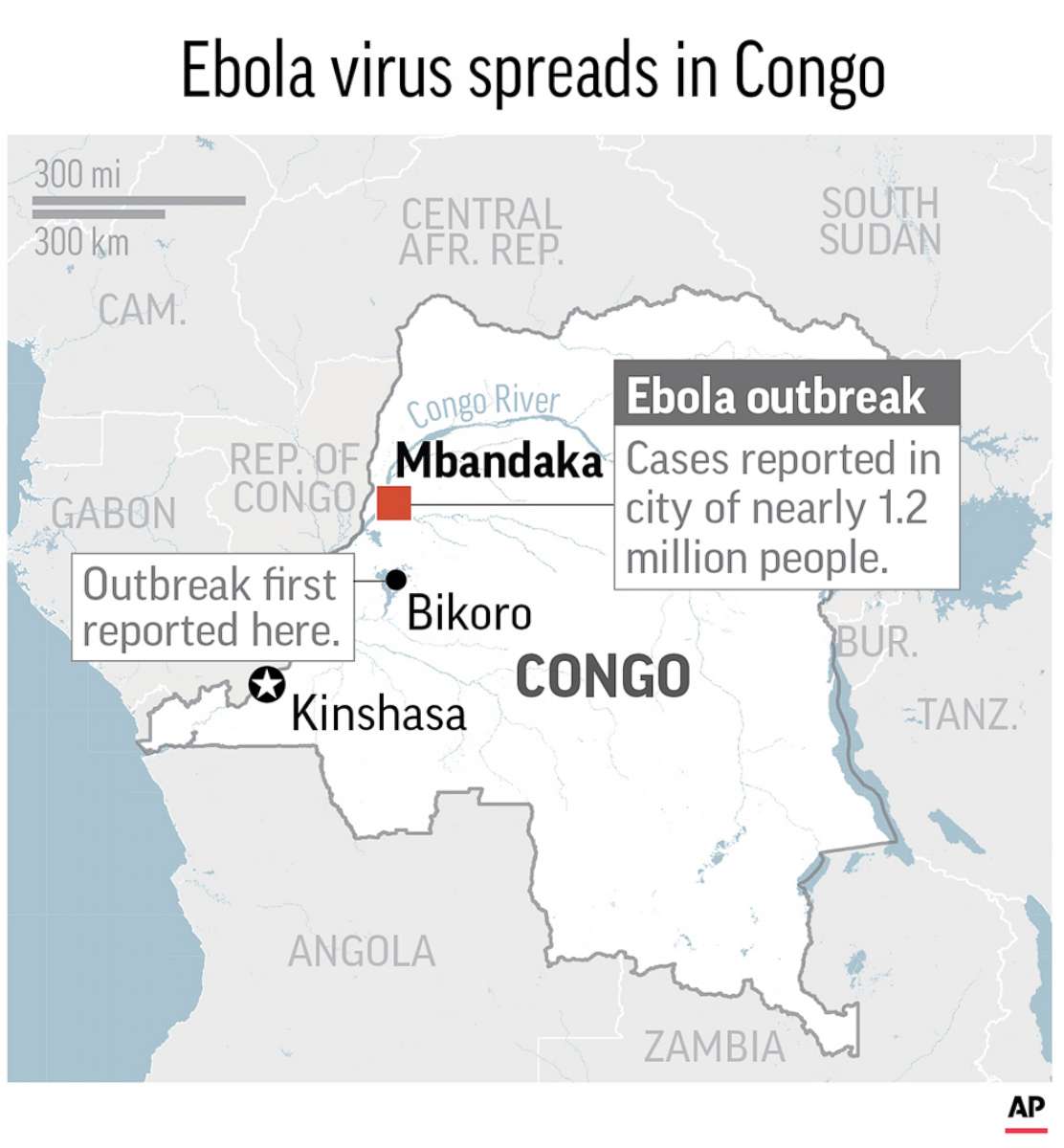
The Democratic Republic of the Congo (DRC) is currently managing an expanding outbreak of the Ebola virus, which has now been detected in four distinct provinces. Public health authorities are working to contain the spread of the virus as it reaches new regions, complicating efforts to track transmission chains and provide medical care to affected populations. The situation remains fluid, with international health agencies monitoring the logistical challenges inherent in responding to the disease across such a large, geographically complex territory.
According to the latest situation reports from the World Health Organization (WHO), outbreaks of Ebola virus disease (EVD) in the DRC are characterized by sporadic cases and clusters that often emerge in remote areas. The involvement of a fourth province underscores the persistent risk posed by the virus, which is endemic to the region. The virus, which causes severe hemorrhagic fever, remains a primary concern for local health ministries and global partners due to its high mortality rate and the potential for rapid transmission in densely populated or underserved areas.
Understanding the Current Ebola Transmission Patterns
The spread of Ebola across four provinces indicates a significant challenge for surveillance and rapid response teams. In the context of the DRC, the virus is often zoonotic, meaning it can jump from animals to humans, particularly in areas with high biodiversity and frequent human-wildlife contact. Once a human outbreak begins, the virus spreads through direct contact with the blood or bodily fluids of infected individuals, or through contact with contaminated materials.
Health officials emphasize that the primary strategy for control involves early detection, rigorous contact tracing, and the deployment of vaccination campaigns in affected communities. As noted by the WHO Regional Office for Africa, the ability to contain the virus is heavily dependent on the rapid isolation of symptomatic patients and the effective management of burial practices to prevent further exposure. The expansion of the outbreak into a fourth province necessitates a wider distribution of medical resources, including personal protective equipment (PPE) and therapeutic treatments that have been proven effective in previous outbreaks.
Logistical Challenges in Remote Healthcare Delivery
Delivering healthcare in the DRC is complicated by significant geographical and infrastructural barriers. Many of the provinces currently affected by the virus are characterized by limited road networks, dense rainforests, and fragmented communication systems. This environment makes it difficult for mobile laboratory teams to collect samples and for vaccination teams to reach the most vulnerable populations in a timely manner.
Local health centers often serve as the first point of contact for symptomatic patients. However, these facilities frequently lack the specialized isolation units required to treat Ebola patients safely. Consequently, the U.S. Centers for Disease Control and Prevention (CDC) maintains that strengthening the capacity of primary healthcare workers to recognize early symptoms—such as fever, fatigue, and muscle pain—is essential to preventing the escalation of localized clusters into larger, multi-province epidemics.
Public Health Response and Future Monitoring
The response to the current Ebola outbreak is coordinated through a multi-agency effort involving the Congolese Ministry of Health, the WHO, and various non-governmental organizations. These groups provide technical support, laboratory capacity, and logistics, while also engaging in community outreach to address misinformation about the disease. Public trust remains a critical factor; in many instances, skepticism regarding medical interventions has hindered containment efforts in the past.

As the situation develops, international observers are looking toward the next scheduled update from the Ministry of Health and the WHO to confirm the specific number of cases and the geographic extent of the transmission in the newly affected province. The persistence of the virus in multiple provinces highlights the need for sustained investment in public health infrastructure within the DRC, rather than solely relying on emergency responses when outbreaks occur. Readers seeking real-time updates are encouraged to monitor the official WHO Disease Outbreak News portal for verified data and public safety advisories.
For those interested in the ongoing efforts to manage this health crisis, further information regarding vaccination schedules and regional safety guidelines can be found through local public health offices. Please feel free to share your thoughts or questions in the comments section below as we continue to track this evolving situation.