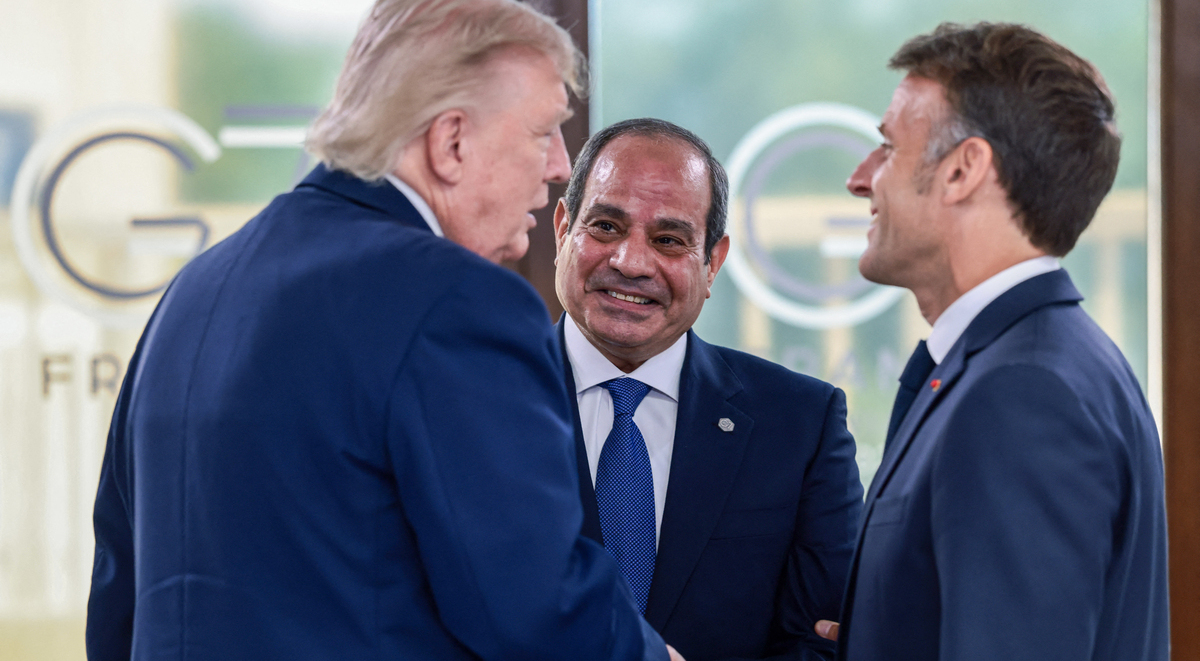
Egyptian President Abdel Fattah al-Sisi has called on Israel to cease any attempts to establish permanent military or administrative control over the Gaza Strip, warning that such actions would undermine regional stability and the viability of a two-state solution. Speaking during the G7 summit, the Egyptian leader emphasized that any “takeover” of the territory would derail ongoing diplomatic efforts and exacerbate the humanitarian crisis in the Middle East.
The Egyptian leader’s remarks come at a critical juncture in the conflict, as international pressure mounts for a sustainable ceasefire and a clear political roadmap for the Palestinian territories. Egypt, a primary mediator in the region, has consistently maintained that any long-term Israeli presence in Gaza that bypasses Palestinian governance would lead to further instability along its borders.
During discussions held at the G7 summit, President al-Sisi expressed concern that the current trajectory of Israeli military operations could lead to a permanent shift in the territory’s status. This shift, he argued, would effectively negate the possibility of a sovereign Palestinian state and create a security vacuum that could destabilize the entire Levant.
What are Egypt’s specific demands regarding Gaza at the G7?
President al-Sisi’s primary demand is the prevention of what he described as a “takeover” of Gaza by Israeli forces. This term refers to both the physical military occupation of key corridors within the strip and the potential for Israel to implement a long-term administrative or security presence that excludes Palestinian authority.
According to diplomatic reports from the summit, Egypt’s position focuses on three core pillars:
- Prevention of Displacement: Egypt remains firmly opposed to any plans that would result in the mass displacement of Palestinians from Gaza into the Sinai Peninsula.
- Political Sovereignty: The Egyptian government insists that any post-conflict governance in Gaza must be linked to a broader Palestinian political framework, rather than unilateral Israeli control.
- Humanitarian Access: Al-Sisi emphasized the need for unhindered movement of aid through border crossings, particularly the Rafah crossing, to address the acute shortage of food, medicine, and fuel.
The Egyptian presidency has frequently stated that the “liquidation” of the Palestinian cause—through the loss of territory or the denial of statehood—would be a direct threat to Egypt’s own national security. By addressing these concerns at the G7, a group of the world’s most advanced economies, Egypt is attempting to elevate the issue from a regional conflict to a global priority for the international community.
Why does an Israeli presence in Gaza impact Egyptian security?
The security implications for Egypt are deeply tied to the management of the Rafah border crossing and the stability of the Sinai Peninsula. A prolonged Israeli military presence in Gaza, particularly along the Philadelphi Corridor—the narrow strip of land running between Gaza and the Egyptian border—creates several direct risks for Cairo.
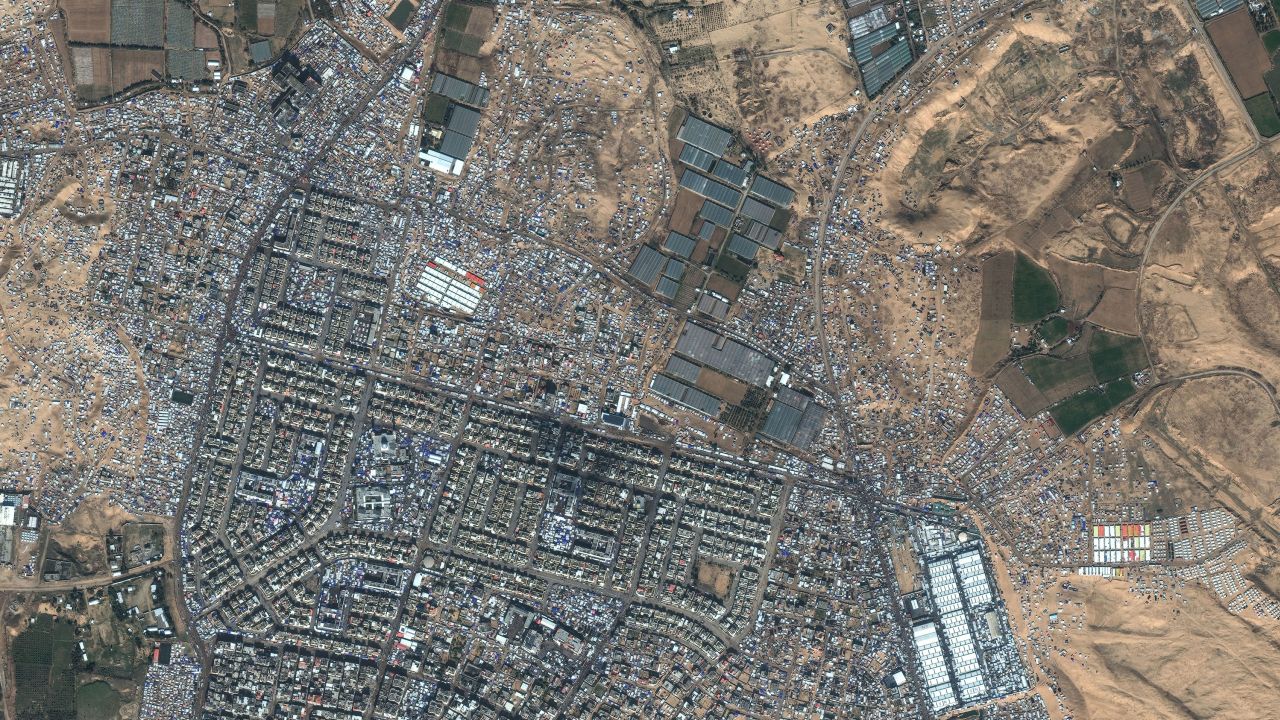
First, Egypt views the control of the border as a matter of national sovereignty. Any unilateral Israeli control over the border zones could spark friction between the two nations, which have maintained a fragile but functional peace treaty since 1979. Second, there is the risk of “spillover” violence. If Gaza becomes a zone of permanent, low-level conflict, the risk of militant incursions or instability leaking into the Sinai increases.
The situation at the Rafah crossing has been a point of intense diplomatic tension. As reported by Reuters, the control of this artery is essential for both humanitarian relief and the regulation of movement. Egypt has argued that any attempt to militarize the border in a way that restricts Palestinian movement or ignores Egyptian oversight could lead to a breakdown in regional security cooperation.
The following table summarizes the key stakeholder interests regarding the Gaza-Egypt border:
| Stakeholder | Primary Interest | Stance on Border Control |
|---|---|---|
| Egypt | National Security & Stability | Demands sovereignty and prevents mass displacement. |
| Israel | Security & Counter-terrorism | Seeks control over corridors to prevent smuggling. |
| Palestinian Authority | Governance & Sovereignty | Advocates for unified Palestinian administration. |
| G7 Nations | Regional De-escalation | Supports humanitarian access and two-state solution. |
The G7’s stance on the two-state solution and Gaza
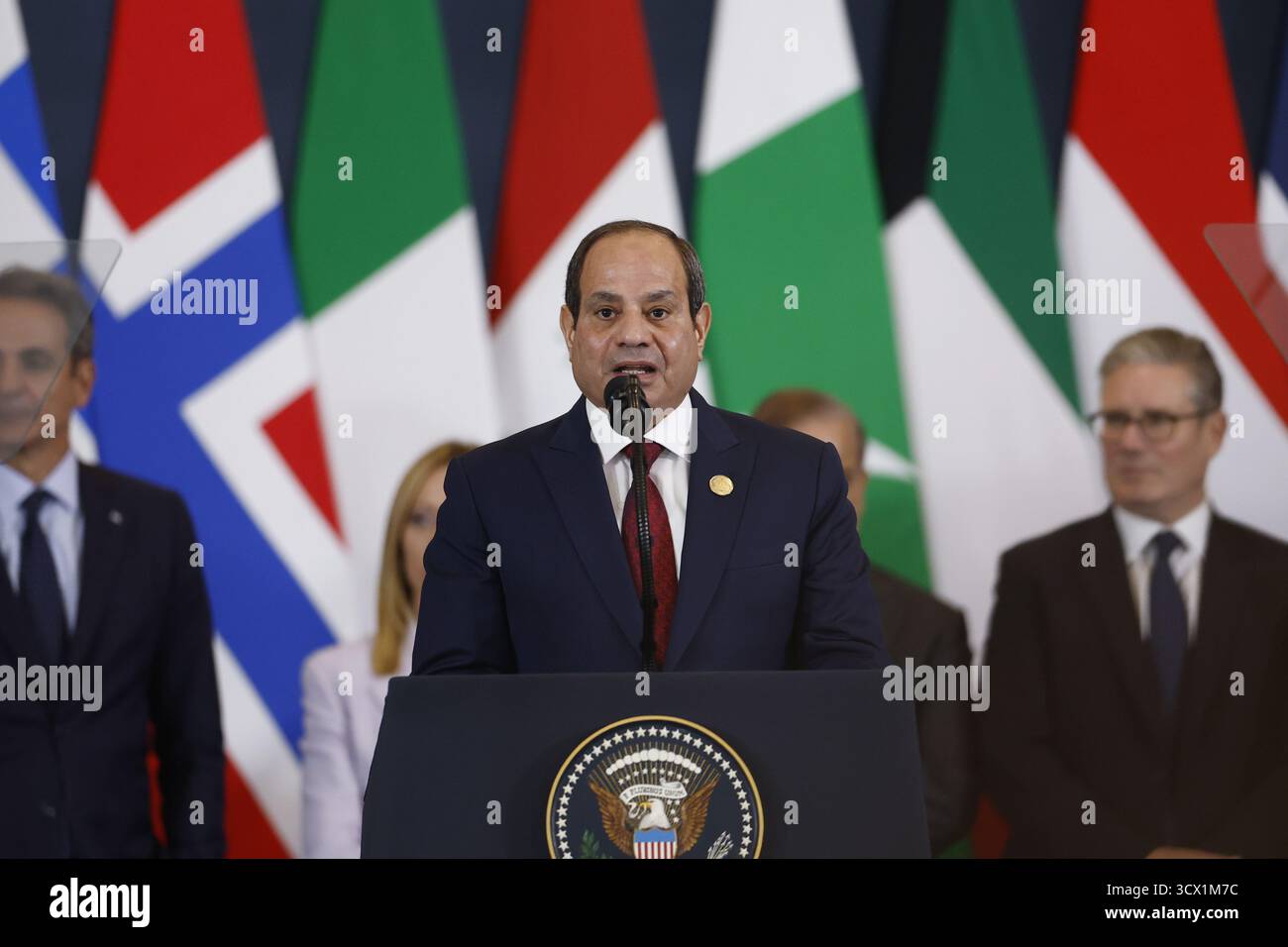
The G7 leaders, representing major global economies including the United States, Germany, France, and Japan, have largely aligned with the call for a political resolution. While the group’s consensus has varied on specific military tactics, there is a unified emphasis on the necessity of a two-state solution as the only path to lasting peace.
The G7’s involvement is significant because these nations provide much of the economic and diplomatic weight required to implement a post-war plan for Gaza. Discussions at the summit have touched upon the need for a “day after” plan that includes:
1. Reconstruction Funding: The massive scale of destruction in Gaza will require billions of dollars in international aid. G7 nations are among the primary potential donors for such a reconstruction effort.
2. Security Guarantees: For any political settlement to hold, there must be credible security guarantees that prevent the recurrence of large-scale hostilities.
3. Reforming Palestinian Governance: There is ongoing debate within the G7 regarding how to empower a revitalized Palestinian Authority to govern both the West Bank and Gaza.
By bringing President al-Sisi’s warnings to the forefront, the G7 is acknowledging that a military-only solution in Gaza is insufficient. The consensus among these leaders suggests that without a political horizon, the humanitarian and security costs will continue to rise, affecting global markets and international stability.
What happens next for the Gaza peace process?
The immediate focus remains on the negotiation of a ceasefire and hostage release deal. Egypt, alongside Qatar and the United States, continues to lead mediation efforts to bridge the gap between Israeli security requirements and Hamas’s demands for a permanent end to hostilities.
The next major checkpoint in this diplomatic process will be the upcoming rounds of negotiations, which are expected to take place in Cairo or Doha. Observers are watching for any movement regarding the status of the Rafah crossing and whether Israel will agree to a withdrawal from key Gaza corridors as part of a broader agreement.
International legal bodies, including the International Court of Justice (ICJ), also continue to monitor the situation, which adds another layer of pressure on the parties to adhere to international humanitarian law. The outcome of these diplomatic, military, and legal processes will determine whether Gaza moves toward reconstruction or remains a flashpoint for regional war.
For updates on the ongoing negotiations and regional developments, please follow our live coverage. We encourage you to share this article and join the conversation in the comments below.
Worth a look