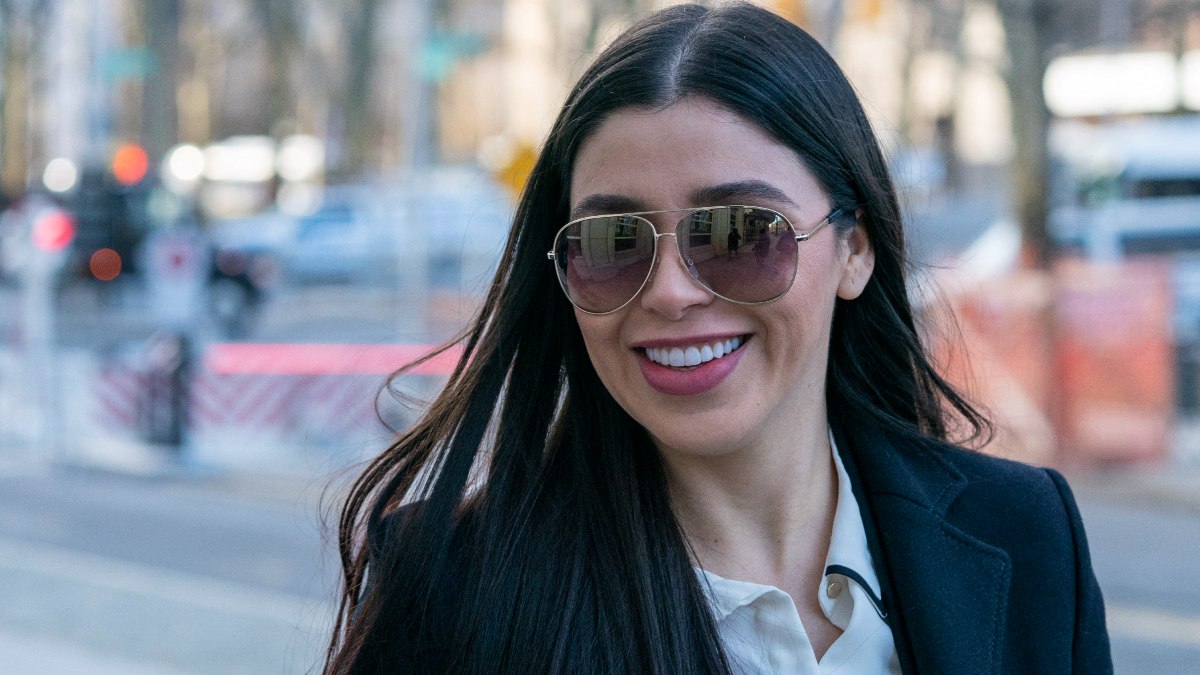
Emma Coronel Aispuro, the wife of Joaquín “El Chapo” Guzmán, has recently attracted renewed public and media attention following her appearance in social media imagery. These images, which have circulated widely across various digital platforms, depict Coronel in a beach setting, leading to significant commentary regarding her public profile and personal presentation.
Following her release from federal custody in the United States, Coronel has been subject to intense scrutiny. Her transition back into public life occurs under strict legal conditions. According to the Federal Bureau of Prisons, Coronel was released from a halfway house in Long Beach, California, on September 13, 2023, after serving time for charges related to her involvement in the Sinaloa Cartel’s operations. Her legal status remains governed by a term of supervised release, a standard component of federal sentencing in the United States.
Legal Context and Supervised Release
Coronel’s current public activities are monitored within the framework of her supervised release. In November 2021, she was sentenced by a U.S. District Court judge to 36 months in prison after pleading guilty to three counts, including conspiracy to distribute controlled substances and conspiracy to commit money laundering. This information is documented in official records maintained by the U.S. Department of Justice.
The conditions of her release, which were finalized during her sentencing proceedings, require her to maintain employment and report regularly to a probation officer. These legal mandates are designed to ensure compliance with federal law following her incarceration. While Coronel has increased her visibility on platforms such as Instagram, her legal obligations remain in effect until the conclusion of her supervised release period, which is overseen by the U.S. Probation and Pretrial Services System.
Public Reception and Media Scrutiny
The recent photographs featuring Coronel have sparked widespread discussion, particularly on social media. This phenomenon is common for individuals with high-profile backgrounds who transition back into public life. Observers have noted the contrast between her current activities and the legal proceedings that dominated headlines during her trial in Washington, D.C.

In the digital age, the “reappearance” of individuals associated with high-profile criminal cases often triggers a cycle of engagement, where personal imagery is analyzed by a global audience. This reaction is frequently driven by the intersection of celebrity culture and the notoriety associated with international criminal organizations. However, these discussions often lack context regarding the specific legal constraints placed upon the individual by the judicial system.
Understanding Supervised Release
For readers unfamiliar with the United States legal system, supervised release is not the same as parole. It is a period of supervision that occurs after a defendant has served their full prison sentence. According to the Administrative Office of the U.S. Courts, the primary purpose of this period is to facilitate the defendant’s reintegration into the community while ensuring public safety through strict monitoring of their conduct.
Key aspects of this process include:
- Mandatory Reporting: The individual must meet with a probation officer at specified intervals.
- Geographic Restrictions: Travel may be restricted or require prior approval from the court or the supervising officer.
- Employment Verification: The individual is often required to maintain steady employment or participate in vocational programs.
- Compliance: Any violation of these terms can result in the revocation of supervised release and the potential for a return to federal custody.
While Coronel’s personal life continues to draw attention, the primary focus for legal authorities remains her ongoing compliance with these court-ordered conditions. As of May 2026, there have been no official reports from the Department of Justice indicating any violations of her supervised release terms.
Looking Ahead
The interest in Emma Coronel’s life highlights the enduring public fascination with the figures surrounding the history of the Sinaloa Cartel. As she continues to navigate her post-incarceration life, she remains under the jurisdiction of the U.S. Federal court system. Further updates regarding her status would typically be found in official court dockets or through statements released by her legal counsel or the U.S. Attorney’s Office.

We invite our readers to share their thoughts on the balance between public interest and the privacy of individuals transitioning back into society after serving their sentences. For those following the broader developments in this case, official records and public court filings remain the most reliable source of information. We will continue to monitor any significant legal updates regarding this case as they are made available through official channels.
Keep reading