Epic Enters the Ambient Clinical Documentation Arena: A Shift in the Market & What It Means for Healthcare Organizations
The buzz around Artificial Intelligence (AI) in healthcare is reaching a fever pitch, and ambient speech recognition – the technology that automatically converts clinician conversations into structured clinical documentation – is at the forefront. As healthcare systems grapple with clinician burnout and the need for streamlined workflows,the demand for effective ambient solutions has exploded. The recent announcement of Epic’s foray into this space was, therefore, not a surprise, but a keenly anticipated development.
As someone who’s spent years observing the evolution of healthcare technology and advising organizations on implementation strategies,I can tell you the reaction has been overwhelmingly positive,albeit tempered with a healthy dose of realism. A recent KLAS Research study confirms this, revealing that 67% of healthcare leaders are optimistic about Epic’s entry, believing it will ultimately deliver superior integration and a more competitive price point than existing solutions. Let’s break down what this means for the market,and more importantly,for you as a healthcare leader considering your options.
Why the Excitement? The Power of Native Integration
The core appeal of an Epic-native ambient speech tool lies in its potential for seamless integration. Currently, many organizations utilize third-party solutions that require complex interfaces and data exchange with Epic. This can lead to data silos, workflow disruptions, and increased administrative burden. Epic’s promise is a solution built within the system, offering a unified experience and complete access to the patient record.
This isn’t just about convenience. True integration unlocks the full potential of ambient AI. Imagine a scenario where the AI not only transcribes the conversation but also automatically populates relevant fields in the Epic chart, triggers order sets, and even suggests potential diagnoses based on the context of the discussion. That’s the vision, and it’s a powerful one.
However, it’s crucial to acknowledge the current reality. As the KLAS report highlights, a small but vocal minority expressed frustration, feeling misled after previously being encouraged to work with Epic partners, only to see Epic develop a competing product. This underscores the importance of clarity and clear dialogue from vendors, and a careful evaluation of long-term partnerships.
Short-Term Adoption: A cautious, Yet Optimistic Outlook
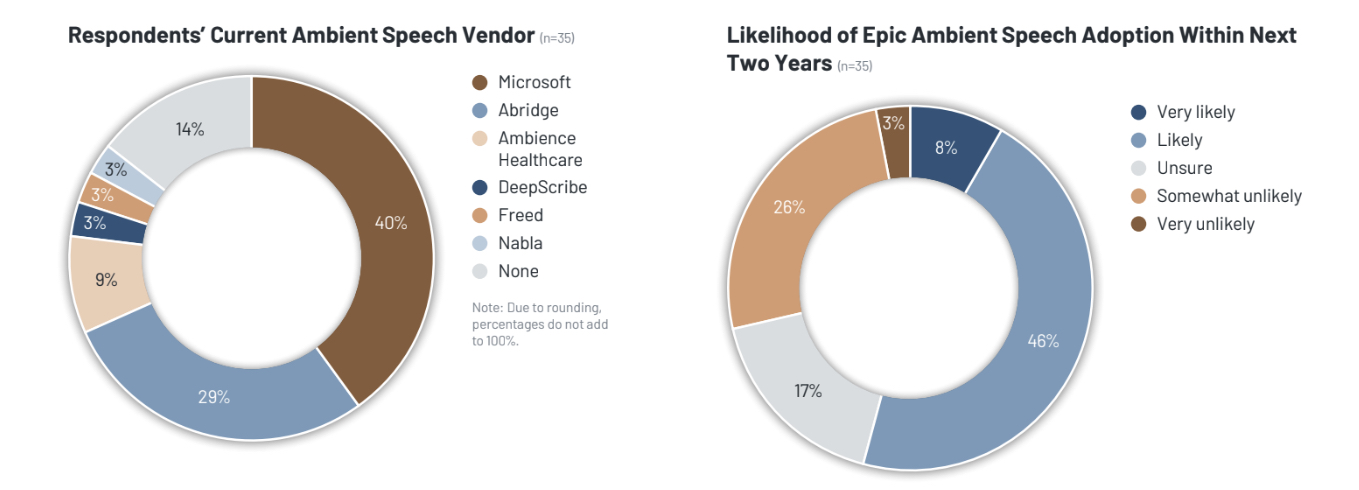
Most organizations interviewed anticipate adopting Epic’s ambient speech tool within the next two years.This isn’t a knee-jerk reaction; it’s a calculated decision driven by existing satisfaction with Epic and the compelling prospect of consolidation. For those already heavily invested in the Epic ecosystem, the allure of a native solution is strong.
However, the path to adoption won’t be without its hurdles. Here’s what we’re seeing on the ground:
* Existing Contracts: Many organizations are locked into multi-year agreements with current ambient vendors. Breaking these contracts can be costly and disruptive.
* Maturity Concerns: The biggest question mark revolves around Epic’s tool’s current level of maturity. While the potential is immense,it needs to demonstrate comparable functionality to established solutions,notably in areas like accuracy,specialty-specific vocabulary,and robust editing capabilities.
* Specialty Needs: General ambient speech is a good starting point, but many specialties (cardiology, oncology, etc.) require highly specialized vocabularies and workflows. Epic will need to demonstrate its ability to cater to these nuanced needs.
The Long Game: Epic’s Path to Dominance & a Hybrid future
looking further out, the trend is clear: most respondents anticipate Epic becoming their exclusive ambient solution. This isn’t surprising.We’ve seen this pattern play out repeatedly with Epic’s other offerings.healthcare organizations often prioritize the perceived benefits of integration and cost-effectiveness, even if it means initially accepting some functionality gaps.
Interestingly,Microsoft customers are particularly confident in this transition,likely due to Microsoft’s collaborative role in the tool’s development. However, organizations using other vendors are taking a more measured approach, waiting for Epic to prove its capabilities.
I believe the ultimate strategy for many will be a hybrid one. Epic’s tool will likely become the workhorse for general documentation, while specialized ambient solutions will continue to play a vital role in specific departments and use cases. This allows organizations to leverage the strengths of both approaches, maximizing efficiency and ensuring optimal clinical documentation.
As one senior director aptly put it in the KLAS report: *”When Epic’s solution is ready for prime time,we will likely look to replace
Worth a look