
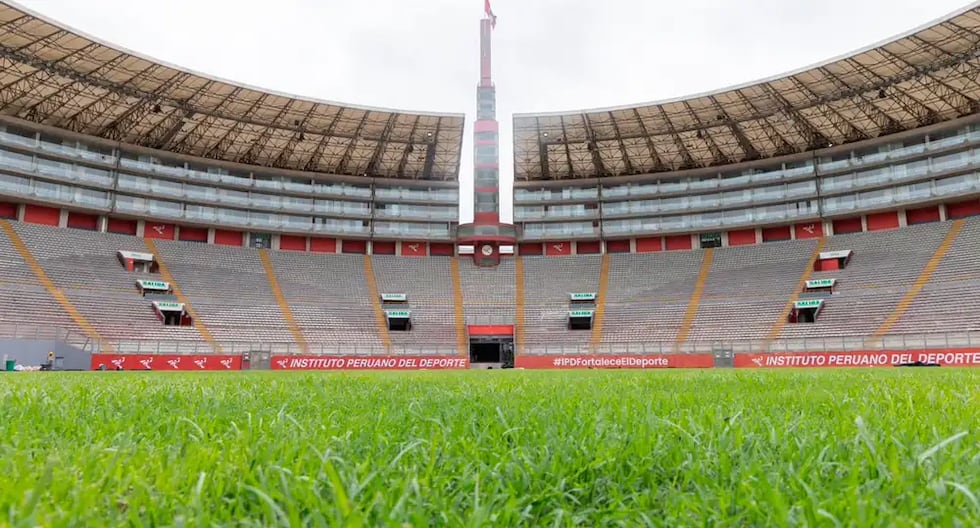
The Estadio Nacional in Lima, the historic heart of Peruvian sports and the home of the national football team, is currently at the center of a heated institutional dispute. What should be a pristine sanctuary for athletes has instead become a flashpoint between the government’s auditing body and the entity responsible for its upkeep, highlighting a systemic struggle to balance commercial viability with sporting excellence.
The current Estadio Nacional Peru pitch crisis has escalated following a critical report from the Contraloría General de la República (the Comptroller General of the Republic), which warns that the stadium’s playing surface and athletic track have suffered significant deterioration. The report points to a recurring pattern: the hosting of high-capacity, non-sporting events—primarily massive concerts and corporate gatherings—that leave the turf decimated and the infrastructure compromised.
In response, the Instituto Peruano del Deporte (IPD), the agency tasked with the stadium’s administration, has issued a formal communication asserting that the facility is not in a state of abandonment. Instead, the IPD maintains that the grass is in the final stages of a rigorous recovery process designed to bring the field back to professional standards in time for Liga 1 matches and international fixtures.
For the global sporting community, this clash is more than a local administrative spat; This proves a case study in the “stadium dilemma.” As cities worldwide seek to maximize revenue from their flagship venues, the tension between the heavy footprints of concert stages and the delicate requirements of professional turf management has reached a breaking point in Lima.
The Comptroller’s Verdict: Commercial Gain vs. Sporting Integrity
The Contraloría General de la República does not mince words in its assessment of the venue. According to the oversight body, the repetitive use of the Estadio Nacional for events that have nothing to do with sports has directly led to the degradation of the grass and the synthetic athletic track. The damage is not merely aesthetic; it involves soil compaction, the destruction of the root system, and the wear and tear caused by the installation and removal of massive stage structures and heavy equipment.

The Comptroller’s findings suggest that the protections put in place during these events are often insufficient to prevent long-term damage. When thousands of spectators occupy the field and tons of steel are placed upon the turf, the natural aeration and drainage systems of the pitch are stifled. This leads to “bald spots” and uneven surfaces that are not only detrimental to the quality of play but pose a genuine injury risk to professional athletes.
the report highlights the plight of the athletic track. While the football pitch often grabs the headlines, the synthetic track is equally vital for Peru’s Olympic hopefuls. The Contraloría indicates that non-sporting events have left the track surface marred, potentially affecting the precision and safety required for high-level track and field competitions.
This oversight is critical because the Estadio Nacional serves as the primary hub for national athletics. Any degradation of the track is a direct blow to the training and performance of Peruvian athletes who rely on this facility to meet international qualifying standards.
The IPD’s Defense: The Road to Recovery
The Instituto Peruano del Deporte (IPD) has moved quickly to counter the narrative of crisis. In an official statement, the IPD clarified that the stadium’s grass is currently undergoing a specialized recovery phase. The agency emphasizes that the “worn” appearance of the field is a temporary state resulting from the very maintenance work required to fix it.
According to the IPD, the recovery process involves several technical stages, including aeration, overseeding, and the application of specialized fertilizers to stimulate growth. The agency insists that the gramado (grass) is in its “final stage” of recovery and will be fully operational for the upcoming demands of Liga 1, the top flight of Peruvian football.
The IPD’s position is that the stadium is a living entity that requires periodic cycles of intense repair, especially after periods of heavy use. By framing the current state as a “transition” rather than a “failure,” the IPD seeks to reassure the Peruvian Football Federation and the various clubs that the venue will be fit for purpose. However, the gap between the Comptroller’s audit and the IPD’s optimistic timeline remains a point of contention for fans and sports analysts alike.
The Economic Dilemma of the ‘Coloso de José Díaz’
To understand why this crisis occurs, one must look at the economic pressures facing the Peruvian government. The Estadio Nacional, often referred to as the Coloso de José Díaz, is an expensive asset to maintain. The revenue generated from hosting global music icons and large-scale entertainment events provides a financial lifeline that can be used for broader sports development.
However, this creates a paradoxical relationship. The very events that fund the stadium’s existence are the ones that destroy its primary utility. In many developed sporting markets, This represents mitigated by the use of retractable pitches or highly advanced hybrid grass systems that can withstand higher pressure. The Estadio Nacional, despite various renovations over the decades—including major works in 2004 and 2011—still struggles with the sheer volume of non-sporting traffic.
The conflict now centers on governance: Who decides when a concert is “too much” for the grass? The Contraloría argues for stricter limits and better enforcement of protection protocols, while the IPD must balance these warnings against the operational realities of managing a national landmark that is expected to be both a sports cathedral and a revenue generator.
Impact on Liga 1 and the National Team
The immediate victims of this instability are the players and coaches of Liga 1. A poor pitch does not just affect the “beauty” of the game; it fundamentally changes how the sport is played. On a degraded surface, the ball bounces unpredictably, passing accuracy drops, and the risk of ankle and knee ligament injuries increases significantly.
For the Peru national football team, the stakes are even higher. As the home ground for the national squad, the Estadio Nacional is where the team builds its identity and connects with its supporters. If the pitch is substandard, it puts the national team at a disadvantage during home qualifiers, where every inch of the field should be an asset, not a liability.
Athletes from other disciplines are equally concerned. The athletic track is the only facility of its kind in the region that can host certain levels of competition. If the synthetic surface is compromised, Peruvian runners and jumpers are forced to train on inferior surfaces, which can lead to a decline in competitive times and a higher incidence of stress fractures.
What Happens Next: The Path to Stability
The resolution of the Estadio Nacional Peru pitch crisis will likely require more than just a few weeks of overseeding. Experts suggest that a long-term solution would involve a fundamental shift in how the venue is scheduled. This could include:
- Strict Event Quotas: Limiting the number of non-sporting events per calendar year to allow for natural regeneration of the turf.
- Investment in Hybrid Technology: Transitioning to a hybrid grass system (a mix of natural grass and synthetic fibers) which is the standard for most elite European and North American stadiums, offering far greater durability.
- Independent Oversight: Establishing a permanent, independent technical committee to certify the pitch’s condition before and after every major event, removing the conflict of interest from the managing agency.
For now, the public remains watchful. The IPD’s claim that the field is in the “final stage” of recovery will be put to the ultimate test as soon as the first whistle blows for the next Liga 1 match. If the ball rolls smoothly and the athletes remain safe, the IPD may win the PR battle. If the pitch remains patchy and uneven, the Contraloría’s warnings will be vindicated, and calls for a complete overhaul of stadium management will likely intensify.
The next critical checkpoint will be the official inspection report scheduled following the completion of the current recovery works, which will determine if the stadium is officially cleared for high-stakes competitive play.
Do you think stadiums should prioritize sports over concert revenue, or is the financial trade-off necessary? Share your thoughts in the comments below and share this article with other football fans.