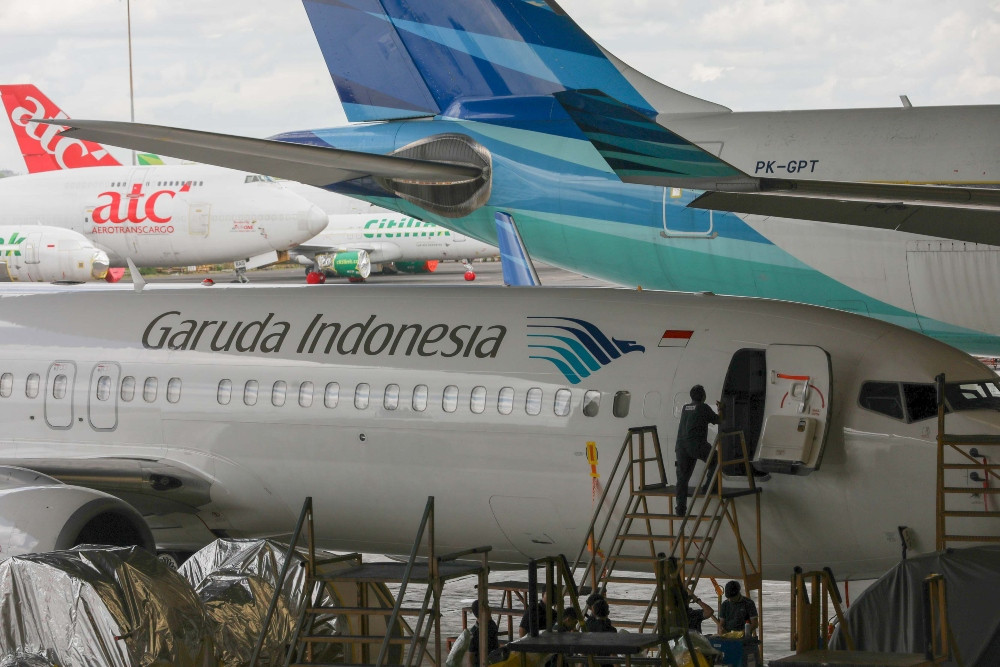
In a move aimed at consolidating leadership and driving the next phase of its corporate recovery, PT Garuda Indonesia (Persero) Tbk has finalized a significant reshuffle of its top management. Following its recent Annual General Meeting of Shareholders (RUPST), the national flag carrier has announced a refreshed composition for both its Board of Directors and its Board of Commissioners, signaling a strategic pivot as the airline seeks to stabilize its long-term financial trajectory.
This leadership transition comes at a pivotal moment for the carrier. Having navigated a complex period of debt restructuring and operational realignment, the new management team is tasked with executing a growth strategy that balances fiscal discipline with the need to reclaim market share in the increasingly competitive Southeast Asian aviation sector. For investors in GIAA, the outcome of this RUPST is a critical indicator of the company’s commitment to improved corporate governance and sustainable profitability.
The restructuring of the board is not merely a routine administrative update. it represents a calculated effort by the Indonesian government—the majority shareholder through the Ministry of State-Owned Enterprises (BUMN)—to infuse the airline with fresh expertise. As the carrier moves beyond the immediate exigencies of its previous restructuring programs, the focus has shifted toward operational efficiency, fleet modernization, and the optimization of its network profitability.
A New Vision: The Reconfigured Board of Directors
The newly appointed Board of Directors will be responsible for the day-to-day execution of Garuda Indonesia’s strategic mandates. The composition of this board reflects a blend of seasoned aviation professionals and specialists in financial management, a combination designed to address the dual challenges of operational excellence and balance sheet strengthening.
Leading the executive team is the President Director, who will oversee the overarching strategic direction of the airline. The board includes directors tasked with specific functional domains, including Finance, Operations, and Commercial strategy. These roles are critical as the airline works to optimize its cost structure—a perennial challenge in the high-overhead aviation industry—while simultaneously enhancing the passenger experience to compete with regional low-cost and full-service carriers.
The appointment of these directors is expected to provide the continuity required to complete ongoing restructuring milestones while introducing the agility needed to respond to fluctuating fuel prices and shifting travel demand patterns across the archipelago and international routes. Industry analysts will be closely watching how this team manages the delicate balance between maintaining high service standards and achieving the narrow margins characteristic of the post-restructuring era.
Strengthening Oversight: The Board of Commissioners
Parallel to the changes in the executive branch, the Board of Commissioners has also undergone a realignment. The role of the Commissioners in a state-owned enterprise like Garuda Indonesia is multifaceted, encompassing both high-level strategic oversight and rigorous monitoring of management’s adherence to regulatory and fiduciary duties.

The refreshed Board of Commissioners includes representatives who bring deep expertise in legal, regulatory, and state-owned enterprise management. This oversight body is tasked with ensuring that the Board of Directors acts in the best interests of the company and its minority shareholders, while also aligning the airline’s objectives with the broader economic goals of the Indonesian government. In the context of a publicly traded entity, the strength and independence of the Commissioners are paramount to maintaining investor confidence and ensuring transparent reporting.
By updating the supervisory layer, Garuda Indonesia is reinforcing its commitment to robust corporate governance. This is particularly important as the company seeks to improve its credit profile and potentially engage with international capital markets in the future. A strong, competent Board of Commissioners serves as a signal to global stakeholders that the carrier is serious about institutionalizing best practices in management and risk mitigation.
Strategic Context: Navigating the Post-Restructuring Landscape
To understand the weight of these leadership changes, one must look at the broader economic context in which Garuda Indonesia operates. The airline has spent much of the recent past navigating the aftermath of the global pandemic and a massive debt restructuring process. This period was characterized by intense negotiations with creditors and a fundamental rethinking of the airline’s business model.
The transition from a “survival mode” to a “growth and stability mode” requires a different set of leadership competencies. While the previous management was focused on liquidity and debt mitigation, the new board must focus on revenue optimization, network expansion, and capital expenditure management. This includes making informed decisions regarding fleet renewal and the integration of new technology to drive operational efficiencies.
the Indonesian aviation market is undergoing a period of intense transformation. The rise of regional hubs and the expansion of low-cost carriers (LCCs) have squeezed the margins of traditional full-service carriers. Garuda Indonesia, as the premium national carrier, must carve out a sustainable niche that justifies its pricing structure through superior connectivity and service quality. The new leadership’s ability to navigate these market dynamics will be the ultimate litmus test of this management shake-up.
The Role of State-Owned Enterprise (SOE) Policy
As a primary asset of the Indonesian state, Garuda Indonesia’s management decisions are inextricably linked to the broader policy framework of the Ministry of State-Owned Enterprises. The government’s approach to SOEs has increasingly emphasized “professionalization”—the idea that state-owned entities should operate with the efficiency and accountability of private-sector firms while still serving national strategic interests.

The recent changes in the board reflect this policy shift. The emphasis is on appointing leaders who can deliver commercial results and adhere to strict governance standards. For the global business community, the performance of Garuda Indonesia serves as a bellwether for the Indonesian government’s ability to manage its large portfolio of strategic enterprises. Success here would bolster the reputation of Indonesia’s SOE sector as a whole, potentially attracting more foreign direct investment into the country’s infrastructure and transport sectors.
Key Takeaways for Investors and Stakeholders
- Strategic Realignment: The leadership change marks a shift from debt-focused management to a growth-and-stability mandate.
- Governance Focus: The refreshed Board of Commissioners is intended to strengthen oversight and institutional transparency.
- Operational Mandate: The new directors are tasked with balancing cost efficiency with the maintenance of premium service standards.
- Market Positioning: Management must now navigate a highly competitive regional landscape to secure profitable market share.
- Policy Alignment: The changes reflect the Ministry of SOEs’ push for increased professionalization within state-owned enterprises.
As the new leadership takes the helm, the immediate focus will likely be on the publication of the next quarterly financial results, which will provide the first empirical evidence of the new board’s impact on the company’s bottom line. Investors will also be looking for clarity on the airline’s capital expenditure plans and any potential updates regarding the long-term management of its debt obligations.
For more detailed updates on corporate filings and official management announcements, stakeholders are encouraged to monitor the official investor relations portal of PT Garuda Indonesia (Persero) Tbk.
What are your thoughts on this leadership shake-up at Garuda Indonesia? Do you believe this is the right move for the carrier’s long-term recovery? Share your insights in the comments below and please share this article with your professional network.
Keep reading