
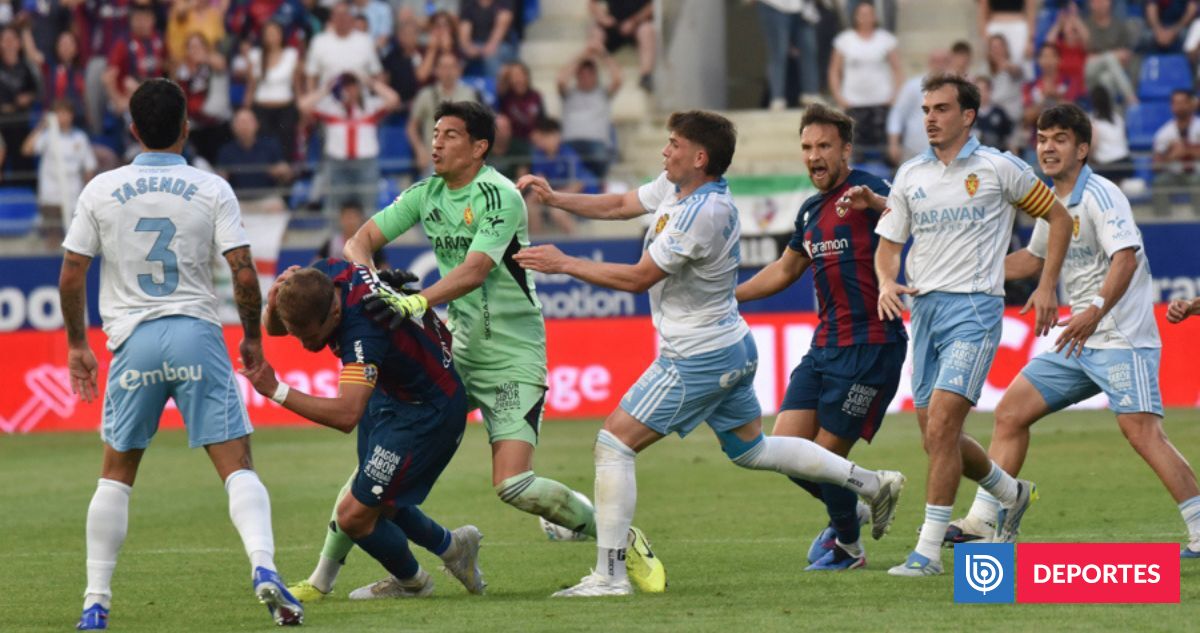
Real Zaragoza Goalkeeper Receives Record Ban Following On-Pitch Assault
Madrid, Spain – Real Zaragoza goalkeeper Esteban Andrada has been handed a record-breaking 13-match ban by the Spanish Football Federation (RFEF) following an incident during a heated derby match against Huesca on Sunday, April 27th. The suspension, announced on Wednesday, April 29th, stems from a physical altercation with Huesca defender Jorge Pulido, escalating after Andrada was initially shown a red card. The severity of the punishment underscores the RFEF’s commitment to maintaining discipline and safety on the pitch, and effectively ends Andrada’s season with the Zaragoza club. This incident has sparked widespread debate about player conduct and the responsibilities of professional athletes.

The incident unfolded in the closing moments of the match, which Huesca won 1-0. Andrada, already having received a yellow card, was ejected from the game after pushing Pulido during a tense confrontation. Rather than leaving the field, Andrada then reportedly struck Pulido in the face, triggering a brawl involving players from both teams. The RFEF’s disciplinary committee deemed the act of violence serious enough to warrant a 12-match ban specifically for the assault, in addition to the automatic one-match suspension resulting from the red card. This combined penalty represents the longest suspension issued to a player in Spanish professional football this season. The committee’s decision reflects a zero-tolerance policy towards violent conduct, aiming to deter similar incidents in the future.
Details of the Incident and Disciplinary Action
According to reports from The Guardian and El País, the altercation began after a stoppage in play. Andrada initially pushed Pulido, receiving a second yellow card and subsequent ejection. Enraged by the dismissal, Andrada then returned to confront Pulido, striking him in the face. The act was captured on video and quickly circulated on social media, prompting widespread condemnation. The RFEF’s disciplinary committee reviewed the footage and the referee’s report before reaching its decision. The committee stated that Andrada’s actions constituted “aggression” and warranted the severe sanction. Beyond the 13-match ban, both Real Zaragoza and Andrada have been fined, though the specific amount of the fines has not been publicly disclosed.
The referee’s report, as cited in Cadena SER, detailed the initial push as “recklessly pushing an opponent, with play stopped.” This action led to the second yellow card and the subsequent red card. The subsequent punch, however, was the primary driver of the extended ban. The RFEF’s decision is consistent with its stated policy of protecting players and upholding the integrity of the game. The length of the suspension sends a clear message that violent behavior will not be tolerated, regardless of the circumstances.
Andrada’s Apology and Club Response
Following the incident, Andrada issued a public apology, expressing remorse for his actions. “The truth is I’m very, very sorry for what happened,” Andrada stated, as reported by ESPN Chile. “It’s not a good image for the club, for the fans, and especially not for a professional like myself.” However, the apology did little to mitigate the severity of the disciplinary action. The incident has also prompted a strong response from Real Zaragoza, who publicly condemned Andrada’s behavior. The club released a statement on Sunday, expressing their disappointment and emphasizing their commitment to sportsmanship and fair play.
Real Zaragoza also reportedly voiced concerns regarding the refereeing decisions during the match, suggesting they contributed to the escalating tensions. However, the club’s criticism of the officiating did not overshadow the condemnation of Andrada’s violent conduct. The club is now left to navigate the remainder of the season without their starting goalkeeper, a significant blow to their hopes of avoiding relegation from the Segunda División. The situation raises questions about the club’s future plans and potential replacements for Andrada.
Impact on Real Zaragoza’s Relegation Battle
The suspension of Esteban Andrada comes at a critical juncture for Real Zaragoza, who are currently battling to avoid relegation from the Segunda División. The team sits near the bottom of the league table, and Andrada’s absence will undoubtedly be felt in the remaining matches. The goalkeeper, on loan from Mexican side Monterrey, had been a key player for Zaragoza this season, and his leadership and experience will be sorely missed.

The club will now necessitate to rely on backup goalkeepers to fill the void left by Andrada’s suspension. This situation presents a significant challenge for coach Carlos Terrazas, who will need to find a way to motivate his team and secure crucial points in the remaining games. The incident has also created a negative atmosphere around the club, potentially impacting player morale and performance. The team’s ability to overcome these challenges will be crucial in determining their fate in the Segunda División. The RFEF’s decision, although intended to uphold discipline, has undeniably complicated Zaragoza’s already precarious position in the league.
Fan Reaction and Social Media Fallout
The incident and subsequent ban have generated a significant reaction from fans on social media. Videos of the altercation quickly went viral, sparking heated debates about Andrada’s actions and the appropriate punishment. As reported by TVN, footage emerged of fans reacting to the incident in a bar, expressing shock and outrage. Many fans called for a severe sanction, while others expressed sympathy for Andrada, citing the intense pressure of the relegation battle.
The hashtag #Andrada quickly trended on social media platforms, with fans sharing their opinions and memes related to the incident. The controversy has also sparked a broader discussion about player behavior and the role of social media in amplifying such incidents. The RFEF’s decision to impose a record-breaking ban appears to have been influenced, in part, by the widespread public outcry and the desire to send a strong message about the consequences of violent conduct. The incident serves as a reminder of the intense scrutiny faced by professional athletes and the importance of maintaining composure and respect on the field.
The fallout from this incident extends beyond the immediate sporting consequences. It raises questions about the pressures faced by players in high-stakes matches, the role of officiating in controlling on-field behavior, and the responsibility of clubs to promote sportsmanship. The RFEF’s decisive action underscores its commitment to upholding these principles, even in the face of intense competition and passionate fan bases.
The next step in this case will be the official notification of the ban to Real Zaragoza and Esteban Andrada. The club has the right to appeal the decision, although the likelihood of a successful appeal appears slim given the clear video evidence and the RFEF’s strong stance against violence. Fans and observers will be closely watching to see how Real Zaragoza responds to this challenge and whether they can overcome the loss of their key goalkeeper to secure their place in the Segunda División. Share your thoughts on this incident and its implications in the comments below.