
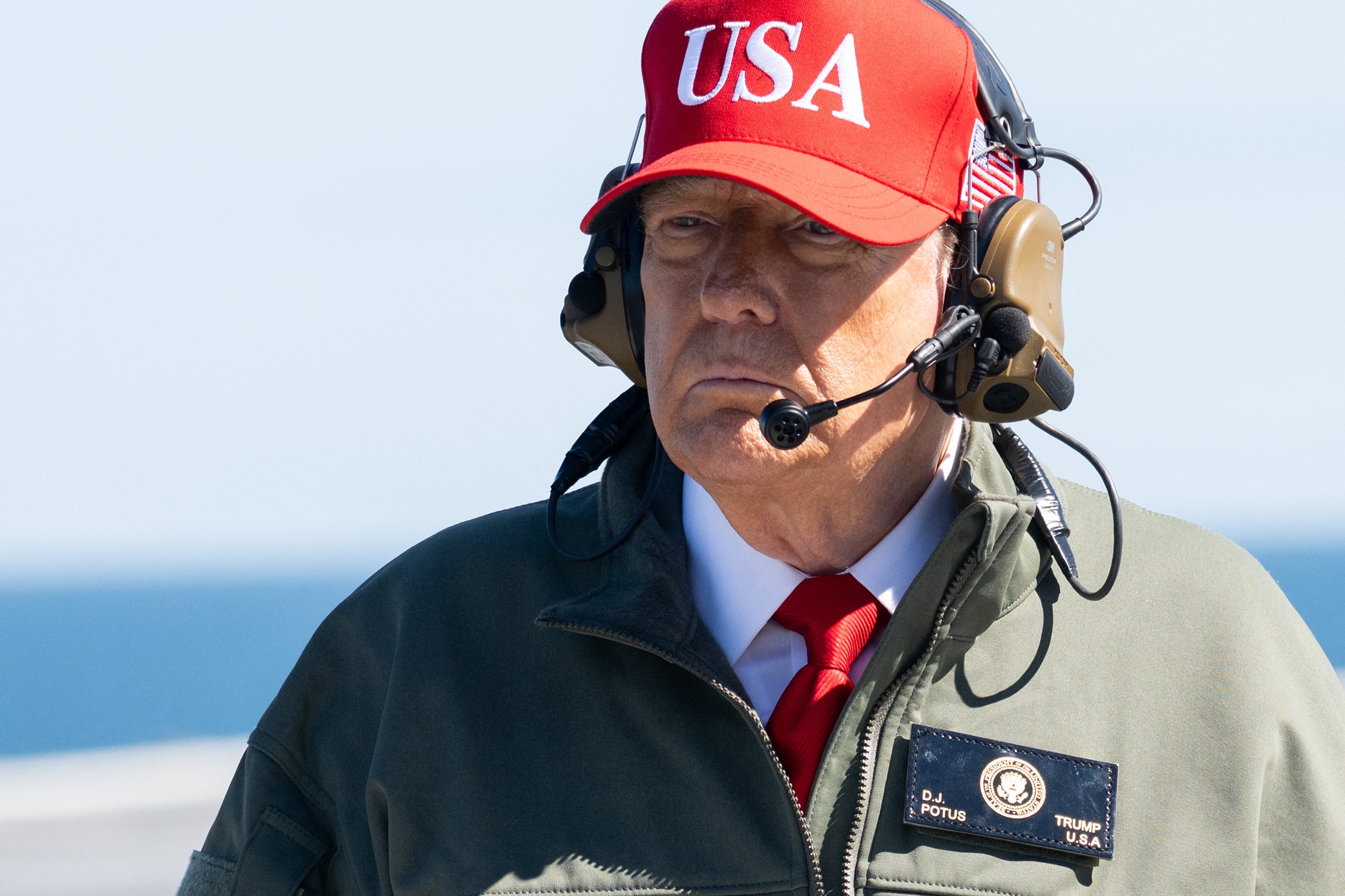
Washington D.C. – As the first of May rapidly approaches, President Donald Trump faces a critical deadline concerning the ongoing military operation in Iran, dubbed “Operation Epic Fury.” The looming date centers on the War Powers Resolution of 1973, a law designed to limit the President’s ability to commit the United States to armed conflict without the consent of Congress. The resolution stipulates a 60-day limit on military operations initiated without a congressional declaration of war, a limit that will be reached on May 1st, nearly two months after the operation began on March 2nd.
The situation presents a significant constitutional and political challenge, pitting the executive branch against the legislative branch over the authority to wage war. The core question is whether President Trump will seek congressional approval to continue military action in Iran, present a case for extending the operation to allow for troop withdrawal, or risk defying the War Powers Resolution altogether. The stakes are high, potentially impacting the future of U.S. Foreign policy in the Middle East and the balance of power between the President and Congress.
The War Powers Resolution: A Historical Context
The War Powers Resolution emerged from the tumultuous experience of the Vietnam War, a conflict that stretched on for years without a formal declaration of war from Congress. Concerned about the erosion of congressional authority, lawmakers sought to reassert their constitutional role in decisions regarding the employ of military force. As explained by the Associated Press, the resolution aims to ensure a “collective judgement” between Congress and the President when deploying troops into “hostilities.” The War Powers Resolution (P.L. 93-148; 50 U.S.C. Ch. 33), enacted on November 7, 1973, over President Nixon’s veto, requires the President to consult with Congress before introducing U.S. Armed Forces into hostilities and to report within 48 hours of doing so.
The resolution mandates that the President terminate the use of military force after 60 days unless Congress declares war or specifically authorizes the continued use of force. The President can request an extension, but Congress is not obligated to grant it. This 60-day clock is now ticking for Operation Epic Fury, forcing a confrontation between the Trump administration and members of Congress who believe the operation lacks proper authorization.
Congressional Opposition and the Debate on Capitol Hill
Opposition to the war in Iran has been vocal on Capitol Hill, particularly from Democratic leaders. House Minority Leader Hakeem Jeffries has been particularly critical, arguing that the conflict is a “war of choice” entered into without a clear plan, objective, or exit strategy, and without the approval of Congress. Jeffries pledged to continue advancing War Powers resolutions in an effort to bring the conflict to a close.

However, the path to securing congressional authorization is far from certain. Representative Brian Mast, chairman of the House Foreign Affairs Committee, dismissed the debate as “pure politics” from Democrats, contending that attempts to end the military operation are a “miscalculation.” This division highlights the deep partisan divide surrounding the issue and the potential for a protracted political battle. The debate centers on the scope of the President’s authority as Commander-in-Chief versus the constitutional responsibility of Congress to declare war.
The Potential Outcomes and Implications
President Trump has several options as the May 1st deadline approaches. He could request a congressional authorization for continued military action, providing lawmakers with a detailed justification for the operation and its objectives. Alternatively, he could argue that the operation is necessary for the safe withdrawal of U.S. Forces, seeking an extension of the 60-day limit. A third, and potentially more controversial, option would be to ignore the War Powers Resolution altogether, asserting his authority as Commander-in-Chief and continuing the operation without congressional approval.
Ignoring the resolution would likely trigger a legal challenge from Congress, potentially leading to a constitutional crisis. It could too further erode trust between the executive and legislative branches and damage the United States’ standing on the international stage. Seeking congressional authorization, even as politically challenging, would demonstrate a commitment to constitutional principles and could garner broader support for the operation. The outcome will likely depend on the political calculations of both the President and key members of Congress, as well as the evolving situation on the ground in Iran.
Operation Epic Fury: A Brief Overview
Operation Epic Fury, initiated almost two months ago, represents a significant escalation in tensions between the United States and Iran. While details of the operation remain closely guarded, it involves a substantial military presence in the region, including the deployment of three U.S. Aircraft carriers to the Middle East, including the USS Gerald R. Ford. (US Navy/AFP). The operation’s stated goals include deterring further Iranian aggression and ensuring the safety of U.S. Allies in the region. However, critics argue that the operation risks escalating the conflict and destabilizing the Middle East further.
The current situation is further complicated by the joint nature of the operation with Israel, raising questions about the extent of Israeli involvement and the potential for a broader regional conflict. The lack of transparency surrounding the operation has fueled criticism from both sides of the political spectrum, with many calling for greater clarity about its objectives and potential consequences.
Understanding the Constitutional Framework
The division of war powers between the President and Congress is a fundamental principle of the U.S. Constitution. The President, as Commander-in-Chief, has the authority to deploy troops and conduct military operations, but only Congress has the power to declare war. The framers of the Constitution intended for a system of checks and balances, ensuring that neither branch could unilaterally commit the nation to armed conflict. The War Powers Resolution of 1973 was an attempt to clarify this division of authority, but it has been the subject of ongoing debate and legal challenges ever since.

The resolution’s effectiveness has been questioned over the years, with presidents often arguing that it infringes on their constitutional authority. However, it remains the primary legal framework governing the use of military force and serves as a crucial check on presidential power. The current situation in Iran represents a critical test of the resolution’s relevance and enforceability.
As May 1st approaches, all eyes will be on Washington to see how President Trump responds to the War Powers Resolution deadline. The decision he makes will have far-reaching implications for U.S. Foreign policy, the balance of power between the branches of government, and the future of the conflict in Iran. The next steps will likely involve intense negotiations between the White House and Congress, as well as continued scrutiny from the international community.
Key Takeaways:
- President Trump faces a May 1st deadline under the War Powers Resolution regarding the ongoing military operation in Iran.
- The War Powers Resolution of 1973 aims to limit the President’s ability to commit the U.S. To armed conflict without congressional approval.
- Congressional Democrats have voiced strong opposition to the operation, arguing it lacks proper authorization.
- President Trump has several options, including seeking congressional authorization, requesting an extension, or ignoring the resolution altogether.
- The outcome will have significant implications for U.S. Foreign policy and the balance of power between the executive and legislative branches.
Stay tuned to World Today Journal for further updates on this developing story. We will continue to provide comprehensive coverage of the situation in Iran and the ongoing debate over war powers in Congress. Share your thoughts and perspectives in the comments below.