
Federal Reserve Holds Steady on Interest Rates Amidst Economic Uncertainty
Washington D.C. – In a widely anticipated move, the Federal Reserve’s Federal Open Market Committee (FOMC) decided on Wednesday to maintain the current federal funds rate, leaving it in a target range of 5.25% to 5.5%. This marks the third consecutive meeting where the central bank has opted to hold rates steady, as policymakers continue to assess the evolving economic landscape and navigate persistent inflationary pressures. Although, the decision wasn’t unanimous, with three members of the committee dissenting and advocating for a more cautious approach, signaling growing concerns about the potential for economic slowdown. The decision comes as the U.S. Economy shows signs of resilience, but also faces headwinds from geopolitical instability, particularly in the Middle East, and lingering uncertainties surrounding the path of inflation.
The pause in rate hikes reflects a delicate balancing act for the Fed. While inflation has cooled considerably from its peak in 2022, it remains above the central bank’s 2% target. Recent economic data, including a robust labor market and continued consumer spending, suggest the economy is proving more resilient than many anticipated. However, the Fed is also mindful of the risks associated with overtightening monetary policy, which could potentially trigger a recession. The committee’s statement acknowledged that recent indicators suggest economic activity has been expanding at a moderate pace, and that job gains have remained strong.
The decision to hold rates steady was accompanied by a revised economic outlook, which officials admitted was subject to “unusually high uncertainty.” This acknowledgement underscores the challenges facing the Fed as it attempts to steer the economy towards a soft landing – a scenario where inflation is brought under control without causing a significant increase in unemployment. The committee’s forecasts suggest that policymakers expect inflation to gradually decline over the coming months, but the timing and pace of that decline remain uncertain.
Dissenting Voices and Concerns Over Inflation
The fact that three members of the FOMC voted against the decision to hold rates steady highlights the internal debate within the central bank. These dissenting voices favored raising the federal funds rate by 25 basis points, arguing that further tightening of monetary policy is necessary to ensure that inflation returns to the 2% target. The dissenters expressed concern that a prolonged period of accommodative monetary policy could allow inflation to grow entrenched, requiring more aggressive action in the future. While the specific identities of the dissenting members were not immediately released, their stance signals a growing divide within the committee regarding the appropriate course of action.
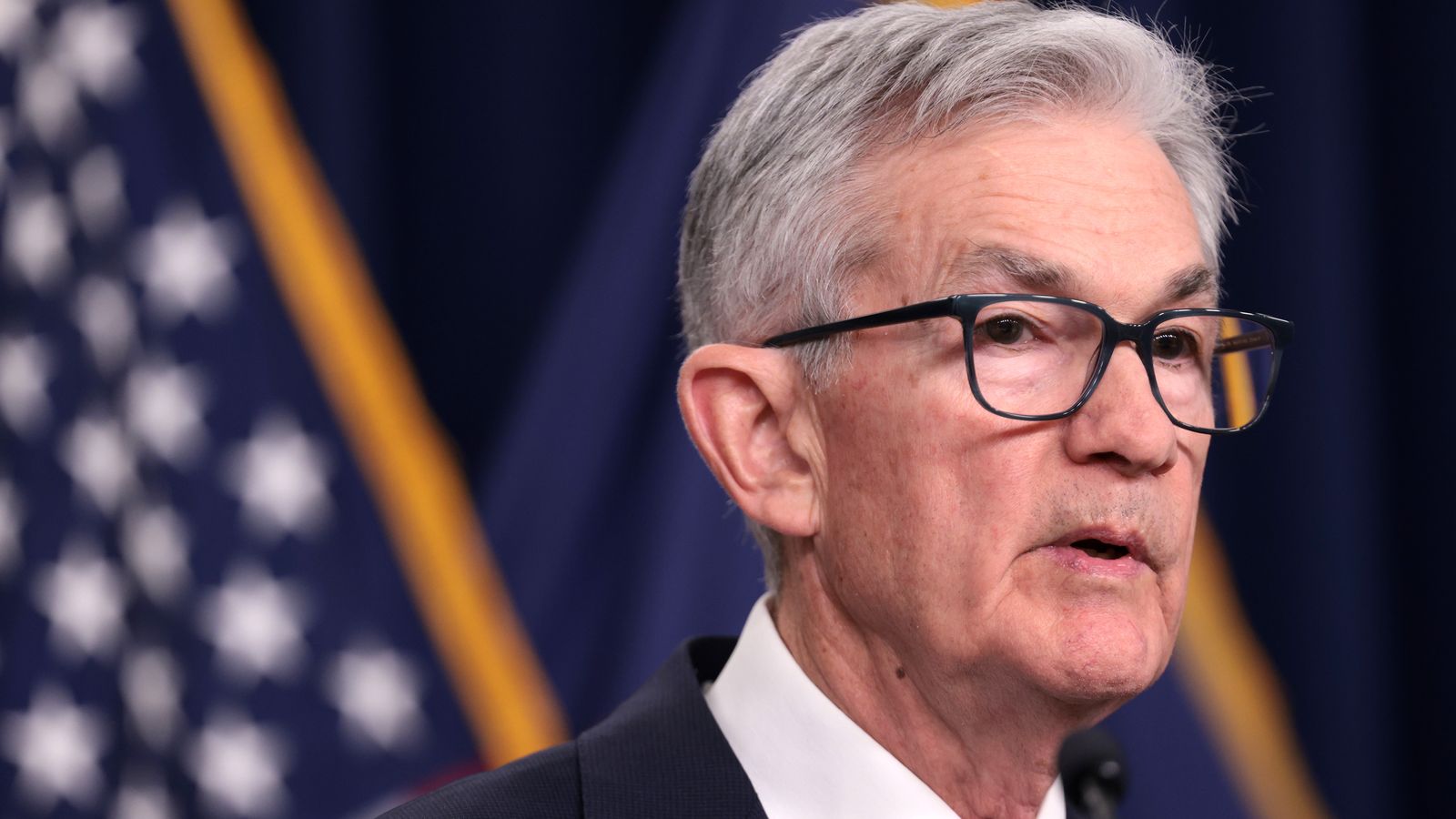
Federal Reserve Chair Jerome Powell, during a press conference following the FOMC meeting, addressed the concerns raised by the dissenting members. He emphasized that the committee remains committed to bringing inflation back to its 2% target, but also acknowledged the risks associated with moving too quickly. Powell stated that the Fed will continue to monitor economic data closely and will be prepared to adjust its policy stance as needed. He also noted that the committee is mindful of the potential for unforeseen shocks to the economy, such as a further escalation of geopolitical tensions or a sharp decline in global growth.
Powell also addressed the impact of the situation in the Middle East on the Fed’s decision-making process. He acknowledged that the ongoing conflict is creating significant uncertainty and could potentially disrupt global supply chains. “The situation in the Middle East is adding to the uncertainty,” Powell said. “We are monitoring it closely and will take into account its potential impact on the U.S. Economy.”
Impact on the U.S. Economy and Global Markets
The Federal Reserve’s decision to hold rates steady is likely to have a mixed impact on the U.S. Economy. On the one hand, it will provide some relief to borrowers, including homeowners and businesses, who have been facing higher borrowing costs. It could also support continued economic growth by encouraging investment and spending. However, it could also prolong the period of elevated inflation, potentially eroding the purchasing power of consumers and businesses.
Financial markets reacted cautiously to the Fed’s announcement. Stocks initially rose on the news, as investors interpreted the decision as a sign that the Fed is nearing the end of its tightening cycle. However, gains were muted as investors digested the Fed’s revised economic outlook and the dissenting votes within the committee. Bond yields also remained relatively stable, suggesting that investors do not expect the Fed to change course significantly in the near future.
The implications of the Fed’s decision extend beyond the U.S. Economy. As the world’s largest economy, the U.S. Plays a significant role in shaping global economic conditions. A slowdown in U.S. Growth could have ripple effects throughout the global economy, potentially impacting trade, investment, and commodity prices. The Fed’s monetary policy decisions can influence exchange rates, which can affect the competitiveness of U.S. Exports and imports.
Looking Ahead: Data Dependence and Future Policy Adjustments
The Federal Reserve has repeatedly emphasized that its future policy decisions will be data-dependent. This means that the committee will closely monitor a wide range of economic indicators, including inflation, employment, and economic growth, to assess the state of the economy and determine the appropriate course of action. Key data releases in the coming weeks, including the Consumer Price Index (CPI) and the Personal Consumption Expenditures (PCE) price index, will be closely scrutinized by investors and policymakers alike.
The next FOMC meeting is scheduled for June 11-12, 2026. At that meeting, the committee will have the opportunity to review the latest economic data and reassess its policy stance. While it is too early to say with certainty what the committee will decide, the current outlook suggests that another pause in rate hikes is likely. However, the Fed remains prepared to raise rates further if inflation proves to be more persistent than expected.
The Fed’s commitment to achieving price stability, coupled with its willingness to adapt to changing economic conditions, underscores the complexity of monetary policy in the current environment. Navigating these challenges will require careful judgment and a data-driven approach.
Key Takeaways:
- The Federal Reserve held the federal funds rate steady at a target range of 5.25% to 5.5%.
- Three members of the FOMC dissented, advocating for a 25 basis point rate hike.
- The Fed acknowledged “unusually high uncertainty” in its economic outlook.
- Future policy decisions will be data-dependent, with the next meeting scheduled for June 11-12, 2026.
The Federal Reserve’s actions will continue to be closely watched by investors, businesses, and consumers around the world. Stay tuned to World Today Journal for ongoing coverage of this developing story.
Worth a look