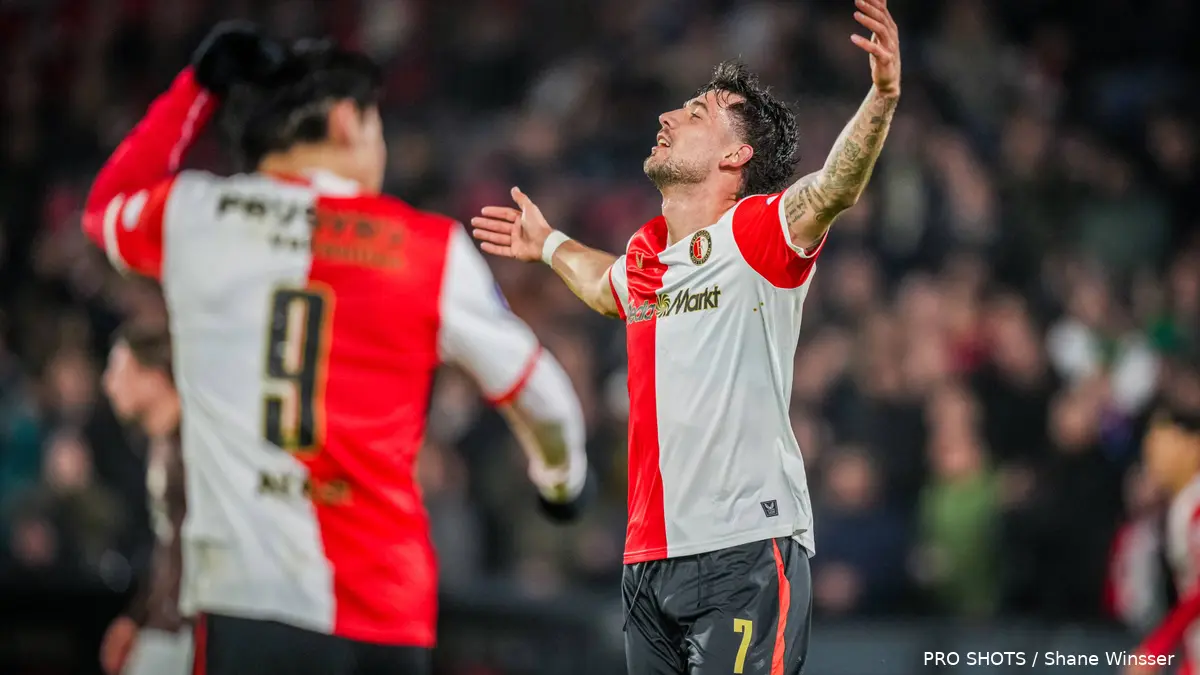
Rotterdam – Concerns are mounting over the direction of Feyenoord under manager Robin van Persie, following a narrow 2-1 victory against Telstar on February 23, 2026. Whereas the result secured crucial points in the Eredivisie campaign, the performance has drawn sharp criticism from analysts, questioning the team’s tactical clarity and overall quality of play. The debate centers on whether Van Persie is setting appropriate standards for the club, particularly when compared to rivals like PSV Eindhoven and their manager, Peter Bosz.
The scrutiny intensified after comments made by football analyst Harry van der Laan on the program *FC Rijnmond*. Van der Laan delivered a scathing assessment of Feyenoord’s performance against Telstar, labeling it “the worst match of the season by a distance.” This critique highlights a growing unease among observers regarding the team’s consistency and ability to dominate opponents, even those lower in the league standings. The win, while valuable, did little to quell the rising anxieties surrounding the club’s form and tactical approach under Van Persie’s leadership. The Eredivisie standings remain tight and consistent performances are vital for securing a top-two finish and Champions League qualification.
Van der Laan’s Harsh Assessment: A Lack of Tactical Identity
Van der Laan didn’t mince words in his critique, stating that Feyenoord failed to capitalize on their advantage against Telstar, a team he described as unlikely to succeed even in the second tier of Dutch football. He pointed to a lack of decisiveness in attack and a tendency to “drop back” instead of pressing their advantage in a packed De Kuip stadium. “You have to go for the throat and win with five goals,” Van der Laan asserted, criticizing the team’s inability to convert numerous first-half chances into goals. He characterized those opportunities as “half-chances,” lacking the polished execution of well-worked attacking moves. He specifically noted that the only clear chance he observed came from Moder in the second half.
The analyst’s criticism extended to Feyenoord’s overall form in 2026, claiming they haven’t played a single “decent match” this year. “I haven’t even seen a decent match from Feyenoord,” he stated, questioning Van Persie’s tactical direction. “I don’t know what Van Persie wants now? Are we playing with pressure, are we dropping back? It’s a bit of everything.” This lack of a clear tactical identity is a central concern, suggesting a team struggling to discover its rhythm and consistently execute a defined game plan. The uncertainty surrounding the team’s approach is fueling the debate about Van Persie’s effectiveness as a manager.
Differing Perspectives: Mossou Offers a More Nuanced View
While Van der Laan’s assessment was unequivocally negative, journalist Sjoerd Mossou offered a more tempered perspective. Mossou acknowledged the validity of Van Persie’s approach, given Feyenoord’s current position – five points off the top of the Eredivisie table. He argued that securing a top-two finish would still constitute a successful season, even if the football wasn’t consistently impressive. “The reality is, that part I understand from Van Persie, they are now simply five points behind,” Mossou explained. “If you finish in the top two, you’ve had a good season. The football may not be good enough, and I don’t understand why Van Persie camouflages that. He acts as if Feyenoord is also playing well. You can also say: there are many things to criticize, but we’ll pull it off and go for better football later.”
However, Mossou also conceded that Van Persie’s tendency to downplay the team’s shortcomings could be counterproductive. He suggested that a more honest assessment of the team’s performance might be beneficial, even if it meant acknowledging areas for improvement. This highlights a tension between pragmatism – focusing on results – and a commitment to playing attractive, high-quality football. The debate underscores the challenges of managing expectations and maintaining a positive atmosphere within the team while simultaneously addressing tactical deficiencies.
Van Persie’s Response and the Comparison with Peter Bosz
The criticism leveled against Van Persie isn’t new. Reports indicate he reacted with irritation to questions about his team selection prior to the match against Telstar, specifically regarding the deployment of Jordan Bos as a left winger. Voetbalzone reported that Van Persie defended his decision, stating he considers the specific needs of each match and the qualities of his players. He rebuffed suggestions that he was overlooking more conventional options on the bench, emphasizing his focus on selecting players best suited to the tactical demands of the game. “My tip to you is to gaze at why I make a choice and not why I don’t make a choice,” he reportedly said, displaying a visibly agitated demeanor.
Van der Laan drew a stark contrast between Van Persie’s approach and that of Peter Bosz, the manager of PSV Eindhoven. He pointed to Bosz’s visible dissatisfaction following PSV’s 1-3 defeat against Heerenveen as evidence of a higher standard. “You see the big difference between Van Persie and Bosz,” Van der Laan stated. “Bosz sets the bar much higher. Van Persie sets the bar much lower. Even with your journalists, because you thought the first half of Feyenoord was good. That was only the first quarter.” This comparison suggests a difference in managerial philosophies, with Bosz seemingly prioritizing performance and tactical execution above all else, while Van Persie appears more willing to accept less-than-ideal results as long as the team remains competitive.
The situation at Feyenoord is further complicated by the team’s position in the Eredivisie. As of February 25, 2026, Feyenoord is battling for a coveted spot in the Champions League, with several teams vying for the top two positions. According to AD.nl, the match against Telstar was crucial in this fight, and the narrow victory, despite the unconvincing performance, provides a temporary boost. However, the long-term sustainability of this approach remains questionable, particularly if the team continues to struggle to consistently deliver convincing performances.
Recent Developments and Fan Reaction
The victory over Telstar, while securing three points, has done little to silence the critics. Soccernews.nl reports that a significant portion of Feyenoord’s fanbase remains skeptical of Van Persie’s leadership. Despite the win, many supporters continue to express their dissatisfaction with the team’s style of play and the perceived lack of progress under his tenure. However, a second-place finish in the Eredivisie could solidify Van Persie’s position, suggesting that results ultimately outweigh concerns about the quality of football.
The debate surrounding Van Persie’s future at Feyenoord is likely to continue as the season progresses. The team’s upcoming fixtures will be crucial in determining whether they can maintain their position in the top two and silence their critics. The pressure is mounting on Van Persie to deliver consistent results and demonstrate a clear tactical vision for the club. The coming weeks will be a defining period for both the manager and the team.
The next key date for Feyenoord is March 7, 2026, when they face Ajax in a highly anticipated Eredivisie clash. This match will be a significant test of Van Persie’s tactical acumen and the team’s ability to perform under pressure. The outcome of this game could have a major impact on Feyenoord’s chances of securing a Champions League spot and could further fuel the debate surrounding Van Persie’s future at the club.
What are your thoughts on Robin van Persie’s management of Feyenoord? Share your opinions in the comments below, and don’t forget to share this article with fellow football fans!