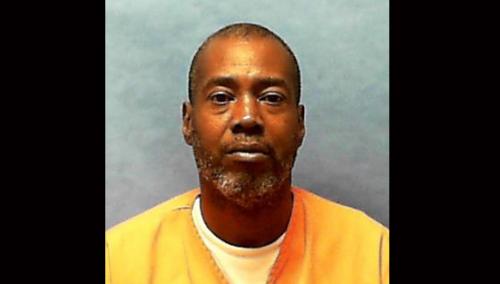
Fort Pierce, Florida – Billy Leon Kearse, 53, was executed by the state of Florida on March 3, 2026, for the 1991 murder of Fort Pierce Police Officer Danny Parrish. The execution, carried out by lethal injection at Florida State Prison near Starke, brought to a close a case that spanned over three decades and involved multiple appeals and legal challenges. This execution marks the third in Florida this year, and the fifth in the United States, continuing a trend of increased executions in the state.
The case centers around a routine traffic stop that turned tragic. On January 18, 1991, Officer Parrish, 29, pulled over Kearse, then 18, for driving the wrong way down a one-way street. What began as a simple traffic violation quickly escalated into a violent confrontation, ultimately costing Officer Parrish his life. The details of the struggle and subsequent shooting have been recounted in court documents and media reports, painting a grim picture of a senseless act of violence against a law enforcement officer.
Kearse’s execution follows a lengthy legal battle, including multiple appeals and a previous reversal of his death sentence by the Florida Supreme Court. The initial conviction and death sentence in 1991 were overturned in 1995 due to concerns that the jury hadn’t been fully informed about aggravating circumstances. A second jury subsequently reaffirmed the death penalty in 1996, and the sentence was upheld by the courts. The long and complex legal process underscores the gravity of the crime and the careful consideration given to capital punishment cases.
The Crime and Initial Arrest
According to court records and reports from the time, Officer Parrish initiated a traffic stop on Kearse after observing him driving against the flow of traffic on a one-way street in Fort Pierce. When asked for his driver’s license, Kearse provided several false names, none of which matched records in the state’s database. Officer Parrish then requested Kearse exit the vehicle to effect an arrest. As Parrish attempted to handcuff Kearse, a struggle ensued. During the altercation, Kearse managed to disarm Officer Parrish and fired the officer’s own weapon multiple times.
The prosecution detailed that Kearse fired 14 shots in total, striking Officer Parrish nine times in the body and four times in his bulletproof vest. A passing taxi driver witnessed the shooting and alerted authorities via the officer’s radio. Despite being rushed to the hospital, Officer Parrish succumbed to his injuries. Police were able to identify and arrest Kearse shortly after the shooting, using information from the vehicle’s license plate provided by Officer Parrish before the incident.
The Legal Proceedings and Appeals
The legal proceedings against Billy Leon Kearse were extensive and fraught with challenges. In October 1991, a jury recommended the death penalty by a vote of 11 to 1. On November 8, 1991, Judge Marc Cianca formally sentenced Kearse to death, initially by electrocution, a method that was later superseded by lethal injection as the primary means of execution in Florida. WUSF News reports on the timeline of the legal proceedings.
However, the case was far from over. In June 1995, the Florida Supreme Court overturned Kearse’s death sentence, but crucially, did *not* overturn his conviction for first-degree murder. The court ruled that the original jury had not been adequately informed about the aggravating circumstances of the crime, necessitating a new sentencing hearing. A second jury was convened in December 1996, and this time, they unanimously recommended the death penalty once again. On March 24, 1997, Judge C. Pfeiffer Trowbridge reaffirmed the death sentence.
The Execution and Final Statements
The execution of Billy Leon Kearse took place at 6:24 p.m. ET on March 3, 2026, at Florida State Prison. According to reports, Kearse was given the opportunity to make a final statement before the lethal injection was administered. He reportedly apologized to the Parrish family, stating, “To his family, I sincerely apologize for what I did. There’s no way I can ever repay.” Tampa Free Press detailed the events leading up to and including the execution.
Witnesses to the execution, including members of the Parrish family and law enforcement personnel, described Kearse briefly convulsing after the drugs were administered, but he ceased movement within minutes. A physician officially pronounced Kearse dead approximately 15 minutes after the injection began. The execution was carried out using a three-drug protocol, a common method for lethal injections in the United States.
Impact and Legacy
The death of Officer Danny Parrish had a profound impact on the Fort Pierce community and the law enforcement community in Florida. Parrish, a 29-year-old Army sergeant, was also preparing for deployment to Operation Desert Storm at the time of his death. His wife, Mirtha Busbin, has been a vocal advocate for seeing justice served throughout the decades-long legal process. She described the murder as “horrific” and expressed relief that the execution had finally taken place. USA Today published a detailed account of the impact on Parrish’s family.
Kearse’s execution marks the 128th execution in Florida since the state reinstated the death penalty in 1979 and the 1,659th execution in the United States since executions resumed in 1977. Florida has been notably active in carrying out executions in recent years, executing 19 inmates in 2025 alone. This case adds to the ongoing debate surrounding capital punishment, its effectiveness as a deterrent, and the ethical considerations surrounding its use.
Key Takeaways
- Billy Leon Kearse was executed in Florida on March 3, 2026, for the 1991 murder of Fort Pierce Police Officer Danny Parrish.
- The case involved a lengthy legal battle, including a previous reversal of Kearse’s death sentence and a subsequent reaffirmation by a second jury.
- Officer Parrish was 29 years old and also an Army sergeant preparing for deployment to Operation Desert Storm at the time of his death.
- Florida has been actively carrying out executions in recent years, with 19 executions in 2025.
The Florida Department of Corrections is expected to release a full report on the execution in the coming days. Further information regarding capital punishment in Florida can be found on the department’s website. The case serves as a stark reminder of the risks faced by law enforcement officers and the consequences of violent crime.
We encourage readers to share their thoughts and reflections on this case in the comments below.