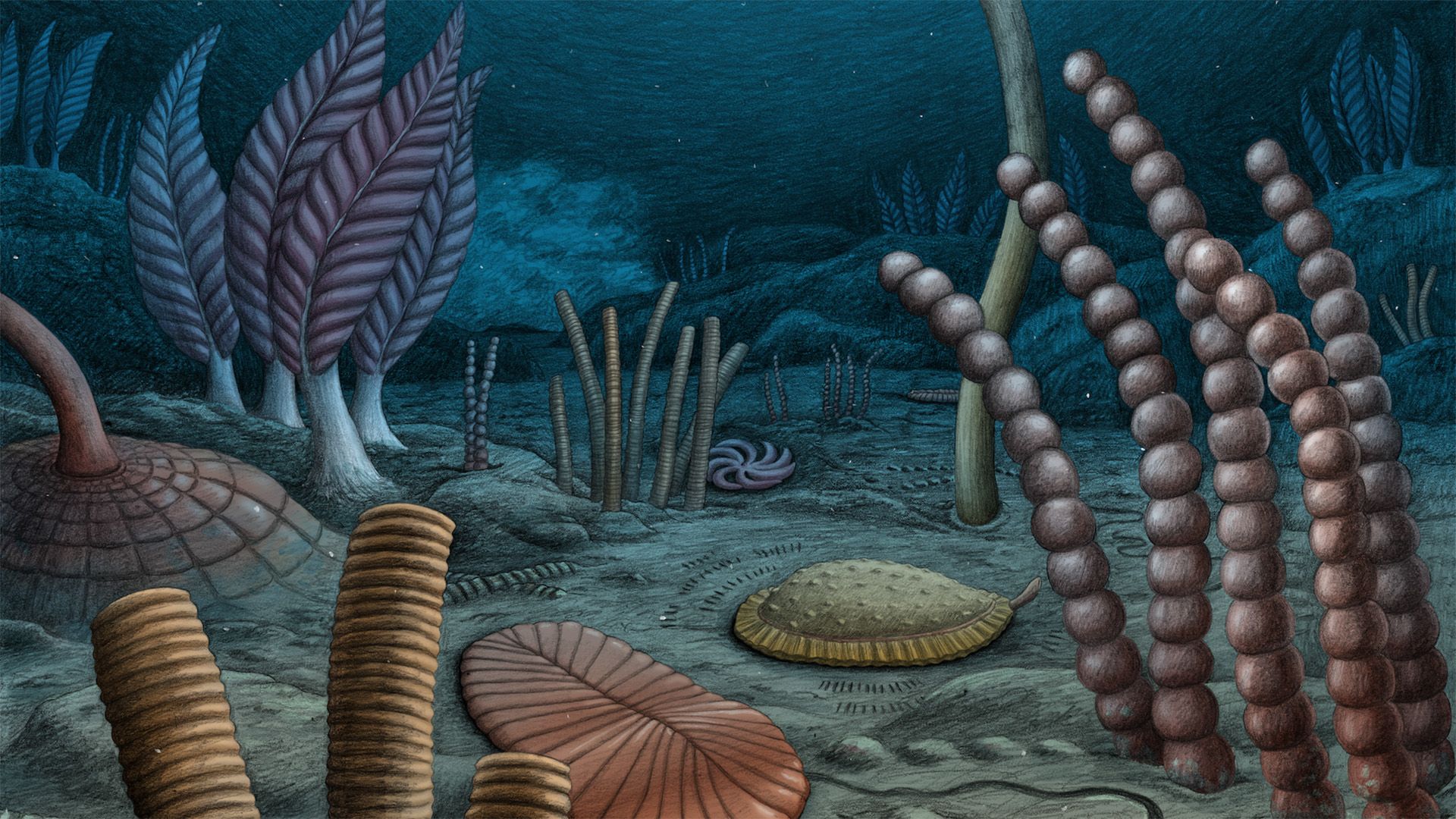
For decades, the biological history of our planet has been anchored by a singular, dramatic event: the Cambrian Explosion. This period, occurring roughly 541 million years ago, was long considered the sudden, explosive dawn of complex, multicellular animal life. However, a groundbreaking discovery in the fossil beds of Canada is forcing scientists to rethink this timeline, suggesting that the “explosion” may have actually been a sluggish burn that began much earlier than previously believed.
A recent trove of fossils unearthed in Canada has provided unprecedented evidence that complex, multicellular animals were thriving up to 10 million years before the traditional start of the Cambrian period. This discovery challenges the long-held consensus that animal life remained relatively simple and microscopic until the Cambrian era, revealing instead a much longer and more nuanced evolutionary journey during the Ediacaran period.
As we piece together this ancient puzzle, the implications for evolutionary biology are profound. It suggests that the biological blueprints for complex life—specialized tissues, organized body plans and sophisticated movement—were being drafted and tested in the oceans long before the fossil record traditionally acknowledged. This shift in our understanding doesn’t just move a date on a geological timeline; it fundamentally alters our perception of how life achieves complexity.
Rewriting the Evolutionary Timeline
The traditional narrative of life’s history often depicts a world of simple, single-celled organisms that suddenly transitioned into a diverse array of complex creatures during the Cambrian period. This “sudden” burst of evolution has been a cornerstone of paleontological study. However, the new evidence from Canadian fossil sites suggests that the transition from simple life to complex metazoans (multicellular animals) was far more gradual.
The fossils in question, dating back to the Ediacaran period, show signs of advanced biological organization that were once thought to be exclusive to later eras. By analyzing the structural complexity of these organisms, researchers have concluded that the evolutionary “fuse” for the Cambrian Explosion was lit much earlier than once thought, potentially pushing the emergence of complex life back by a significant margin.
This discovery supports what some scientists call the “long fuse” model of evolution. Rather than a sudden burst of innovation, this model proposes that a long period of experimentation occurred during the Ediacaran, where various lineages of animals developed the fundamental traits that would eventually dominate the planet. The Canadian finds serve as a critical missing link in this extended timeline.
The Canadian Connection: A Window into the Ediacaran Era
Canada has long been a global epicenter for paleontological research, thanks to its rich and diverse geological history. The specific fossil beds contributing to this discovery offer a rare, high-resolution snapshot of an era that is often poorly represented in the fossil record. The preservation of these organisms—often found as impressions in fine-grained sedimentary rock—allows scientists to observe intricate details of their body plans.
These fossils represent organisms that were “unmistakably animal” in their complexity. They exhibit characteristics such as bilateral symmetry, specialized feeding structures, and evidence of organized tissue layers. Finding such advanced features in fossils that predate the Cambrian by millions of years provides the empirical evidence needed to challenge existing evolutionary models.
The ability to date these fossils so precisely is a testament to advances in geochronology. By utilizing sophisticated dating techniques on the surrounding volcanic ash layers and sedimentary sequences, researchers have been able to establish a much tighter and more accurate chronology for these ancient life forms. This precision is what allows for the definitive claim that these animals existed significantly earlier than previously estimated.
From Microbes to Metazoans: The Complexity Leap
To understand why this discovery is so transformative, one must understand the scale of the biological leap involved. For much of Earth’s history, life was dominated by prokaryotes and simple eukaryotes—single-celled organisms capable of basic survival but lacking the specialized “parts” required for complex behavior or large-scale body structures.

The transition to metazoan life—multicellular animals—required a massive leap in biological coordination. Cells had to learn to communicate, adhere to one another, and differentiate into specialized roles, such as muscle, nerve, or digestive cells. The Canadian fossils prove that this coordination was not a sudden miracle of the Cambrian, but a process that was already well underway during the Ediacaran.
This suggests that the “complexity threshold” was crossed much earlier than we anticipated. The evolutionary pressures that drive multicellularity—such as increased size, improved nutrient acquisition, and more effective defense mechanisms—were likely at work in the oceans tens of millions of years before the Cambrian explosion became visible in the rock record. The discovery essentially fills a massive gap in the history of biological innovation.
Why This Discovery Changes Everything
The impact of this find extends far beyond the niche of paleontology. It touches upon the very core of how we understand the resilience and adaptability of life. If complexity can emerge and stabilize over such long periods, it changes our models for predicting how life might evolve in other environments, including the possibility of life on other planets.
this discovery forces a reassessment of the drivers of evolution. If the “explosion” was actually a gradual accumulation of traits, scientists must look more closely at the environmental factors that facilitated this slow climb. Was it a change in ocean chemistry? An increase in oxygen levels? Or a purely internal biological momentum? The Canadian fossils provide a new set of data points to help answer these fundamental questions.
For the scientific community, this is a reminder of the inherent incompleteness of the fossil record. We have long operated under the assumption that what we see in the rocks is a complete picture of what happened. This discovery proves that the “silence” in the fossil record between the Precambrian and the Cambrian was not an absence of life, but rather a period of significant, albeit harder-to-detect, biological activity.
Key Takeaways
- Timeline Shift: Complex animal life may have emerged up to 10 million years earlier than the traditionally accepted Cambrian period.
- Gradual Evolution: The “Cambrian Explosion” may be better described as the culmination of a much longer, more gradual evolutionary process.
- Canadian Significance: Fossil discoveries in Canada are providing the critical evidence needed to bridge the gap between simple microbes and complex animals.
- Biological Complexity: The fossils exhibit advanced traits like bilateral symmetry and tissue specialization, proving high levels of organization in the Ediacaran period.
- Scientific Impact: The findings challenge the “sudden burst” model of evolution and support a “long fuse” theory of biological development.
Looking Ahead: The Future of Evolutionary Research
As researchers continue to analyze these Canadian fossil assemblages, more details regarding the specific lineages of these early animals are expected to emerge. The next phase of research will likely focus on more granular comparisons between Ediacaran organisms and the first true Cambrian animals to determine exactly which traits were inherited and which were unique to the earlier era.
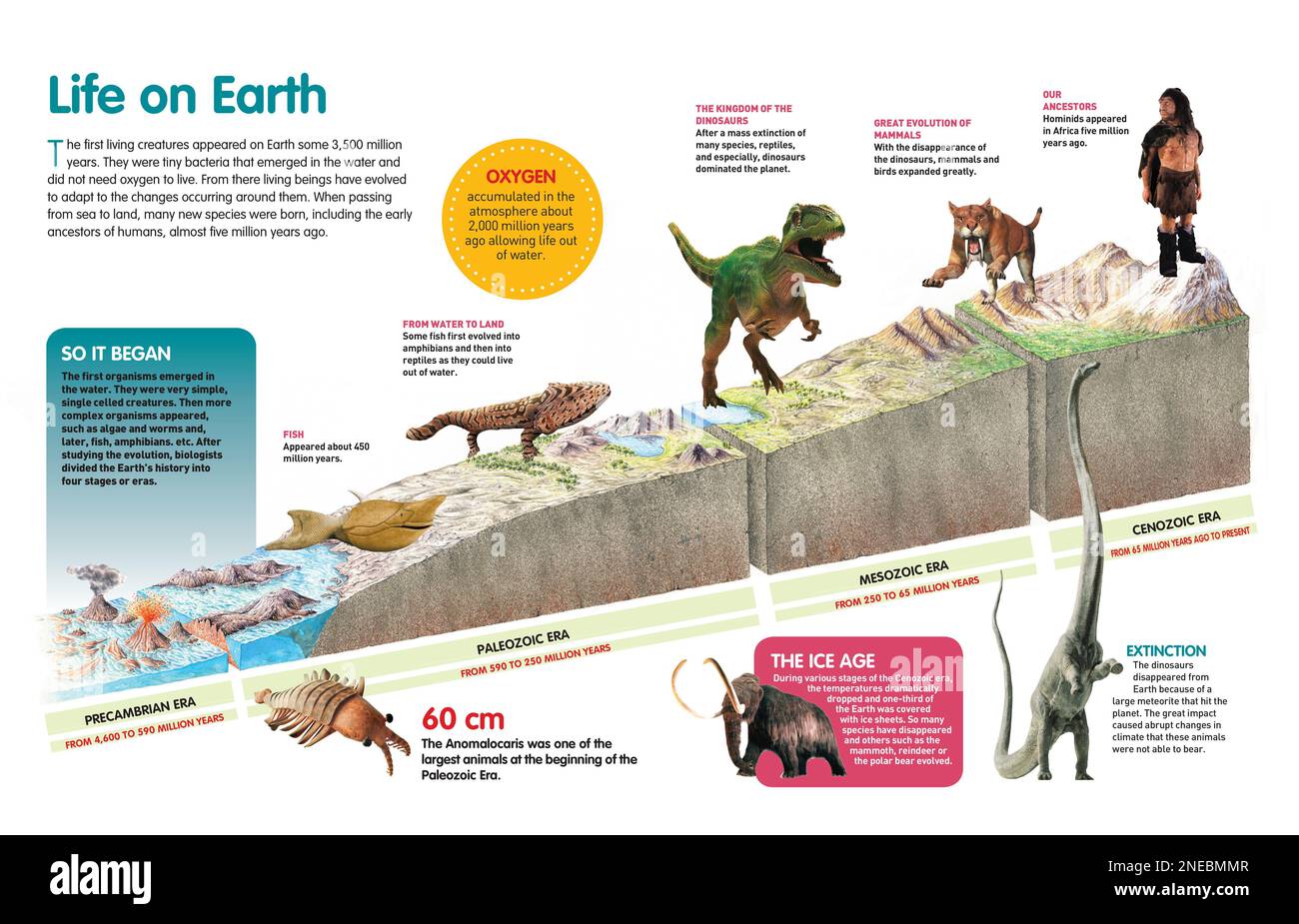
Paleontologists are also looking toward other potential sites globally to see if this “long fuse” pattern is a universal phenomenon or specific to certain geological conditions. The discovery has reignited interest in Ediacaran-era strata around the world, promising a new wave of findings that could continue to reshape our understanding of life’s origins.
While no further official updates on this specific Canadian site have been scheduled for the immediate weeks, the scientific community anticipates that more detailed peer-reviewed studies will follow as the full dataset is processed. This discovery marks the beginning of a new chapter in our understanding of the history of life on Earth.
What are your thoughts on this shift in our evolutionary timeline? Does it change how you view the history of life? Share your thoughts in the comments below and share this article with your fellow science enthusiasts.
Keep reading
- Merck & Co., Inc., Rahway, N.J., USA Announces Second-Quarter 2026 Financial Results; Highlights Key Regulatory and Clinical Milestones Across Broad, Diverse Pipeline
- World Health Day 2025: WHO Offices Worldwide Mobilize for Maternal and Newborn Health
- The Pants Guy: Funny Animal Art and Memes (newsdirectory3.com)